Antony Bruno

Audio By Carbonatix
Soy sauce can be a powerful tool in the kitchen, with the ability to add a punch of flavor to nearly any dish. It’s the base of countless marinades, an added splash to various sauces, and can bring complexity to both savory and sweet applications when required.
But for all its versatility, it’s also wildly underappreciated and misunderstood. Todd Martin hopes to change that.
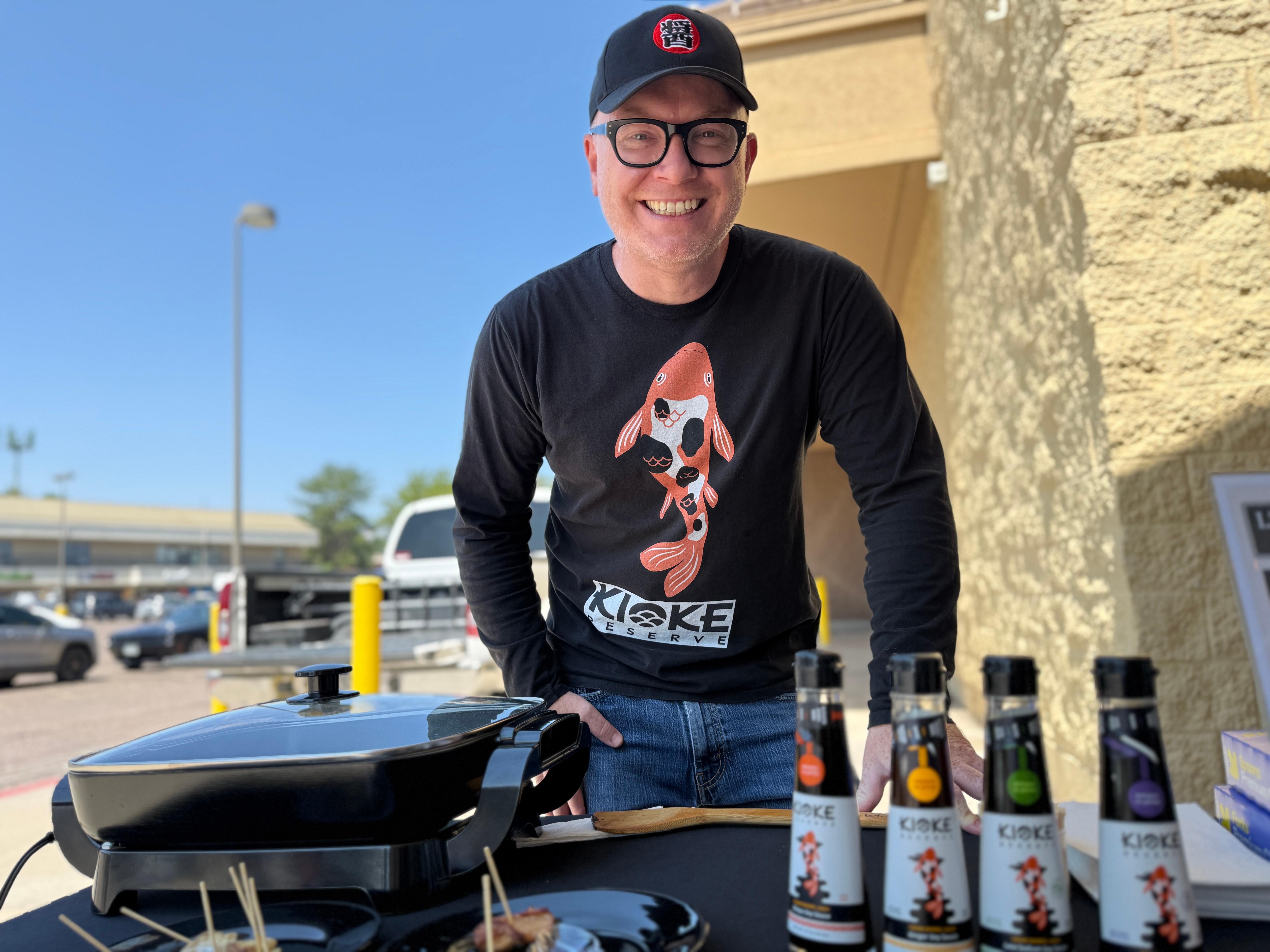
The former Heinz executive is the founder of Kioke Reserve, a line of premium soy sauces that, for the last year, he’s been promoting through samples and tastings at craft food fairs, farmers markets, and specialty grocery shops across Denver. His goal: make soy sauce more approachable to (mostly American) shoppers who’ve been trained by larger brands to view the condiment as an inexpensive and interchangeable commodity rather than a premium ingredient worth closer consideration.
“The category is right for something that’s authentic and real,” he says.
Ancient technique, modern branding
The product Martin is betting on comes from a 200-year-old brewery on Japan’s west coast, run by the same family for eight generations. There, the soy sauce is made with all-Japanese ingredients, including non-GMO soybeans, wheat, domestic sea salt and water filtered through volcanic rock. But most notably, it is aged in cedar barrels — an old method that Martin says dates back over 400 years.
“Less than 1% of soy sauce is made that way today,” he says. “The other players don’t actually even brew their soy sauce. It’s kind of like a chemical reaction. They add colors and flavors and things like that.”
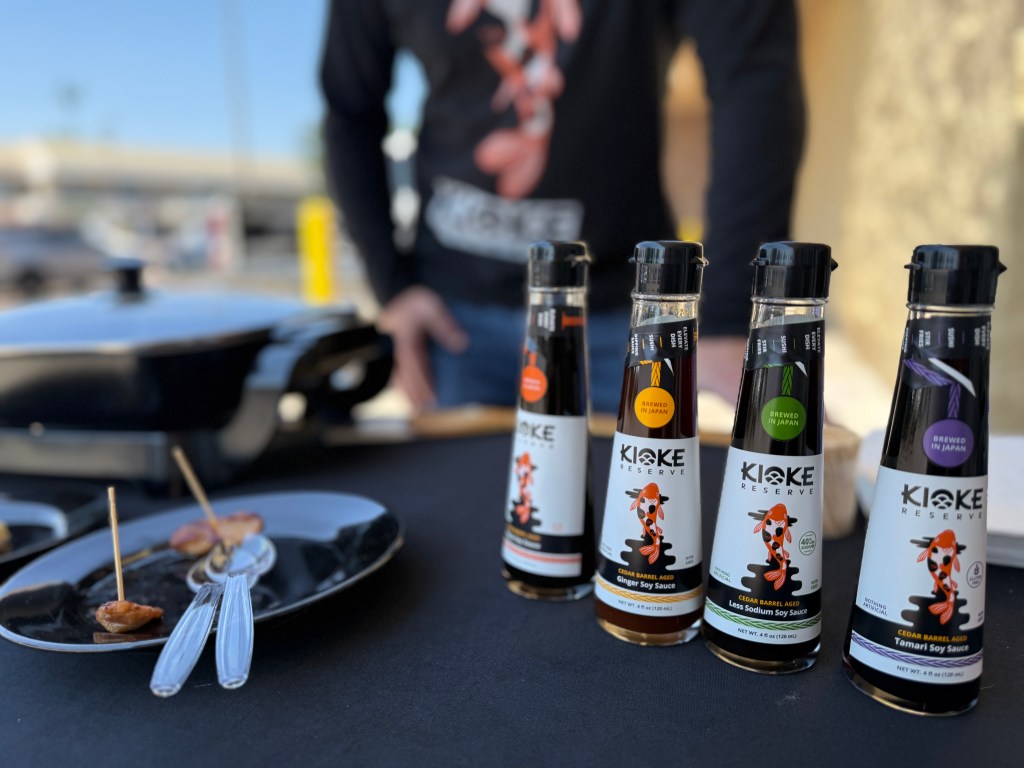
Martin says he visited some 600 producers before settling on the brewery, which he now distributes to the U.S. under the Kioke Reserve brand. The line includes traditional soy sauce, as well as a lower-sodium version and a gluten-free tamari. There are also flavored options, one with ginger and another called Sansho that uses Chinese numbing spices, with a yuzu-flavored line currently in development. All retail for around $12.
The quality is undeniable. The challenge is selling it to American shoppers intimidated by unknown ingredients and branding. Martin deliberately wanted the packaging to bridge the gap between the product’s Japanese heritage and an American consumer who may not know what to do with it. For instance, “Kioke” means wooden barrel or wooden tub in Japanese, while “Reserve” refers to the roughly year-long aging process.
“It’s still quite intimidating for the vast majority of Americans,” Martin says about most imported soy sauce. “The labels are all in Japanese. They’re fantastic products, but it’s like no one knows what it is.”
Kioke Reserve, he emphasizes, isn’t trying to change the traditional product. Instead, his goal is to translate it for a new audience by bringing something deeply rooted in Japanese food culture to American consumers ready to move beyond the standard bottle of soy sauce.
Antony Bruno
Selling store by store
Martin launched Kioke Reserve just under a year ago, initially selling through Amazon to test demand. He says the early response was encouraging enough to take the next step into grocery store shelves.
“I’ve been in food long enough to know when I think I’m onto something,” he says.
That’s starting with local specialty food shops across the Denver area. The soy sauce is currently available at Congress Park Market, Pete’s Fruits and Vegetables, and Littleton Meats. Martin has also begun holding tastings, showing up with an electric griddle and a boatload of toothpicks to give shoppers samples of chicken and vegetables brushed with the different flavored sauces.
“I think a lot of the smaller places, like Congress Park or Littleton Meats, are looking for really unique stuff that people have never seen,” Martin says. “And if it’s got a local angle, you know, it’s even more exciting to talk about.”
That local angle may seem unusual for a product with origins thousands of miles away. But Kioke Reserve is, at its core, a Colorado food business built around a Japanese producer and a local entrepreneur using his decades of experience in the food industry to bridge gaps.
“I’m trying to get people to eat better food,” Martin says. “I mean, that’s kind of the goal.”