
Stephen Cardinale (stephencardinale.com)

Audio By Carbonatix
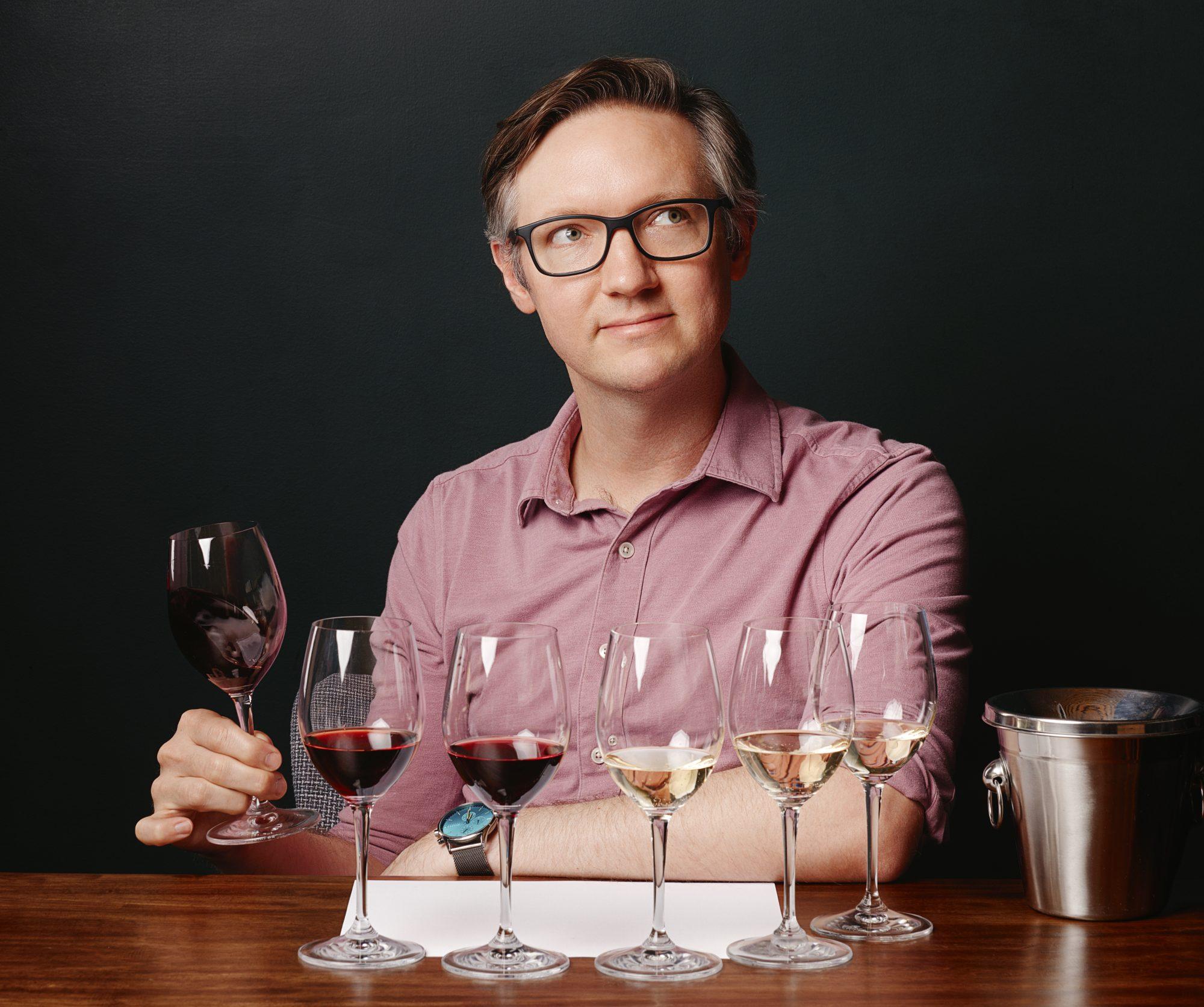
Steven Washuta knows what it’s like to pass one of the hardest tests in the world.
Since its inception, barely 300 people have passed the exam necessary to earn the designation of Master Sommelier, the wine world’s most exclusive and most prestigious title. It’s a test few make the effort to take, and even fewer pass, with a failure rate of roughly 95%.
More people have traveled to space than have earned the title of Master Sommelier. Washuta was one of them.
Until he wasn’t.
The co-owner of the Denver Wine Merchant bottle shop is one of a small number of people who have earned the title of Master Sommelier, only to have it taken away in 2018 when an infamous scandal rocked the organization behind the test and the U.S. sommelier certification program.
This September, he’s returning for the seventh time to try to win the title back while dealing with additional challenges few others face.
“It still bothers me,” Washuta says. “I’ve never fully gotten over it. I’ll never not feel that way, even when I pass it again. I’ll still be like, ‘You took this away from me.’“
Six Wines – 25 Minutes
Over a decade earlier, Washuta was an engineering student at Georgia Tech when he caught the wine bug while spending a semester abroad in France. What started as a mere curiosity grew to a passion so great that he dropped out of school to pursue a two-year degree in enology and viticulture from Walla Walla Community College.
Following graduation, he worked in various wineries, tasting rooms and restaurants, meeting his partner along the way. Among the places he’s worked include Telluride’s Bon Vivant and a stint as wine director for Lidia Bastianich’s Felidia in New York. Wine had become his life, so he started to pursue the various levels of sommelier certification offered by the Court of Master Sommeliers.
Stephen Cardinale (stephencardinale.com)
He breezed through the first three levels of sommelier certification on his first try over the years: the Introductory in 2011, Certified in 2012 and Advanced in 2016, for which the pass rate is only 25%. Then, in 2017, he passed two of the three components of the Master’s test — theory and service — but came up short in the blind tasting portion.
That’s not unusual. Only 18 Master Sommeliers have ever passed all three components of the test on their first try. It’s such an achievement that they give out a special award for those who do: the Remi Krug Cup, a trophy shaped like a large, upside-down champagne bottle. On the flip side, the most attempts recorded before finally passing the exam is 10, and some people have taken it 17 times and still have not yet succeeded.
Service and tasting are no slouch components of the test. Theory, for instance, is a one-hour verbal interrogation before a panel of judges that covers global wine regions and laws, grape varieties and vintages. Only around 10-15% of candidates pass, but it’s a requirement in order to take the tasting test.
Tasting is the sexy part. Candidates have 25 minutes to sample six wines, three white and three red, and provide a thorough deductive analysis of each, culminating in a final conclusion of each wine’s grape variety, country and region of origin, quality level, style, and vintage.
To make this determination, candidates must evaluate each wine’s sight, smell, structure and taste based on multiple characteristics. Points are awarded for both the final conclusions as well as the deductive reasoning behind them. To rack up enough points to pass, they need to correctly identify four of the six wines.
So, yeah … it’s a difficult test.

Sally Stewart
A Sommelier Scandal
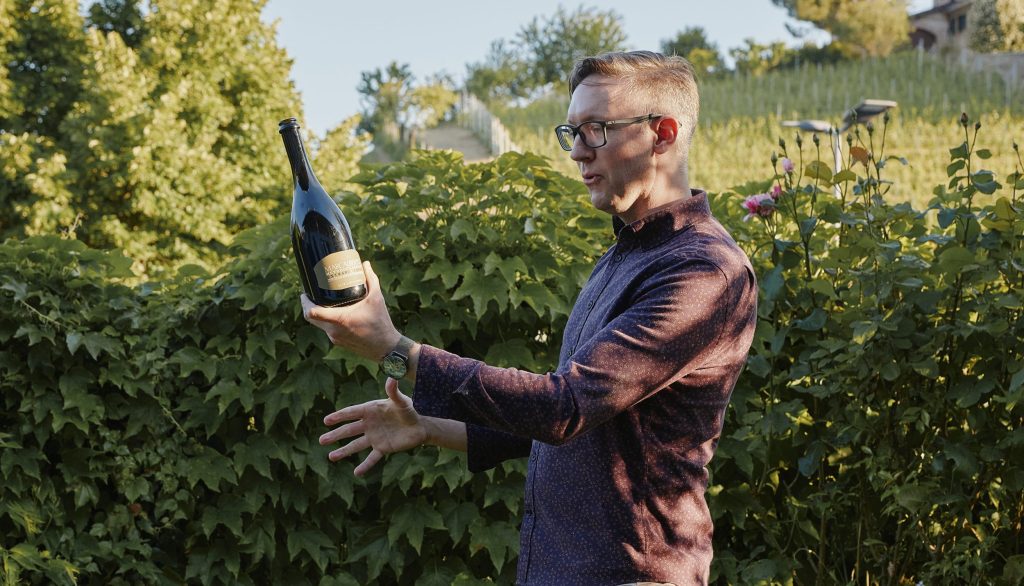
Washuta passed the tasting portion on his second attempt in September of 2018. He was one of 24 candidates who passed that year, the largest group to pass in any single year before or since. Shortly after, he attended the bi-annual Master Sommelier Symposium, held to welcome new members. He was given a certificate and presented with the revered Master Sommelier pin — a gold interior embossed with the bust of Bacchus with a red border.
He was starting to make career plans.
“I put so much into it,” he says. “I knew I only had to pass it once. And I killed it.”
But five weeks later, he got a call telling him that at least four of the candidates had received tasting details in advance on two of the six wines used in the blind tasting flight, a major breach of test security.
Washuta was not one connected to the scheme, but since the Court of Master Sommeliers claimed it could not determine exactly which candidates received the answers, it had to invalidate all taste test results.
“I was totally caught off guard,” Washuta says. “I already paid the dues. I was, like, this is my new life, and I was thinking what I wanted to do next with it. Like, where do I go from here? It was a pretty big blow, because I committed so much of my life to it. I thought I was there.”
All candidates were given the opportunity to retake the test two months later. Of them, only six passed the second time. Since then, six more have successfully passed the tasting portion again.
Washuta is one of the remaining candidates still trying. He often has bigger things on his mind, though.
An Avalanche of Consequences
The Court of Master Sommeliers, a once-insular organization, found itself the subject of headlines worldwide; the scandal was even the topic of a “Jeopardy!” question. Three of the candidates sued, and a federal judge ordered the organization to turn over records of the investigation into the incident. The case has not yet been resolved.
For the innocent candidates, invalidating the results took away far more than a diploma and a pin. Those who earn the title of Master Sommelier keep it for life. There’s no retest. No recertification. Once you’re in, you’re in. And the benefits are tangible.
Master Sommeliers are a rare lot, and as such are in high demand. Back when the Court still collected and reported this information, the average salary for an advanced sommelier was around $80,000 a year. For master somms, it was $160,000.
Many master somms go to work for big wine wholesalers or become wine educators, flying around giving lectures to industry people and selling wine at a high level. They get paid to judge tasting events, act as spokespeople for industry bodies and specific wine regions, host tastings and generate interest from buyers, visitors and press. In the few short weeks he held the title, Washuta had already been approached with consulting and wine competition judging offers, all of which had a paycheck attached.
His disappointment was about more than just money, of course. But money would soon become a very big factor in Washuta’s life.
In August of 2019, just a few months after having his test results invalidated, Washuta’s partner, Sally Stewart, was diagnosed with ALS, a degenerative nervous system disease also known as Lou Gehrig’s disease.

Provided by Sally Stewart
They’ve been together since 2013, and met working in the wine industry in San Francisco. They moved around to Chile, Portland and Telluride before landing in New York, where she worked at Mario Batali’s Babbo and Wolfgang Puck’s Cut. She passed her Advanced Sommelier exam in 2018, and they were hatching a plan to leave the restaurant world to open a wine shop when Washuta passed his Master exam.
Stewart’s diagnosis sped up those plans, bringing the couple back to Colorado, where they purchased the shop that would become Denver Wine Merchant in 2021. It’s now widely considered one of the best wine shops in the city, frequented by industry professionals and traveling somms.
“We were, like, why stay in New York?” he says. “I couldn’t work in restaurants much longer. So let’s go somewhere cheaper and easier.”
Stewart and Washuta quickly became a part of Denver’s wine scene, helping advance the city’s reputation while he studies to get his title back. This September, he will make another attempt at retaking the test. Until then, he spends part of every week practicing and preparing — which means tasting a lot of wine.
The “Grid”
Antony Bruno
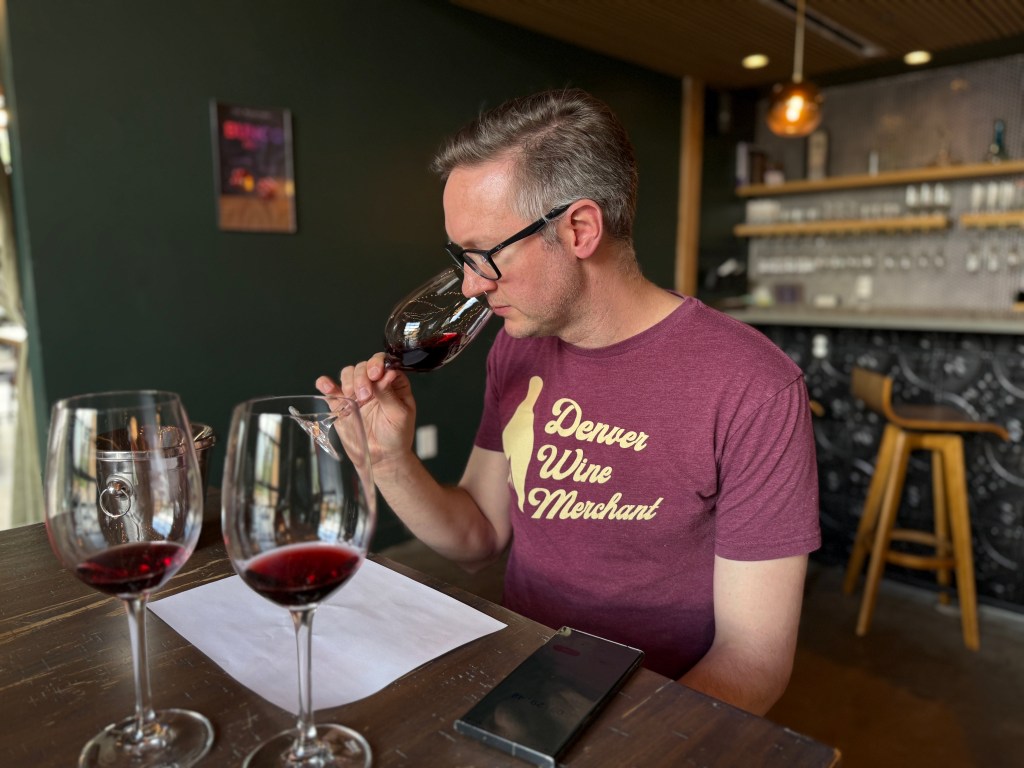
As he prepares for his next attempt at the test, Washuta sits at a table in the Birch Road Social club, just a few blocks away from his store, with three glasses of red wine placed before him, practicing his blind tasting skills.
He picks up the first glass, idly twirls it with the practiced hand of someone who hasn’t touched anything but stems in decades, and his eyes go a little unfocused as he buries his nose into the goblet and takes a deep sniff.
“Nose is clean, a youthful moderate-plus intensity,” he starts. “Fruit condition is just ripe, very crunchy, mostly in the red fruit camp. There’s a cranberry, pomegranate, raspberry, like, red apple skin. I think there’s a savory note here. There’s a green-kind-of-tarragon-anise-seed spice to it. Possible whole cluster fermentation. There’s a pretty good amount of rose in floral quality, mostly old dried red rose potpourri. No evidence of oak on the nose. I think a neutral cask, but I don’t think it’s stainless steel. There seems to be a little development in the fruit quality. There’s, like, just the slightest amount of dried-out quality. There’s a moderate-plus minerality, with crushed rock, a little white clay, and, like, a little button mushroom, as well. Maybe a little tint, hint of pickle juice.”
That’s just from smelling it. Then he swirls again, takes a sip, and rattles off a similar list of flavors and textures. He thinks for a split second, and offers his initial conclusion.
“This could be a gamay from France, a cab franc from France, pinot noir from France. I’m gonna say, final conclusion, that it’s a gamay from France, from Beaujolais, cru level, 2023, of high quality.”
Wrong. (It was a Châteauneuf-du-Pape.)
But the next one, a pinot noir from Oregon, he identifies exactly.
There are thousands of grape varietals in the world, and even though only a few hundred of them are used in mainstream consumption, it’s still an intimidating number of possibilities to consider during a blind tasting examination of just six.
The pool of potential wines used in the Advanced Sommelier tasting test consists of over 20 grape varieties and blends from over 10 countries and more than 30 regions (70 subregions). The Court of Master Sommeliers won’t disclose the list of potential wines that might be included in the Master test, but we know it’s more than that, and the PowerPoint it provides to candidates for guidance is 64-pages long.
Again … it’s a hard test.

Sally Stewart
Those who pass don’t just have a naturally sharper palate than the rest of us. It’s trained through years of tasting and running the sensations experienced through what’s known as the “grid,” a tried-and-true method of eliminating as many of the potential conclusions as possible so the final guess becomes more educated than wild.
“It’s not something that comes naturally,” Washuta says. “You don’t take a sniff and say, ‘This is white Bordeaux.’ You don’t even think about what it is. You describe the wine, and then think what wine best fits that description. If it’s white Bordeaux, it’s because it has both green and tropical notes, and it has oak. Only white Bordeaux shows that.”
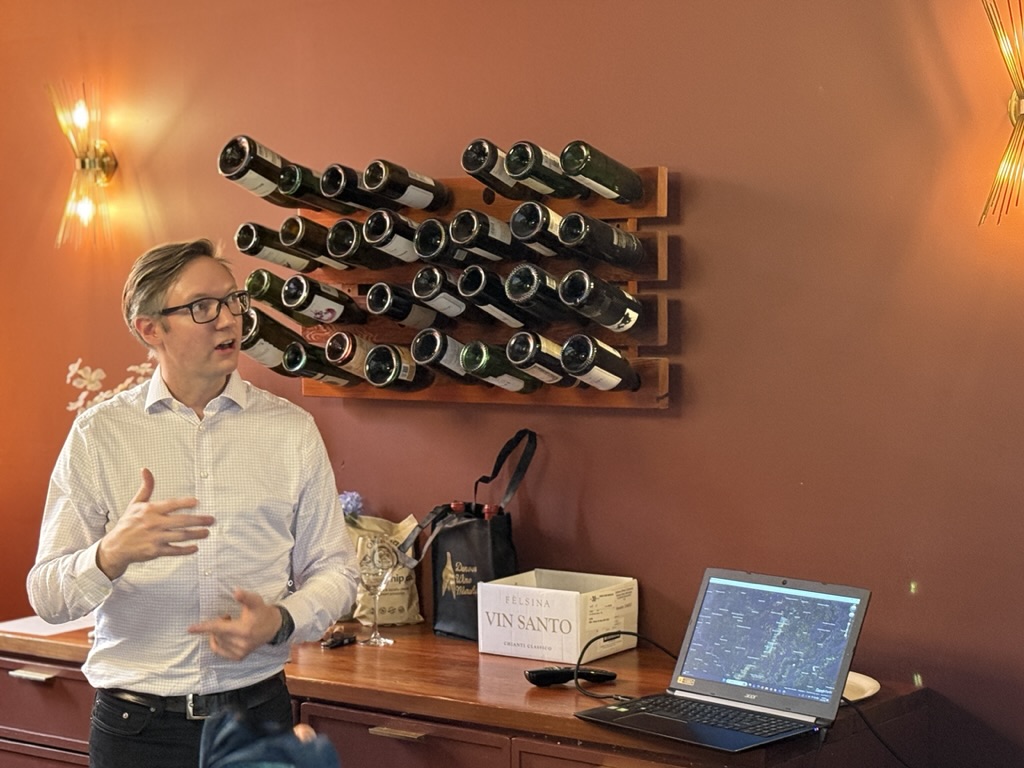
That takes practice, which takes time, and time is something Washuta has less of today than he did when he first passed the exam. His mornings are spent caring for his wife: helping her get out of bed, shower, dress, eat. He has a business to run, managing inventory, scheduling and conducting classes, and running a top wine club in the city (which, for $99 a month, gets you three bottles selected by Washuta and Stewart). He even has a part-time job adding wines and fixing database errors for the wine collector app, CellarTracker.
Antony Bruno
But he’s determined to keep going until he regains that title. Part of what drives him is the benefit it would bring his and Sally’s business and the financial help it would provide for her care.
“It costs money to live with ALS in this country,” he says.
But it’s not all a practical pursuit. Washuta can’t shake that nagging knowledge that he had the title, he had the key to the secret club. He knows what’s on the other side of the door that was closed to him eight years ago, and he’s not stopping until he gets back in.
“I’ve asked myself, ‘Do I really need this?'” he says. “Probably not. It probably won’t really change my life. I’ll still be doing the same thing, anyway. … But it’s been my goal since level one. It’s an extremely prestigious title. This is what I chose to be. Why stop halfway?”
And through it all — the tests, the scandal, the disappointment — he continually reminds himself what it’s all about. Past the money. Past the title. It all comes down to a simple love of wine that makes it all worth pursuing.
“It’s not just work to me. I still love it,” he says. “There’s still something I love about wine that brings people together. And people who aren’t enjoying it are missing out. It’s just one of the more interesting place-specific products of both man and nature that I just love. I still think it’s really cool.”
Denver Wine Merchant is located at 3911 Fox St. and is open from noon to 8 p.m. Monday through Saturday, and 11 a.m. to 7 p.m. on Sunday. For more information, visit denverwinemerchant.com.