
Behind the Apron Media

Audio By Carbonatix
Now that we’ve said goodbye to 2025 and welcomed a new year, it’s the perfect time for Denver diners to make a few resolutions to help ensure they have the best dining experiences of their lives in 2026.
The fact is, while dining out can often be an enjoyable, engaging, and delicious experience, it sometimes falls short of expectations. The reasons why vary. In some cases, the restaurant just blows it. But in most cases, diners can stack the odds in their favor and increase their chances for satisfaction with just a little bit of knowledge about how restaurants operate.
“I think sometimes there can be this divide between us and the people we are meant to serve, and I would like to close that gap,” says Jenne Harris, director of service and culture and maître d’ at Bella Colibri in Golden. “If that means they need to understand more of what we’re doing, I’m an open book. We’re full disclosure, because we want people to enjoy themselves. It should never be us against them.”
Harris, along with and several other restaurant owners and front-of-house vets, has some inside tips for how diners can better navigate the restaurant system to their advantage, clear up the most common misconceptions causing friction, and arm customers with the knowledge they need to better guarantee the best night out possible.
Behind the Apron Media
Make a Reservation
For starters, yes. If at all possible, make a reservation. The more restaurants know what to expect in advance, the better, even if it’s the same day and reservation times are wide open.
“It is always a good idea to make a reservation,” says Harris. “You may see all kinds of reservations at five o’clock, but that doesn’t mean at 6:30 we’re going to have anything available. If all the tables are reserved at 5:30 and you walk in at 5:00 and see it’s empty, those people are still coming. So even if they’re not physically occupied, those tables are spoken for.”
Generally, restaurants offer reservations at the top of the hour and half past, but some may offer them in 15-minute increments. Which to choose depends on your goals. If you want to get seated faster, sometimes booking at the 15-minute mark fits into the restaurant’s natural flow better, particularly for smaller parties. But larger parties, or those hoping for a prime location, may want to stick to the half-hour marks. Why? It all comes down to timing.
“We all work on a certain expected timeframe that people will be eating,” says Brat Ritter, proprietor of Carmine’s Italian Restaurants, which includes the longtime Denver staple Carmine’s on Penn. “The most common is about an hour and a half, but that also depends on the size of the party. The larger the party, the longer it takes. So for a party of two, we usually expect about 75 minutes. A party of four, we expect 90 minutes.”
For larger parties, most restaurants limit the size of the table you can reserve on platforms like OpenTable. If your party exceeds that number, don’t attempt to just book multiple smaller tables and expect the restaurant to push them together once you arrive. Those tables might be in different areas, making it impossible to accommodate. Just call ahead and see what your options are.
Courtesy of Nocturne
Show Up On Time
You’re not the only guest showing up that night. Restaurants may hold a table for up to fifteen minutes before releasing it to another party, but even that slight delay can cause chaos. Calling ahead helps, but understand that restaurant table turnover and scheduling is much like air travel: one delay can throw the whole night out of whack.
“Nothing ever goes exactly according to plan, and that’s okay, that’s what we do,” says Ritter. “But if, if a plane is late getting into the airport, then the next flight is late getting out. That’s the same with restaurants. If a diner is late sitting down, it will impact the next party somewhere down the line, whether it’s at that exact table or in the conglomeration of tables.”
Arrive Together
Nearly every diner has experienced the frustration of not being seated until their entire party has arrived. On the surface, it makes no sense. After all, why not sit down and order drinks and appetizers until your friends arrive? To be fair, this policy varies by the restaurant. Harris says she’s fine seating incomplete parties. “If people are standing there wanting to sit down and begin their experience with you, in my book, they should be able to do that,” she notes.
But according to Carmine’s, doing so can restrict the server’s flow. “Once you get into the rhythm with the servers, it’s more difficult to serve a party that’s only partially arrived, because you have to now treat it in multiple swings, more passes at the table than usual,” Ritter says. “You go get a cocktail for the first group, and now a couple more show up, and you have to go back and get another cocktail. Then the first group is hungry or wants to eat while they’re waiting for the others. These are things that might seem very simple, but in the dynamics of a restaurant, that’s not the way we’ve built the business to operate with efficiency.”
Behind the Apron Media
Request The Table You Want
Table jockeying is one of the biggest sources of friction in a restaurant, but it doesn’t have to be if you know how the system works.
“There’s a whole science/art to seating guests,” says Nicole Mattson, who, with her husband Scott, owns RiNo’s Nocturne Jazz & Supper Club, which just celebrated its tenth anniversary. “The host is generally trying to avoid seating too many guests at the same time for one server so that each server has an opportunity to efficiently greet and serve everyone.”
If there’s a specific table you know you want, note that in the reservation. Even better, follow up the online reservation with a phone call. The earlier you make your request, the more likely you’ll get the table you desire.
If you’re visiting a restaurant for the first time, you may not know which table to request until you get there. Then it becomes a chess game once you see that prime location in the bay window, or the one by the fireplace, or anything not next to the bus station or bathroom door.
The best option is to arrive a bit early and point out the table you prefer. Just know that you may have to wait a bit longer, even past your reservation time, before it’s ready. And the earlier your reservation time, the more likely it is that this will work.
“If the restaurant opens at 6 p.m. and you arrive right at 6:00, you increase your probability of being able to pick your table out, within reason,” says Mattson. “If you arrive at 7:30, you’re probably entering a pretty full restaurant already, which means your options are limited to what’s ready and what is about to be ready if a guest leaves.”
Just don’t get up and move to a different table without telling anyone, no matter how empty the restaurant feels. Different servers are assigned different tables, and your table assignment is based on the workload each server has. In some cases, staffing levels may even mean that some tables go unassigned and stay empty due to staff shortages. Moving to a new table on your own is even more disruptive than showing up late.
Courtesy of Rioja
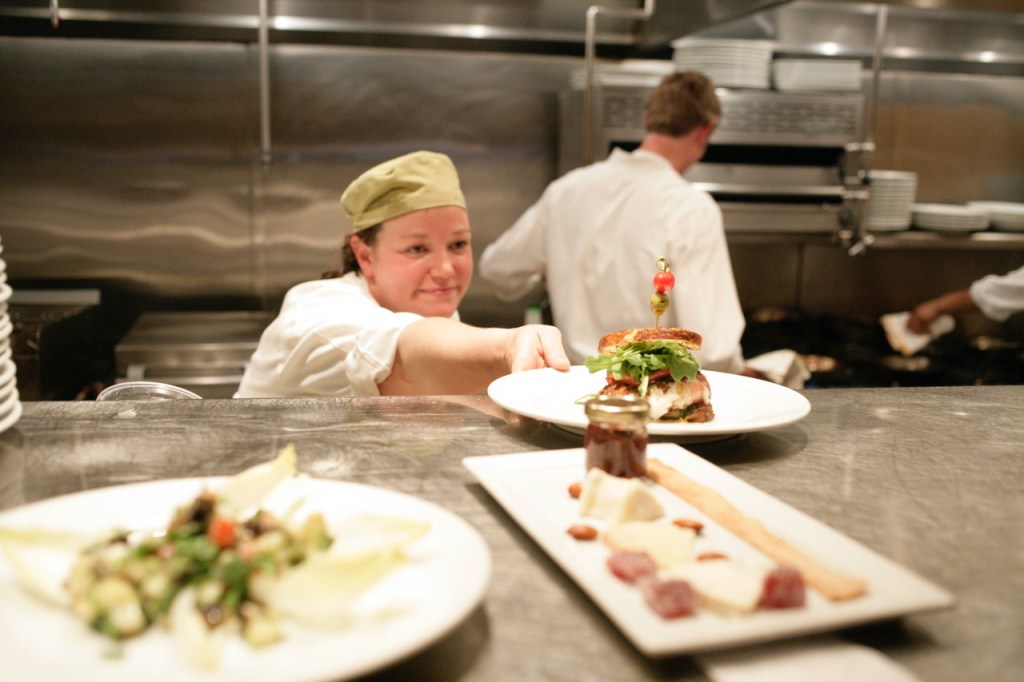
Communicate Dietary Restrictions
Communication here is critical. So is honesty. There is a big difference between not liking an ingredient and having a life-threatening allergy to it. A dietary preference, like gluten-free, has nowhere near the consequences of having celiac disease.
“If it’s true celiac, there is a completely different operation that needs to happen in the kitchen,” says John Richards, general manager of Rioja on Larimer Square. Accommodating a celiac or allergic individual requires far stricter steps to avoid cross-contamination with equipment and ingredients than accommodating someone who just prefers to avoid certain ingredients.
Understand that restaurants will accommodate all situations. That’s what they do. But exactly how they do it will differ, so communicating early and honestly makes all the difference. Dropping the news on site will affect not only your experience, but that of everyone else in the restaurant.
“Everything slows down,” Richards says. “All of a sudden, the chef has to stop running the line to prepare a specific meal for that person. Had that information been provided ahead of time, we would have had something ready to go. But without that leader in the kitchen on the line during a dinner service, a communication breakdown naturally occurs.”
And show a little common sense too, particularly at restaurants or special events featuring the very ingredient you’re allergic or averse to.
“Restaurateurs will do everything within our power and talents to make sure that your allergy/aversion is tended to,” says Jacqueline Bonanno, creative director of Bonanno Concepts, which owns seven restaurants in Denver, including Osteria Marco and Mizuna. “However, if I’m hosting a dinner called ‘Meatball Madness’ and you’re a vegan, maybe just skip this one?”
Give Direction on Suggestions
A generic, “What’s good here?” is not the best approach because the server doesn’t know anything about what you might consider “good.” A different tack might be, “What’s the signature dish here?” or, “What’s the most popular?” or even, “What dish do you think is overlooked?”
Another approach is to convey your preferences, much like you would with a sommelier when looking for wine recommendations. “I’m interested in something more veg-forward, yet hearty,” or, “I like fish, but am trying to avoid too much butter or cream.” These give the server something to work with and calibrate to rather than simply guessing.
“It’s easier for a knowledgeable service team to help guide you if you have some idea of what you like or what you dislike,” says Mattson. “There’s quite a lot of science on how and why people taste differently, so asking a server if they like a specific wine or dish is going to be less helpful in getting what you want.”
Behind the Apron Media
Be Flexible With Substitutions
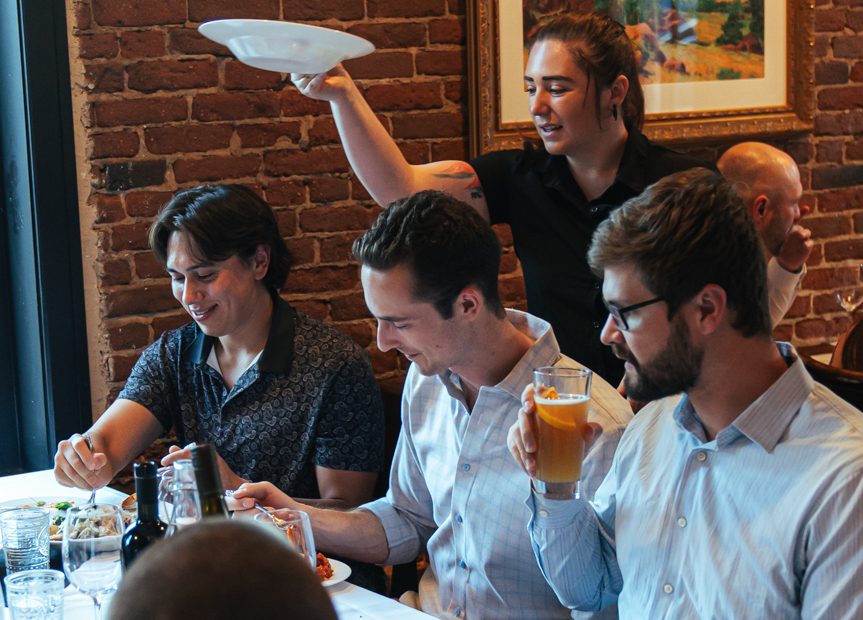
Asking for Swiss cheese on a burger instead of cheddar is one thing. But chefs at finer dining establishments often construct a very specific flavor and texture profile designed for maximum impact. If a substitution is possible, they’ll of course accommodate. They are, after all, “Yes-tauranteurs.” But there are limitations.
“Restaurants are always going to make any accommodations they can to satisfy their guests,” says Richards. “And 99 percent of the time, it’s executable. … If there’s an element on one dish you’d prefer on another, we will do that. (But) if we need a certain number of servings of, say, baby potatoes, and we’re getting towards the end of the night, we may need to hold on to those to make sure that we can execute those dishes. The chef will find a different substitute, or there’s going to be a compromise.”
Behind the Apron Media
Don’t Hold Back Concerns
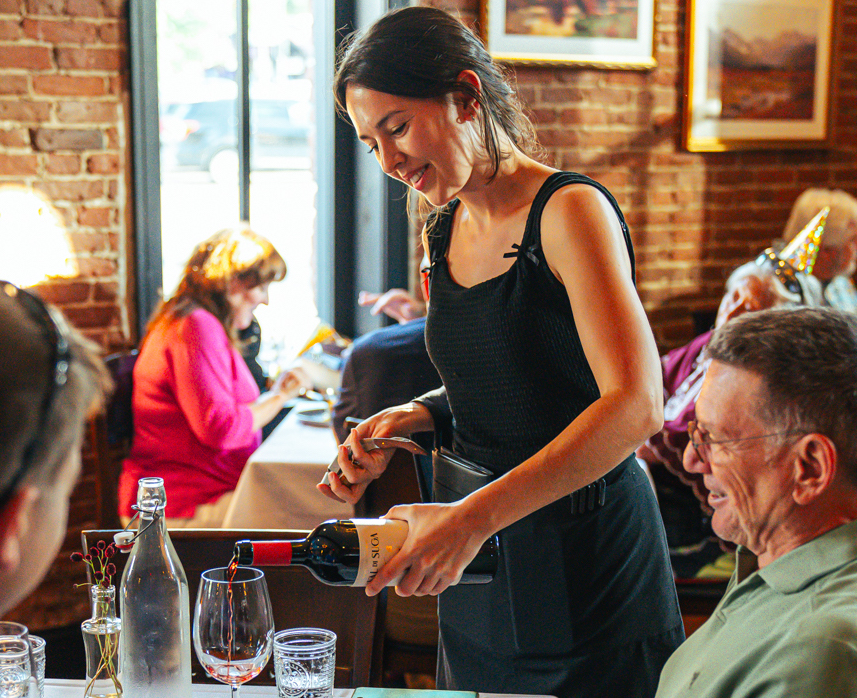
If you order one dish but get another, that’s an easy fix. But if you didn’t like the meal, or it’s not what you expected, speaking up while still on site can garner a much better result than stewing and complaining about it online days later with a bad review. Give the restaurant the chance to make it right.
“We’re always looking for feedback,” says Richards. “We want to get the guests’ opinion of the food that we’ve created. And if people have legitimate comments, we want to make sure they leave with smiles on their faces, satisfied. If something seems off, let us know, because the server is going to tell the manager, the manager goes to the chef, and we’ll make a change quickly. We look at it as a positive thing. It only makes us better.”
The common thread through all these tips is communication. Left unsaid is the need for realistic expectations. This isn’t The Bear, so don’t come in thinking a manufactured summer snowstorm is in the cards. The measure of hospitality isn’t offering free stuff. It’s listening and accommodating. The more information you provide, the better they can respond.
“We’re in the hospitality business,” says Rioja’s Richards. “We want people to enjoy their time here. We want them to come back. We want them to tell their friends to visit us. We are in the business of creating experiences, and want to make sure that we are providing guests with what they’re anticipating. And that’s a two-way street.”