
Photo by Miryam Ramos

Audio By Carbonatix
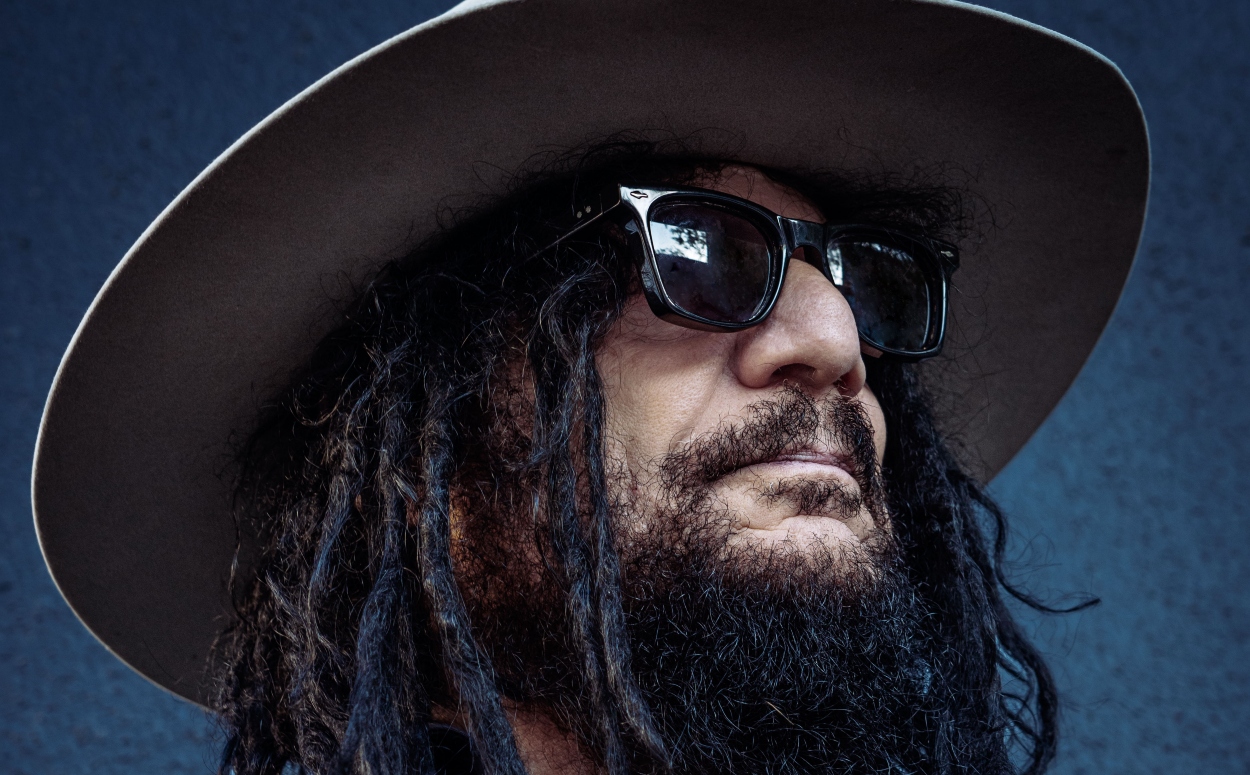
Bassist/sonic scientist Don Was, whose new band, Don Was & the Pan-Detroit Ensemble, headlines Gates Concert Hall on January 29, isn’t a household name when it comes to the general public. But his connections to some of the biggest names in entertainment make him a stealth superstar.
Was (born Don Fagenson in the Motor City circa 1952) first came to the attention of brainy music scenesters nationwide by way of Was Not Was, a duo with David Weiss, rechristened David Was, that fused clever lyrics to R&B, pop and pretty much every other sonic style that struck their fancy. The combo earned more respect than bankable assets during its prime working years (1979-1992), but the esteem with which he was held launched Don into a production career that brought him into close contact with many of the era’s most popular and/or esteemed performers. The acts for which he oversaw or otherwise contributed to major recordings include the Rolling Stones, Bob Dylan, Willie Nelson, Bonnie Raitt, Iggy Pop, Bob Seger, Leonard Cohen, Ringo Starr, Garth Brooks and enough additional A-listers to make a publicist faint.
The resultant relationships were built to last. In the broadcast for the Rock & Roll Hall of Fame‘s latest induction ceremony, Was can be seen backing up Elton John during a tribute to the late Beach Boys co-founder Brian Wilson. And yes, he previously worked with both of them.
As if these accomplishments weren’t enough, Was is also a powerful and influential label executive. In 2011, he was named president of Blue Note Records, inarguably the most famous jazz imprint still standing, and in his decade-and-a-half or so of leadership, he’s championed the likes of the brilliant Robert Glasper while helping the company survive and thrive in an economic environment that could hardly be more difficult to navigate.
To put it mildly, guiding Blue Note is a full-time job — yet Was continues to play live in a number of formats. In addition to shows with the Pan-Detroit Ensemble, whose work is documented on Groove in the Face of Adversity, a highly enjoyable Mack Avenue release that arrived last September, he was part of the Wolf Bros, a touring outfit fronted by the Grateful Dead’s Bob Weir.
Westword spoke to Was prior to Weir’s death on January 10, but the man he refers to as Bobby was very much a presence in the conversation. Was speaks at length about the impact working with Weir had upon him — a fact underscored by the Pan-Detroit Ensemble’s decision to cover the Dead’s 1975 album Blues for Allah as part of its current set.
These stories are only some of the fascinating anecdotes Was shares. He also references seminal moments with Gene Wilder, Richard Pryor, Randy Newman and Lyle Lovett to illustrate a creative philosophy that’s proven its value for nearly a half-century, with no end in sight.
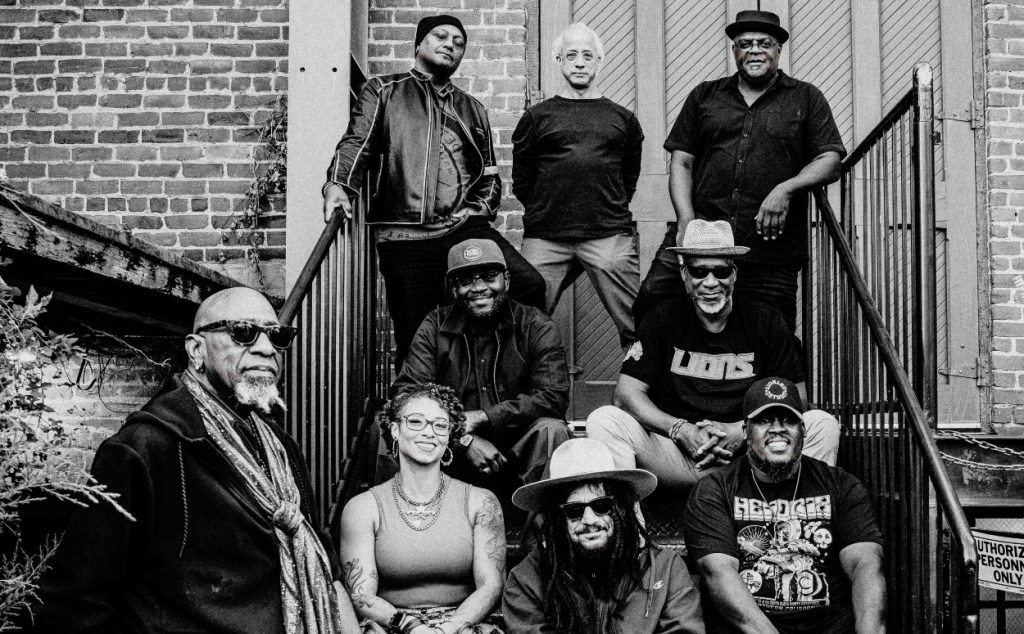
Photo by Tristan Williams
Westword: I’ve been trying to think of other figures who’ve had the kind of music career you’ve had — a major recording artist becomes a hugely successful producer and then a label executive. And the closest comparisons I came up with are Smokey Robinson and Jay-Z.
Don Was: That’s heady company, man.
When you were starting out on your particular journey, could you ever have imagined where you’d end up, and the kind of stops you’d make along the way?
I’ll be honest with you, man. I believe in visualization. I had to imagine the life I wanted in order to get there. But I didn’t see any of this coming. It’s beyond my wildest dreams, the kind of life I’ve been able to lead.
Was there a key to the way it happened?
There’s a lot of good fortune involved. But I will say that it all feels like one big thing. It’s all kind of connected — and the common thread is the desire to make music that gets under people’s skin, makes them feel something, understand something in their own lives, makes them make sense of chaotic and confusing times like these, and at the very least distracts them from their woes for three-and-a-half minutes. Regardless of whatever capacity I’m in — whether I’m playing bass or signing an artist at Blue Note — the methodology for getting there is the same. I don’t see them as separate adventures. They’re just different chapters in the quest to make meaningful music.
I own a vinyl jukebox, and whenever I’m crate-digging for 45s and come across a Was Not Was single, I always pick it up — and while a lot of the music from the era when you were active feels dated, that’s not really the case with yours. It holds up remarkably well. Do you have a sense of why that might be?
I wish I could tell you that was by design, but I don’t know if I can (laughs). We just tried to make the best records we could make. We did try to make competitive records, and I think we sort of failed in a good way. I haven’t been in the Top 40 since 1989 [Was Not Was’s “Walk the Dinosaur” hit number 7]. That’s the last time I was really interested in that. If you don’t have that in your heart, people can tell, and you generally shouldn’t make pop records. We tried and got it wrong and landed on something else. I think it holds up well because we couldn’t be fashionable if we wanted to. I think in general you do better if you tell a good story rather than try to make the story you’re telling be trendy or fashionable. That usually doesn’t work. There are people who I know who have a real knack for coming up with catchy pop singles, and I’ve envied them at times. But I just don’t know how to do it.
One of the 45s I found is “Anything Can Happen,” which has an R&B version on one side and a pop version on the other. They sound like entirely different songs, but somehow, they’re both great. To pull off something like that, you have to have deep knowledge and love for both genres. Were you trying to demonstrate that with the single? Or was something else going on?
I wish I could claim a master plan, but we just kind of stumbled from episode to episode. As a recall, they needed a different version of it for a movie: [1989’s] See No Evil, Hear No Evil, with Richard Pryor and Gene Wilder. They were actually in our video for that, which is how I got to meet them. I think we did the other version for the movie. We weren’t toying with anyone’s expectations. We were just trying to make a song that fit the action on the screen. That’s one thing I learned about music and films; you have to make the music fit.
I produced “You’ve Got a Friend in Me” for Toy Story with Randy Newman and Lyle Lovett. Now remember, Toy Story was the first Pixar film, and no one knew what Pixar was at the time we were making the music. [Former Pixar chief creative officer] John Lassiter was at the session, and we cut a version that was slow but really loaded with feeling. I said, “That’s the one. It’s fantastic.” And John, who was very sweet, came up to the board and said, “I’m sorry, but this is coming after a car chase. It’ll seem twice as slow as it does. It’s not going to fit.”
I was indignant. I said, “Can’t you hear the pathos in Randy’s voice?” But when the animation was ready a year later, I realized he was 100 percent right. We had to go back in and speed it up. That was a good lesson. If you’re doing music for film, you have to trust the director and serve the director’s vision. If you’re composing a song or doing a song for a movie, you’re not the artist anymore. The director is the artist and you have to serve their vision. I think that’s what we were doing with “Anything Can Happen.”
You’ve produced an incredibly wide range of artists. Do you have a common approach for all of them? Or do you try to serve their vision in the same way you need to serve the vision of a movie director?
You tailor your work for every artist and maybe every song. Look, there are all kinds of ways to produce records and any of them can be acceptable and accepted. There are auteur producers who are really the artists. They make the tracks and maybe even do a guide vocal — and you can make really good records that way. Daniel Lanois is an example of that — a great auteur producer. But that’s never been my strength, or maybe my desire. What’s intriguing to me is sitting down with a really great artist who has a vision and helping them realize that vision — getting inside their heads and helping them get the thing they’re looking for. That’s going to be different for every artist you’re working for. If you go in with an open mind and try not to force them into something that they’re not into, you’re going to make a better record.
At Blue Note, does that mean putting commercial considerations lower down on the list of priorities?
That’s a good start, a reasonable business plan. You can try to second guess anything you want, but if you want to make records that make people feel something, that just don’t leave them cold, that’s not just ephemera — if you make those, not every record will be a hit record, but it’s a good business plan. You’ll have a successful record if you retain artistic quality. And the way to do that is to sign artists you trust and believe in and enable them to rise to their potential. I think a big mistake that record companies make is signing an artist that they love, that they’re attracted to, and as soon as they have them under contract, they try to make them conform to the fashion of the moment. That’s always a terrible move, because by the time the record comes out, something else is fashionable, so you’re always a step behind and you’re not really nurturing a unique vision.
Taking over a label like Blue Note presents a lot of challenges. It’s got an incredibly rich history that’s important to honor, but at the same time, being afraid to make any changes can turn into an artistic straitjacket. How do you balance that in your role?
Honest to God’s truth, it’s a work in progress. We’re always trying to figure that out: How far can you stretch the bounds of the Blue Note ethos before you dilute it into nothingness. We try to be careful. We’re pretty conservative, I think. We’ve tried some stuff, and some of it’s worked and some of it didn’t work. But overall, I believe we’ve respected the legacy and the feel of the company. Ethos is the word I keep coming back to. I’m really cognizant of what the founders of the company had in mind, and they left us a manifesto. We’ve pretty much dedicated the company to the pursuit of authentic feeling and granting that to the artist. That’s right there in the manifesto they wrote in 1939. We think about that all the time.
I think one of the other hallmarks of Blue Note Records is that my predecessors always signed artists who had mastered the fundamentals of the music that came before them, but subsequently used that knowledge to create something brand new and pushed the boundaries of music. That was Monk in the ’40s, Horace Silver and Art Blakey in the ’50s — and that goes to Robert Glasper in 2011 and 2012. I think we’re always trying to respect that. I wonder about this: Does our A&R strategy look like a series of random events? Because they’re not. We do think about everything we release and how it fits into the legacy of the company.
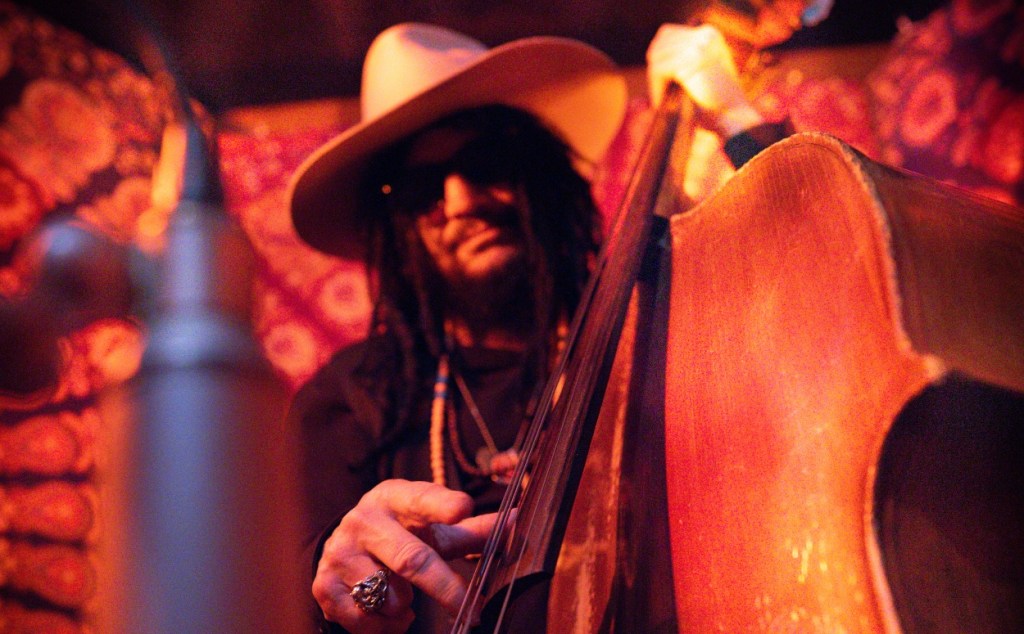
Photo by Miryam Ramos
In regard to your new album, it’s the first you’ve released under your own name. Why did that feel right in this case?
It wasn’t a conscious thing, where I went, “Let’s make an album and start a band.” Terence Blanchard, an old buddy of mine, was curating a series of concerts with a Detroit theme to it, and he asked if I wanted to do one of the nights. I said I’d be honored. This was about two years before the gig; that’s how far in advance symphony orchestras plan. So I got to six months away from it and I thought, “Fuck, I don’t have a band, and I don’t have any songs.” But I remembered something I’ve often preached to other artists.
In the early ’90s, I got to work with all my heroes in a short period of time: Bob Dylan and Willie Nelson and Leonard Cohen and Brian Wilson. I got to watch really great writers close up, and it gave me writer’s block for about five years. Every time I’d sit down at a piano, I’d think, “What’s the fucking point of this? Brian Wilson lives about a mile away. Why don’t I just give him the lyric and let him write it?” Then, one day, I was in the studio with Willie Nelson, feeling like shit and thinking I could never be Willie Nelson, when the inverse of the situation occurred to me — which was, Willie Nelson can’t be you. He didn’t grow up listening to the MC5 and Parliament playing a sock hop at his high school. That’s your superpower: Be the best version of you. That’s really the only prayer you’ve got.
So I thought, “Well, if I’m going to put a band together to play this concert, don’t try to be Wayne Shorter or Robert Glasper. Just be you.” That’s when I called the other musicians I knew from Detroit, a couple of whom I’ve played with for 45 years. I could tell in the first ten minutes that we all spoke the same language, because these were people who grew up listening to the same radio stations, playing in the same bars, playing with the same musicians. And the minute we started playing, it felt like we’d been in a band together for at least ten years. I’ve learned enough to know that if you get a group of people like that in one room, don’t let it slip away. We booked a tour, and we’ve now done four or five tours. We’ve even played Japan. And the album was a byproduct of doing that. We thought, “Let’s get some of this down.” There was no master plan beyond just don’t embarrass ourselves with this with Terence, and everything else just sort of happened.
Did you have a sound in mind when you first put the group together? Or did one develop organically?
It’s very specifically the sound of these nine people playing together. If any one of us can’t be at a show, we don’t call a sub. We just don’t do the show. It’s very much the sound of these people playing. Another thing that I’ve learned, and it’s a work in progress too — there’s a lot of refinement left to do — is that I try not to be self-conscious. I think self-consciousness is the enemy of the people, and certainly the enemy of musicians. Just be yourself when you play, the same way you hopefully are in life. I think it’s easier to bluff in life. You learn certain social graces you can fall back on. If you and me and Charles Manson could have gone to lunch together, it might have been ten minutes before we thought, “Something’s wrong with this cat.” But you can’t do that in music. You play who you are, and when you play with other people doing the same thing, you get to know them really well. If you play with them for ten minutes, you know a lot about their character and their personalities. You can’t fake it in music.
The idea is to be unself-consciously ourselves. There’s nothing fashionable that sounds anything like our band. I’m aware of that and I’m okay with that. We’re just being who we are — these nine people from Detroit who play with a certain feel, because there’s a sound in Detroit. And because of that, it really doesn’t matter what kind of songs we play.
On this tour, in the middle of our set, we play Blues for Allah in its entirety. I thought a lot of the songs were unplayable, but that was sort of the allure of it. There was this random event: Some hardcore Deadheads were doing a festival of Dead music in Buford, Georgia, and they wanted us to play — but they wanted us to play Blues for Allah. I thought that was an interesting prospect. I didn’t really know how to play “King Solomon’s Marbles,” but when I got into it, I realized there was a real structure to that song. I’d always assumed it was this crazy, random, freeform jazz improvisation, but it’s not — and it was fun to learn the form, then figure it out. So now we know how the song goes — but how does this group of nine people play it? We don’t play it doing Grateful Dead karaoke. We’ve got our own version of it. Even the songs you know from the album, like “Franklin’s Tower,” still sound like us playing them. There’s no mistaking it for the Dead.
I’m sure you got to know Bob Weir really well in the Wolf Bros tours.
I got tuned into a deeper kind of relationship with the audience touring with Bobby, for sure. That’s when you start playing and you let go and stop thinking and let the music carry you where it’s going to take you. The audience picks up on that and can feel like you’re all going on an adventure together. And when it lands on something that starts to take off, you can feel the audiences respond. You get this cyclical exchange going that can blow the roof off a theater. I don’t know anything that’s more exhilarating than that feeling. I’ve kind of become addicted to it. I’m 73, and if you say to me, “You’ve got limited time: How do you want to spend it?,” that’s how I want to spend it. I like being on a bus. I like being in a band. I like being onstage, locking in with an audience and having a brand new adventure every single night.
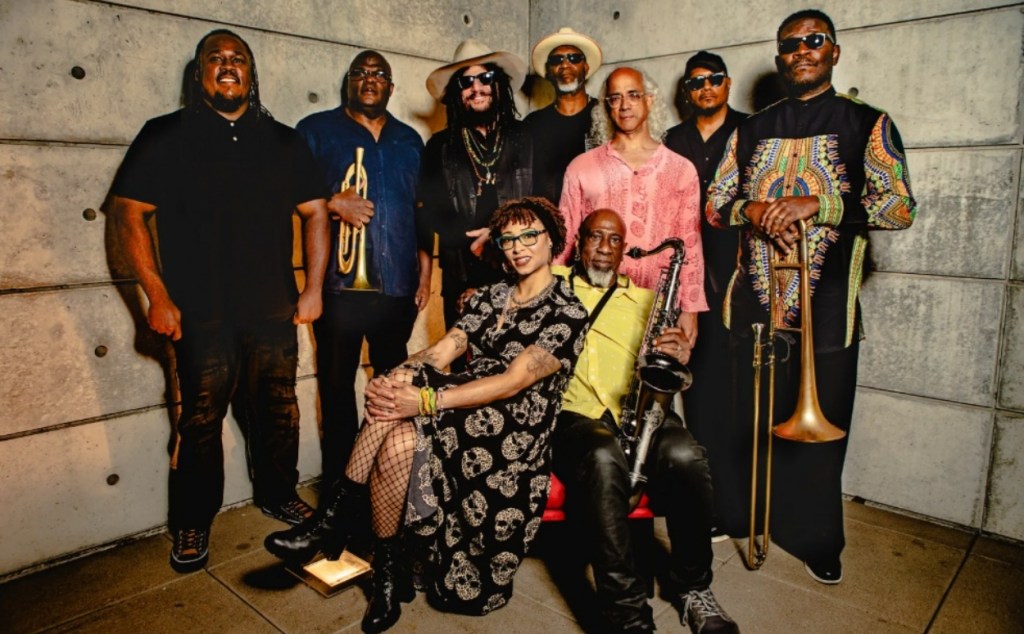
Photo by Kory Thiebault
Can it be hard to get into that headspace? Or did it used to be?
I’m getting better at it. It’s something I’ve been working on for years — to go into something with so little self-consciousness that you just let it happen. When I can feel the music coming through me, I don’t think of the notes. They come from somewhere else and you catch them. When I feel my hands moving on their own, that’s when I know we’re going someplace good. You try to get there every night, and if you want to know the truth, I do get there every night, but it moves around during the ninety minutes of a show. If you meditate, you know that you get off the mantra and pull yourself back and learn to catch it. But I’ve yet to have twenty minutes where I’ve been there the whole time. I started meditating when I got the gig at Blue Note almost fifteen years ago, and I don’t know that I’ve been focused for the whole twenty minutes.
When I took the gig with Weir, I was thrilled — but my goal was to learn something about being fearless and open and unselfconscious. I thought, if I can play with Bobby, who’s spent a lifetime going out in front of a stadium full of people and improvising a show, if I can learn that kind of fearlessness, I think I can apply it to other parts of my life, too. You’re always working on it and trying to get better. It’s a practice, but I learned a lot about it in all the time I spent with Bobby.
Don Was & the Pan-Detroit Ensemble. 7:30 p.m. Thursday, January 29, Gates Concert Hall, Newman Center for the Performing Arts, 2344 East Iliff Avenue, 303-871-7720. Currently sold out.