
Courtesy Ray Rodriguez

Audio By Carbonatix
While most people are currently staring down 2026, we’re looking back — like, way back — at an oft-overlooked, somewhat forgotten gem from the city’s 2000s underground.
This blast from the past comes courtesy of former extreme-metal group To Be Eaten, which is readying the rerelease of its formative 2005 debut, Dead Mean Seize, on Friday, January 9. The once Denver-based label Ash From Sweat Records is pressing the album, originally only available on CD, to vinyl for the first time as part of the twenty-year anniversary. This is one for the obscurest collector: Only 35 copies will be available during the limited run and there are no pre-orders; the first few orders will even include some exclusive To Be Eaten memorabilia.
We caught up with former To Be Eaten guitarist and frontman Ben Pitts, along with Dan Phelps of Ash From Sweat, to talk about how the band and that first album helped pave the way for alternative music in Denver and left a no-holds-barred legacy.
It might be hard to imagine now, but in 2003, when To Be Eaten first got together, Denver didn’t house the bevy of bands or well-defined scenes many associate with the city today. And no one was writing chaotic, math-infected tech-death like Pitts and company were spewing.
“The Denver metal scene was small. There weren’t a ton of bands,” Pitts recalls. “Cephalic Carnage was the main big Denver band that put Denver metal on the map. Outside of that, there were plenty of hardcore and punk bands. But as far as bands trying to do stuff like we were doing with extreme drumming, double-kick, blast beats, crazy riffs, I don’t remember a whole lot of bands at that time.”
“There weren’t,” Phelps adds. “At the time, it felt very natural to intersperse the heavy metal stuff with the punk and hardcore and emo and indie thing. The lines were very blurred. It was probably out of necessity because there just wasn’t a whole lot going on.”
To Be Eaten quickly made a name for itself in the intimate DIY scene across the vital beating-heart venues, all of which are mere memories now. Such spaces as Monkey Mania, 15th Street Tavern, Garageland and Rhinoceropolis, as well as the Construct, which was a short-lived project spearheaded by Pitts. “They’re mostly condos now,” Phelps says of those former haunts.
But back then, they were proving grounds where budding musicians could experiment and take risks amongst their peers, while still finding their own sound. With Dead Man Seize, To Be Eaten merged European melodeath with American mathcore to create a distinct form of spastic death noise, separate from either subgenre.
“That’s how I started developing this European-style guitar playing that I still have. It’s become my signature songwriting style. It really materialized on this release,” says Pitts, who is currently doing his thing with Denver bands NightWraith and In the Company of Serpents.
But back then, for a twenty-year-old, there were no rules.
“We were just coming up with some really cool ideas,” he adds. “It didn’t sound like traditional American death metal. It had this European flavor to it. We were young and just wanted to put a record out. We weren’t super concerned with putting out something that’s perfect. We were very experimental. It kind of goes all over the place at times.”
That’s part of what made To Be Eaten so unique. On Dead Man Seize, there’s a track called “Pabst Blue Ribbon Is the Only Red White and Blue That I’ll Salute” that’s less than two minutes in length, but is stuffed with more riffs than words in the title. On the opposite end of the sonic spectrum is “Lost Without the Hourglass,” the eight-plus-minute closer with a surprisingly poignant prog outro.
“At that period in a musician’s life, you should be free to explore all boundaries and see how far you can push yourself. Those are formative years,” Pitts says. “You’re still trying to find your identity and figure out the limits of what you’re even capable of. That’s what this album is, is us figuring out what we want to do and how much we can do.”
Courtesy Ray Rodriguez
Recorded with Trevor Morris, currently of indie-rockers Hooper, at the Furnace Room, Dead Man Seize also featured bassist Dan Rahe and drummer Brian Miller, though Eric Fuller would step in for Rahe shortly after the record was released.
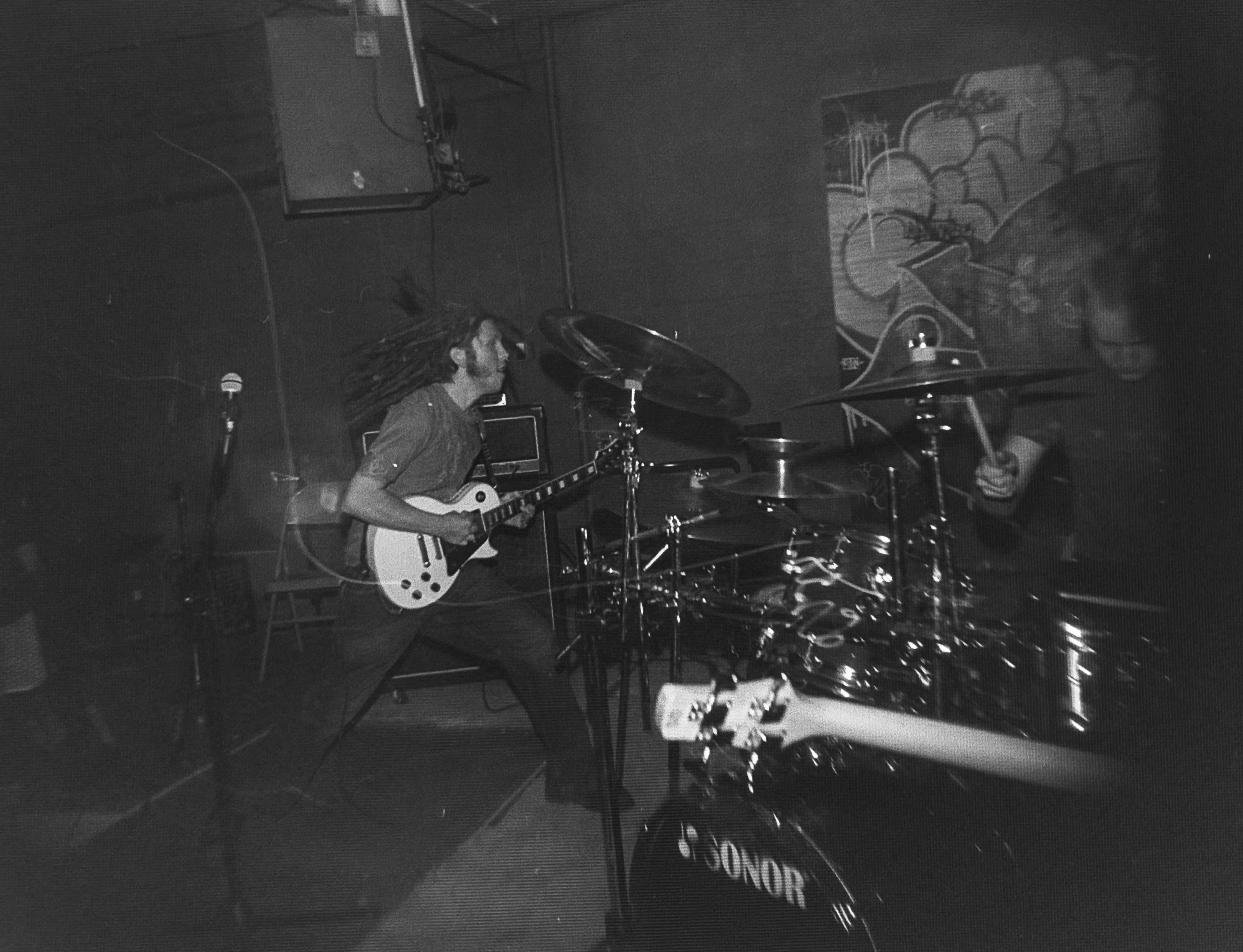
Pitts and Phelps remember how wild that release show at Monkey Mania was. To Be Eaten opened for Angels Never Answer, a popular local hardcore group that was celebrating a reunion, and Deadlock Frequency, one of Dave Paco’s punk projects. “We played a lot of sweet shows, but the album release show was sick. It was one of my favorite shows,” Pitts recalls. “We had a fire-breather who was blowing fire above the crowd. It was insane. It was definitely crazy, maybe 300 people crammed into this warehouse. We were trying to do pyrotechnics. That show was incredible because Angels Never Answer was a huge influence for me, so getting to play with them was a big deal.”
“It was so many people in a very small space,” adds Phelps, who moved to Asheville, North Carolina, a few years ago. “People were climbing the walls to be able to see. The whole floor was moving. It was a lot of commotion. Those floors were rickety,anyway. It made it feel like the venue itself was alive because of the movement, the breath the venue itself could take. That was a fun one.”
A mini-Midwest tour of Dead Man Seize followed, an experience Pitts points to as pivotal in his burgeoning musical career.
“It was the first tour I’d ever been on. We were booking random, random places, wherever we could get booked, really. We were playing places like Springfield, Illinois, those quintessential Midwestern small towns,” he says. “When we made Dead Man Seize, that was it for me. I quit going to school at Metro. I was taking shitty pizza jobs. I was like, ‘I just want to play music, I want to write, record music, I want to tour it. I want to promote it.’”
To Be Eaten remained active until 2013, hosting a handful of “final” and comeback shows, and releasing another album in 2008, the more polished In the Clearing, recorded with Steve Goldberg of Cephalic Carnage, and again released on Ash From Sweat. Pitts and Phelps were also bandmates in Giant Eyeball and False Cathedrals at one point.
Now, Pitts is busy with NightWraith and In the Company of Serpents, while Phelps is focusing on settling into his new surroundings and putting out special editions from the label’s back catalog when possible. But the two look back on Dead Man Seize fondly.
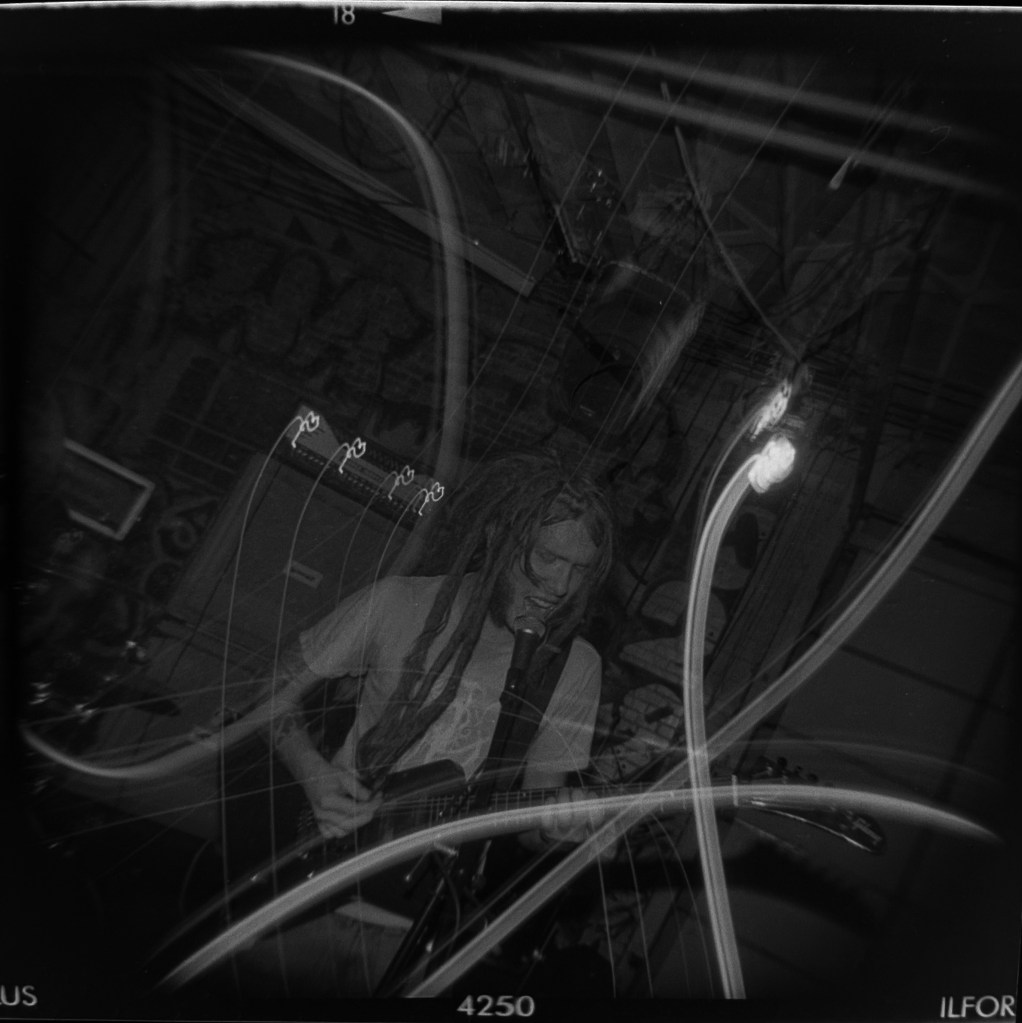
“I just feel fortunate that I’m able to do that twenty years later. It’s been cool thinking about all those old memories, thinking about old Denver and how cheap the rent used to be, how easy it was to survive as an artist,” Pitts shares, adding that seeing old pictures of his younger, dread-headed self brings back memories from those simpler times.
“We thought it was our responsibility to try to grow and nurture the Denver heavy metal scene. We did this by just trying to show bands a good time when they came through,” he continues, even if that meant providing a spot to stay and cooking bands meals. “We wanted to show them Denver was a nurturing place for heavy music. Obviously, we saw it grow over the years, and it is what it is now.”
“Momentum” is the word that comes to mind when Phelps thinks of those salad days. “That was really the start of getting our feet under us and hitting what we wanted to do at full speed,” he explains.
The upcoming rerelease feels more full-circle than anything for To Be Eaten, but Pitts isn’t totally shutting the door on one more “last show,” depending on how the album’s received.
“I’ve totally fantasized about getting the guys back together and writing a few songs and seeing what happens,” he concludes. “It’s not out of the realm of possibility. I would be open to it, if there was a demand. If anyone gives a shit, I would totally give it a shot.”
