Evan Semón

Audio By Carbonatix
During summers in Denver, electronic billboards on the side of the highway often let people know that the state health department has declared an ozone action alert day — just like it has for today, July 6.
But what that means isn’t always clear…even when the air seems to be.
Ground-level ozone is different from the ozone layer in the atmosphere that protects Earth. In this case, ozone is a pollutant that forms when other pollutants, such as volatile organic compounds and nitrogen oxide, mix with heat and sun rays. As a result, ozone alerts are common in late spring and summer.
The Environmental Protection Agency sets National Ambient Air Quality Standards for a range of pollutants. For ozone, that threshold is 70 parts per billion, so when ground-level ozone surpasses that level (or is projected to surpass it the next day), the Colorado Air Pollution Control Division issues an ozone action alert.
Denver’s ozone problems are aggravated because the city is situated in a geographical bowl between the Rockies and the plains. Ozone precursor pollutants get trapped in that bowl, waiting to get cooked into ozone by the sun.
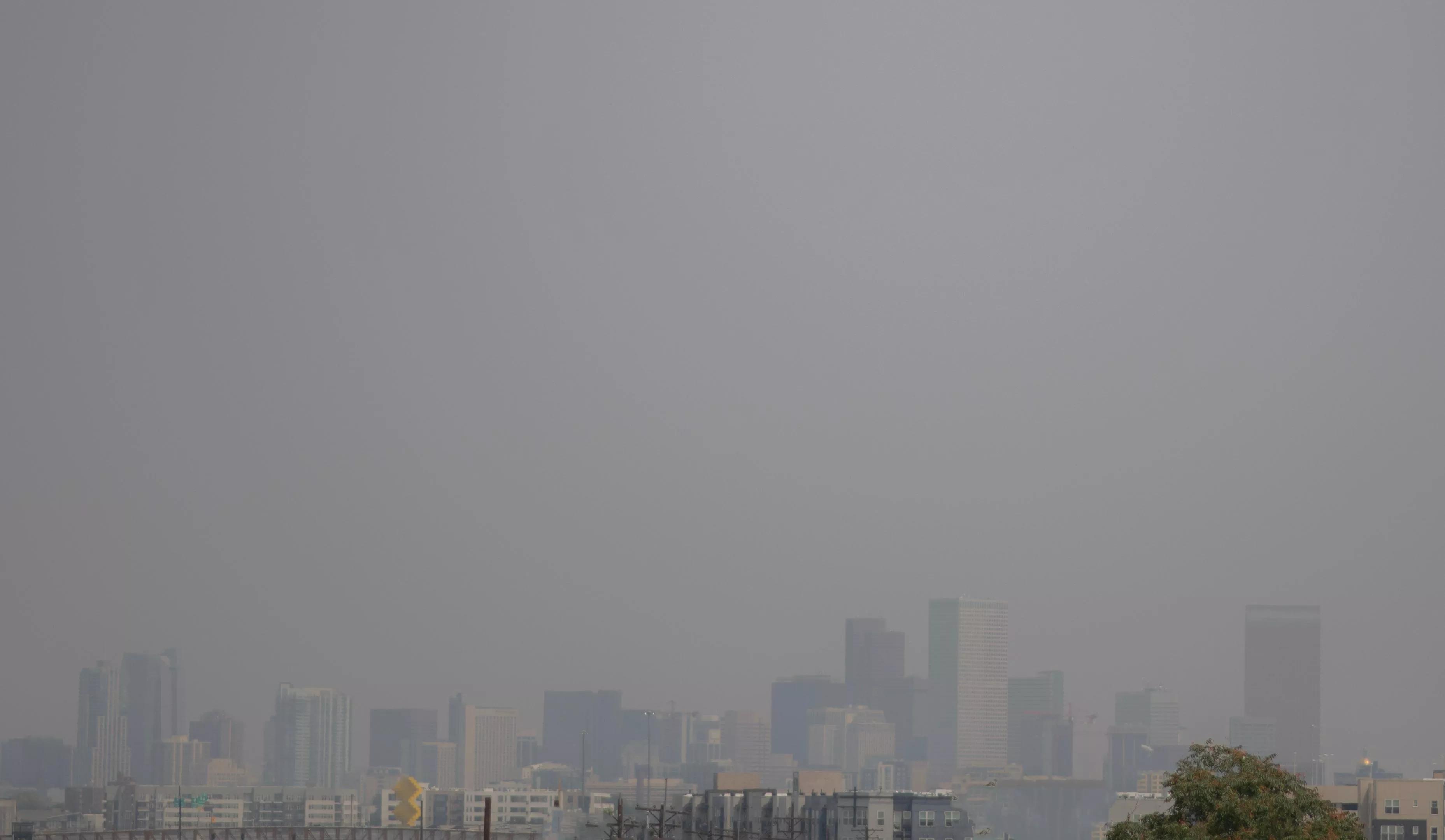
Wildlife smoke particles can contribute to the formation of ground-level ozone — and Colorado has several major wildfires burning right now this summer —but fires and smoke aren’t necessarily the main driver of such alerts. Smoggy days obstructing views of the Rocky Mountains often correlate with ozone alerts, too, but ozone is a colorless gas.
The iPhone weather app shows the air quality in areas, but ozone is only part of that measurement. On some days in Denver, the Colorado Department of Public Health and Environment issues an ozone alert, but phones still show that the air quality is deemed above average. Air Quality Index measures the amount of ozone, particulate pollution, carbon monoxide, sulfur dioxide and nitrogen dioxide in the air, so ozone itself isn’t always enough for the AQI to reach orange or red status. But that doesn’t mean the air is pure and clean.
Short-term exposure to excess ozone can cause coughing, chest pain, difficulty breathing, asthma attacks and eye, nose and throat irritation. Long-term exposure to ozone has been linked to lung and cardiovascular disease, and even premature death, according to the CDPHE.
“Active children and adults, and people with lung disease, such as asthma, should reduce prolonged or heavy outdoor exertion,” the CDPHE adds.
Children, older adults and people who are pregnant or suffering from lung diseases are most at risk from ozone, as well as people spending time outdoors and those lacking in vitamins C and E.
Denver high in ozone
Denver ranked sixth on the American Lung Association’s list of most polluted cities for ozone in 2025. It was also sixth in 2024.
The CDPHE begins issuing daily ozone notices every year from May 31 to August 31. Last year, the CDPHE recorded 33 ozone action alert days in 2025, down from 52 in 2024. In 2023, there were 38. Over the past 15 years, the highest number of ozone action alerts was recorded in 2021, when the state issued 65.
Above-average temperatures and below-average precipitation tend to lead to more ozone alerts because hot, dry conditions are best for ozone. If there are wildfires near the Front Range, smoke can contribute to increased ozone pollution concentrations, as well. The APCD launched a Colorado Smoke Blog in 2024 for those who want to track smoky conditions in the state.
“Wildfires in Colorado and neighboring states will continue to produce significant amounts of smoke, degrading air quality conditions in large areas of central, southern and southwestern Colorado on Sunday. Weather conditions will remain hot and dry over most of the state, with scattered storms possible for a few areas,” part of an entry from July 5 reads. “Many mountain valleys saw increased impacts on Sunday morning due to smoke settling overnight. Areas further from the fires’ locations have seen more widely varying concentrations as daytime mixing of the atmosphere and transport winds interact.”
The division also shares current ozone pollution levels online.
What to do on ozone action alert days
The APCD issues daily air quality alerts via email and shares regular updates about ozone on social media from May 31 to August 31. If forecasts show today or tomorrow could exceed the 70 parts per billion standard, notifications are sent out to the public.
According to state health officials, less is more on ozone action alert days.
“Although we understand that people cannot always make changes to their daily lives and schedules, these alerts can help Coloradans make informed decisions when planning outdoor activities or considering adjustments to help reduce ozone pollution,” says Zachary Aedo, a spokesperson with the APCD.
The APCD suggests limiting time spent outdoors when possible on ozone action days. If it’s not possible to limit those activities, try to schedule them for mornings or late evenings, when ozone pollution is generally lower. People can also swap in less strenuous activities like walking instead of running in order to cut down on the health risks, the division suggests.
On ozone action days, no burning is allowed within areas that don’t meet air quality standards, even if projects have obtained open burn or smoke management permits.
Nitrogen oxide is one of the top ozone precursors and is emitted from gas-powered vehicles, so cutting back on automobile travel by carpooling, walking or biking, using public transportation or combining errands can also help on ozone alert days. According to the APCD, keeping gas-powered vehicles properly maintained, using electric vehicles or lawn equipment instead of gas versions, and recycling can help curb ozone, too.
This article was originally published in 2025 and has been updated.