
Sage Kelley

Audio By Carbonatix
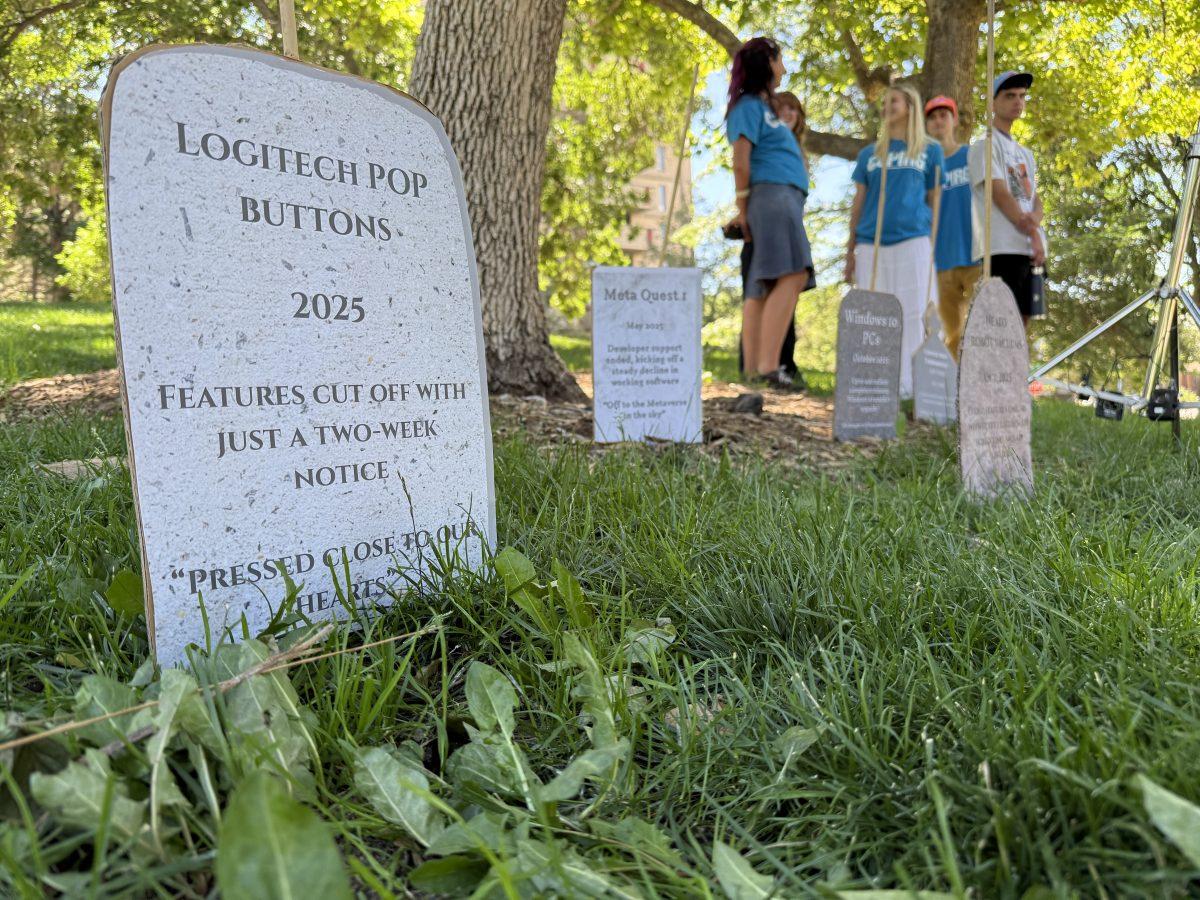
The Colorado Public Interest Research Group Foundation (CoPIRG) held a memorial in Denver for nearly 2 billion pounds of phones, laptops and other electronics on July 14. According to the activists, forsaken electronics like your old iPhone and Amazon Kindles aren’t dying from broken hardware, but from software support that was cut off too soon.
Members of CoPIRG stood around a display of fake gravestones at Governors Park on Tuesday morning, giving tongue-in-cheek eulogies for over 100 tech products that, although still physically operable, have become useless due to manufacturers cutting off software support. The organization estimates that support stoppages have led to 1.7 billion pounds of electronic waste since 2014.
“Amazon Kindles. Their screens lit up our worlds and will always be remembered,” Liana Ruedel said over a headstone, noting that Amazon cut off book and library access to 13 e-readers made before 2012. “The company said they had to do this because the technology has come a long way. Meanwhile, I thought reading text on a screen was pretty much the same as it had been.”
Along with the ceremonious display, the nonprofit released its new Electronic Waste Graveyard, keeping tabs on the 100-plus-and-growing usable smart devices that have now become bricked due to expired or lost support. These include a multitude of Kindles, smartphones, smartwatches and the biggest offender: computers.
“These aren’t devices consumers chose to stop using. They were taken from them,” Danny Katz, CoPIRG Foundation executive director, told Westword. “Some of these products we’re mourning today lasted three years. People don’t buy stuff hoping they’re going to have to buy a new one in a couple of years.”
According to Katz, when Microsoft ended its support of the Windows 10 operating system at the tail end of 2025, nearly 400 million computers could not be upgraded to Windows 11, creating a substantial contribution to that 1.7 billion pounds of waste.
“When we have to replace devices that we should be able to keep using, update or fix, it fuels our massive and growing electronic waste problem,” Katz added.
The organization wants legislation to require manufacturers be upfront about how long a product will be supported by software, similar to a recently proposed bill in California that would require a manufacturer to present a “minimum guaranteed support timeframe” for products that could not be reduced.
“Manufacturers are under no obligation to provide support and updates for the lifespan of a product,” Katz said. “Colorado has been an innovative state. We now want to make sure Colorado is on the cutting edge of ensuring manufacturers are providing that ongoing software support for longer, as well.”
Katz pointed to the recent Consumer Right to Repair Digital Electronic Equipment Act passed by Colorado in 2024 (backed by the Right to Repair consumer movement) as a beacon for the state’s progress in consumer rights. The act requires manufacturers to provide consumers and independent repair shops with the parts, software and documentation required to fix any electronics sold in Colorado after July 1, 2021. The required support timeline would be the next step in that consumer movement.
“The goal of our Right to Repair campaign is to challenge the trend toward throwaway tech. That means standing up to manufacturers when their actions leave our devices unworking or unfixable,” Katz said. “Consumers and the planet deserve better.”