Denver International Airport

Audio By Carbonatix
Denver City Council is preparing to pass an ordinance meant to boot air carriers that operate flights for immigration enforcement from Denver International Airport.
The measure, introduced by Councilwoman Shontel Lewis in May, proposes that businesses and their employees in the City and County of Denver shall “comply with all applicable federal, state and local laws, statutes, ordinances and other governmental orders or rules or regulations.” It’s less than a page long and may seem redundant on the surface, because why does city council have to pass a law just to tell businesses to follow the law?
It’s actually a method to push out airlines and other businesses that provide services for federal immigration deportations. So far, the measure has quietly moved through the council, receiving unanimous approval in its initial vote on June 1, with a final vote scheduled for Monday, June 8.
“What we had found was that there were some carriers that were participating in deportation flights, and there was essentially nothing we could do about it. This is an opportunity to solidify, not just our commitment, but to inform folks that we have the opportunity to hold you accountable,” the District 8 councilwoman says.
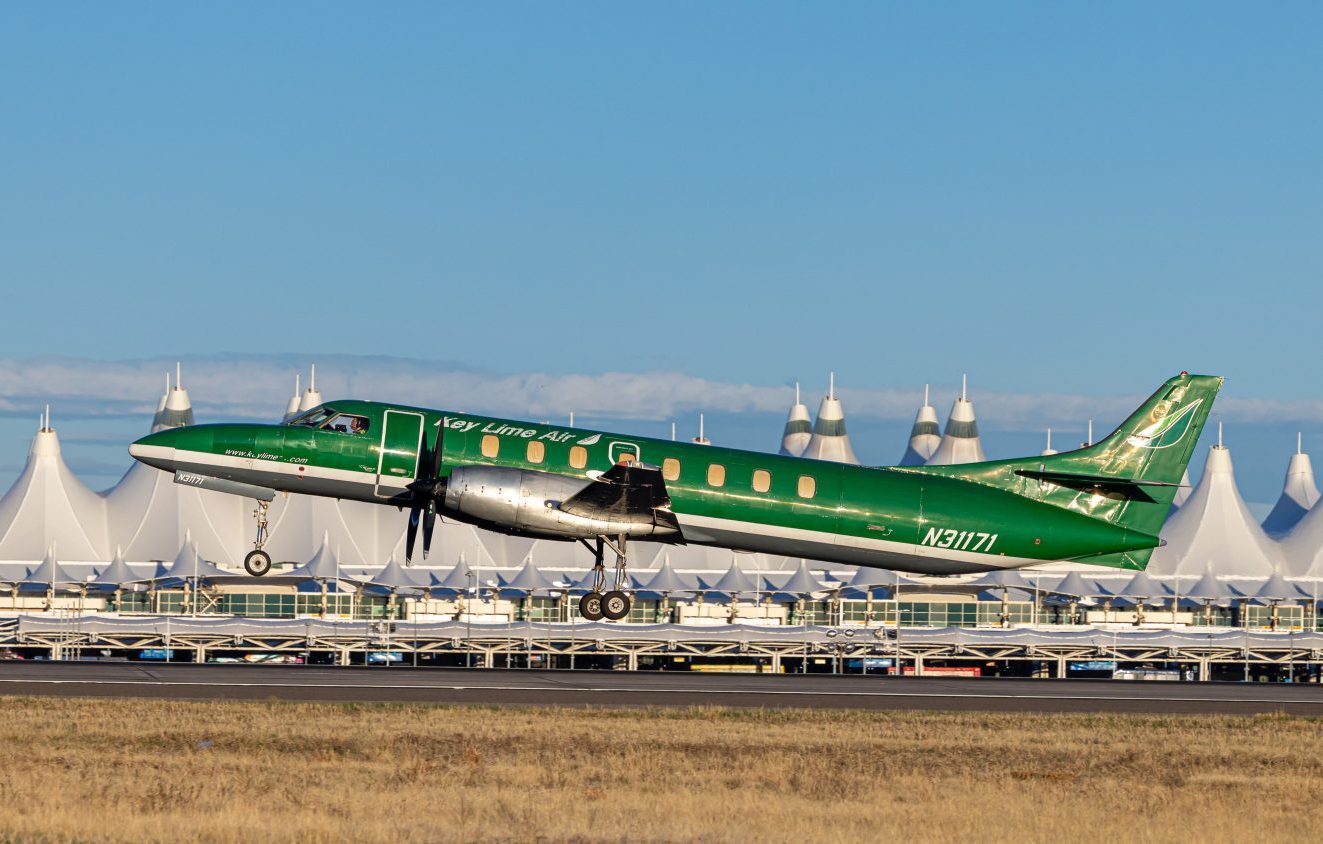
Last October, Colorado Newsline reported that Colorado-based airline Key Lime Air had flown detainees across the country for U.S. Immigration and Customs Enforcement. According to the report, Key Lime largely operates out of Centennial Airport in Arapahoe County and flies charter and commercial planes through a subsidiary, Denver Air Connection, out of DIA. Key Lime has also been contracted by the University of Colorado to fly its basketball teams since 2011.
The Newsline report found at least two flights operated by Key Lime transported shackled immigrants who were in line for deportation. Neither of the flights was found to have touched down or departed from Denver, and the aircraft did not display company logos or designators, but they were spotted via flight trackers and registration numbers. In the past few months, more information has surfaced connecting Key Lime to dozens of additional flights that transported undocumented immigrants.
Protests have been held around Colorado since last fall and as recently as this week, with demonstrators demanding that CU and other institutions end their Key Lime contracts.
In December, Denver councilmembers voted down a resolution that would have allowed Key Lime to lease ground space at DIA, but the airline can still fly out of the airport and use a cargo apron common area there.
“There wasn’t much, at least at the time, that the airport believed they could do to hold this carrier accountable,” Lewis says, adding that her ordinance is “not just about Key Lime, specifically, but also anyone who wants to do business with us.”
According to Lewis, the requirement to comply with state and local statutes would force Key Lime and all other businesses operating in Denver to abide by Colorado laws.
Lewis says she would prefer to spend more time worrying about local issues, like infrastructure or transportation, telling her fellow council members on June 1 that “in other times, I’m not sure that this would have been required, but these are anything but regular times.”
“It’s not what shapes all of our work,” she says of responding to federal government mandates since President Donald Trump returned to office in 2025. “But, yes, there has been work responding to some provocative things … while also assessing the city’s needs.”
The City of Denver has a law prohibiting local government employees, including law enforcement, from sharing information with federal immigration authorities or detaining people on behalf of ICE and U.S. Border Patrol. In 2019, Colorado legislators passed a law banning local and state law enforcement from detaining people on behalf of ICE.
Laws like these could help the city kick Key Lime out of Denver under Lewis’ ordinance — as soon as the day after it passes, she says. But such moves typically draw heat or blowback from Trump and Republicans officials.
Denver and Colorado have both been branded as “sanctuary” governments by Trump and his cabinet because of their protective laws against federal immigration enforcement. The distinction has resulted in a subpoena for Mayor Mike Johnston to appear in front of Congress in March 2025, as well as withheld federal funding and a regular stream of threats from the White House. Last week, Trump’s Homeland Security Secretary, Markwayne Mullin, said the federal government could halt international flight processing at “sanctuary cities” unless local governments further cooperate with immigration enforcement.
The new business compliance ordinance was drafted and reviewed by the Denver City Attorney’s Office, which did not respond to a request for comment until a day after this article was published, three days after our initial request was submitted. In a statement sent to Westword on June 7, the city attorney’s office says the ordinance would not be able to push out airlines from DIA, despite some talks to the contrary.
“We share city council’s desire to protect residents and hold Key Lime or any corporation accountable, as well as to ensure that any business operating in Denver respects all federal, state and local laws, ” the statement says. “The purpose and effect of the ordinance is to provide Denver with an additional tool to hold businesses responsible if they break the law. It does not have the power to stop Key Lime or any other airline from lawfully operating at DEN. Only the FAA has this power.”
This article was updated after receiving a statement from the Denver City Attorney’s Office.