
Kristen Fiore

Audio By Carbonatix
Lawyers won’t stop barking about the Denver Zoo Conservation Alliance’s sea lion exhibit, which is now the subject of another lawsuit.
Less than a year after the $19 million, “state-of-the-art” renovation was completed, the Denver Zoo sued the exhibit’s designer and general contractor, claiming the structure had rusty cages and hardware, multiple leaks, cracked areas and other defects. The lawsuit was filed in March in Denver District Court by the Denver Zoological Foundation, the nonprofit organization that operates the Denver Zoo.
The general contractor and lead construction firm, Vertix Builders, has disputed the zoo’s claims. But now both parties in that suit are defendants in a subcontractor’s lawsuit that claims it hasn’t been fully paid for work on the sea lion exhibit.
Texas-based Longhorn Organics says it provided labor, materials, supplies and goods to Vertix during the construction. According to Longhorn Organics’ website, the company builds “unique filtration systems” for animal habitats in aquariums and zoos.
Longhorn Organics claims that it’s still owed a little over $250,000 by Vertix for its work, but Vertix hasn’t paid up “despite repeated demands.” Meanwhile, Vertix says it’s owed a contract balance of almost $700,000 by the zoo, which is demanding that additional work be completed on the sea lion exhibit.
In the meantime, the sea lion exhibit remains open and the zoo has assured the public that the exhibit’s California sea lions are safe under current conditions. However, administrators want several issues fixed, and have demanded that Vertix complete an agreed-upon “punch list” to ensure the structure’s sound future before paying, according to the Denver Zoo’s public relations director, Jake Kubié.
After news broke of the lawsuit, Vertix President Ted Laszlo said that his firm had met with zoo officials in February and “proposed to fix all items on the zoo’s list in exchange for the zoo’s agreement to pay the contract balance.” According to Laszlo, Vertix representatives left that meeting thinking they had reached an agreement, but the zoo stopped communicating.
“Vertix stands firmly behind the quality of its work and remains committed to client service. However, given the lack of payment, Vertix has been left with no choice but to pursue its legal remedies to obtain payment,” Laszlo said at the time.
Longhorn Organics appears to be caught in the middle of the dispute and has sued not just the contractor and the zoo, but the firm that insured the contract, Travelers Casualty and Surety Company. According to Longhorn Organics, all three defendants are liable for the unpaid invoice and the company wants that tab paid in full, plus interest.
Longhorn Organics and Vertix have not responded to requests for comment on this most recent lawsuit. In a statement to Westword, the zoo stands firm in its dispute with Vertix and declines to comment on the Longhorn Organics claim.
“As the Zoo has said in its Complaint against Vertix, pursuant to the parties’ contract, final payment to Vertix is not owed until completion and acceptance of the punch list. In addition, the Zoo is entitled to withhold or offset any amount due from Denver Zoological Foundation to Vertix for corrective work to be performed. Longhorn acknowledges that DZF has withheld funds as required,” Kubié says. “We cannot comment on Longhorn’s allegations against Vertix or its surety.”
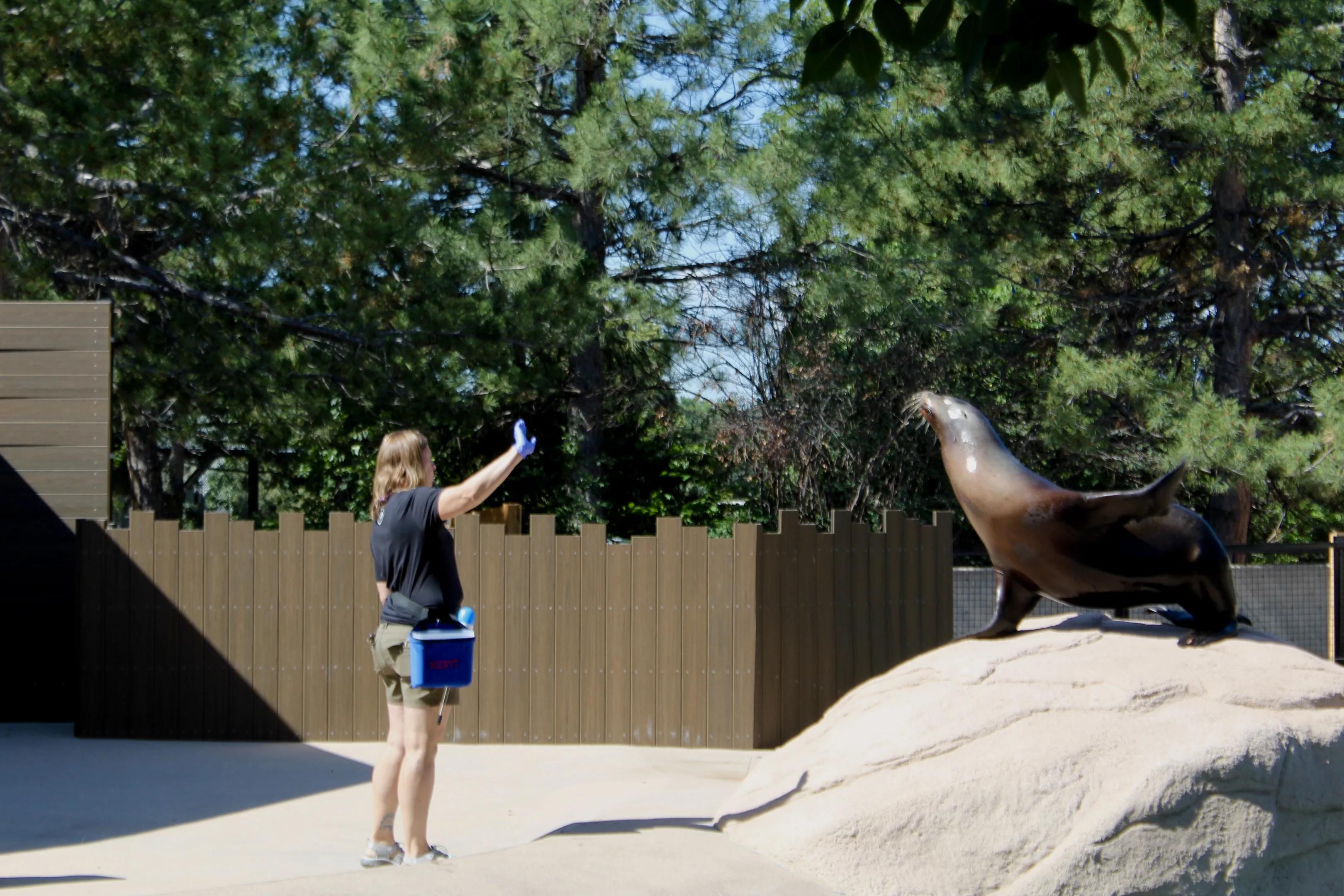
The exhibit’s renovation took almost two years to complete, with the exhibit’s five sea lions moved to other zoos across the country during construction. The zoo enthusiastically hyped the exhibit’s reopening last year, listing an advanced filtration system as one of several big additions, along with a 16-foot viewing window and saltwater pools.
The zoo’s lawsuit is much less glowing, claiming that Vertix’s work has already resulted in “active water seeping through cracks” of a basement wall, as well as cracking in the main and lower beaches where demonstrations take place, pipe failures and leakage, loose fiberglass polymer trim and exposed concrete, among other issues.