
Westword

Audio By Carbonatix
Many Coloradans are suddenly dealing with the Division of Motor Vehicles after news that the Denver Police Department and other metro law enforcement will temporarily reinstate traffic stops for expired plates starting the week of Aug. 23.
It takes money and time to renew vehicle registrations, and the fear of going to a notoriously slow DMV office and not having the right paperwork could contribute to procrastinating, too. Not to worry: We’ve collected all the information necessary to get your car registered in the state of Colorado.
Those who purchase cars from in-state dealerships will have the easiest time, as vehicles can be titled and registered on-site in most cases. If not, Colorado dealerships will mail buyers a “Title Complete notice” containing everything necessary to register the car online through the myDMV service, even if it’s the first time the vehicle has been registered.
“Transactions completed online generally take 21 days to have the plates/tags/registration received via the USPS,” the DMV says on its registration website. “Please visit your county if you cannot wait 21 days, or if your temporary tag is about to expire and you have not yet received your Title Complete notice.”
Anyone who purchased a vehicle from a third party in a private sale must visit their county motor vehicle office in person to register.
What you need to register your car
To register a car for the first time, customers need to provide their title, an emissions test certificate and proof of insurance. After buying a car, people have 60 days to register their vehicle. Those who move to Colorado have 90 days to register their vehicles before incurring prorated back taxes and fees.
The full cost of registration varies by the cost of the vehicle, type of vehicle, vehicle age and the specific town and county someone lives in. Generally, it costs around $125, but it can range from $50 to $200 for a regular passenger vehicle.
Here’s a breakdown of some of those costs:
Registration fees are quite low, at just $6 for passenger vehicles up to 2,000 pounds and an extra 20 cents per 100 pounds, up to 4,500. Cars over 4,500 pounds cost $12.50 to register, with an extra 20 cents per 100 pounds over 4,500. Motorcycles cost just $3 in literal registration fees. Heavier vehicles cost more, up to $39 for any over 16,000 pounds.
There are surcharges for bridge, road and highway infrastructure that also generally scale based on weight, and can range from $10 to the mid-$30 mark.
Coloradans also chip in anywhere from 50 cents to $1.50 for emissions control programs, $2 for emergency medical services, 94 cents for county road and bridge fees and $1 for the Peace Officers Standards and Training Board.
The annual Keep Colorado Wild Pass Fee of $29 will allow entry into any Colorado State Park. Since 2023, it’s been included on each vehicle registration, but people can easily opt out. Revenue from the pass goes to Colorado Parks and Wildlife to help maintain parks; search-and-rescue efforts; and avalanche forecasting in the state. In its first year, the pass netted nearly $41 million for those programs.
Vehicles must be renewed annually. When renewing, the same fees apply.
How to renew vehicle registration in Colorado
Registration renewal can be completed online with myDMV or at a Colorado MV Express kiosk. Online renewals will mail the tags and registration, whereas the kiosks will print them out immediately. People can also visit their county motor vehicle office for renewals.
With each renewal, Coloradans chip in an ownership tax based on the taxable value of their vehicle and the number of years the car has been around. In the first year, the state will collect 2.1 percent of the taxable value of a car; after nine years, a tax of around $3 per year will be collected. This is responsible for the majority of costs associated with Colorado vehicle registration.
County DMV offices accept cash, check and credit cards, though many tack on a credit card processing fee. Every county accepts Mastercard, Visa and Discover. But sorry, AmEx loyalists: Only Weld and Yuma counties accept American Express.
Late fees begin at $25 per month after one grace month for renewals.
“There are exemptions to late fees that include: Acts of God, weather-related delays, office closures and furloughs, medical hardships, information technology failures, military deployment, farm vehicles, and stolen vehicle,” according to the DMV website.
Anyone who hasn’t paid tolls, fees and other civil penalties, such as fines for crossing double white express lane lines or driving in express lanes in oversized vehicles, can’t renew their registration without paying up. E-470 and the Colorado Department of Transportation have a program that can place holds on renewals if at least nine previous attempts to collect those fees have been made.
Most DMV services can be done online, including registrations and renewals, ordering replacement tabs or license plates and changing the address of a vehicle. Electric vehicle owners who want to receive EV plates for $8.06 must go in person to their county motor vehicle office. If not, they still need to pay 25 cents for an EV decal, which can be done online.
In-person visits are only needed for driver’s license services and tests or registering a car after a third-party, private vehicle purchase.
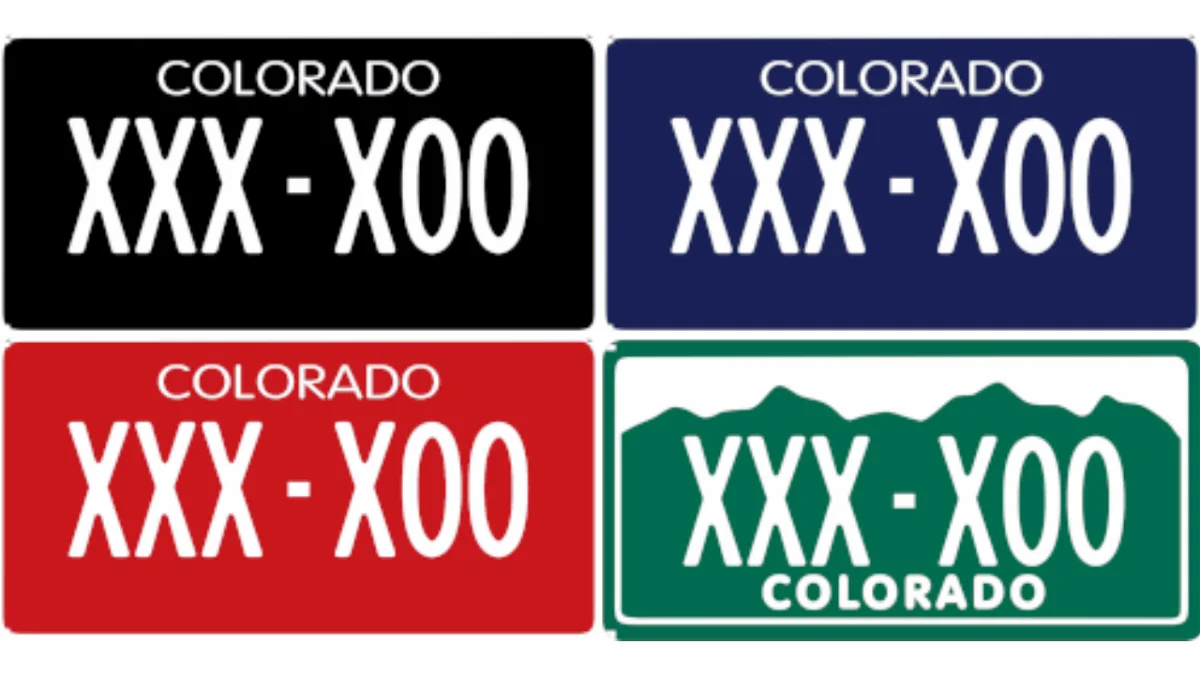
“Colorful Colorado” extends to the state’s license plates too.
Colorado Department of Transportation
Special license plates in Colorado
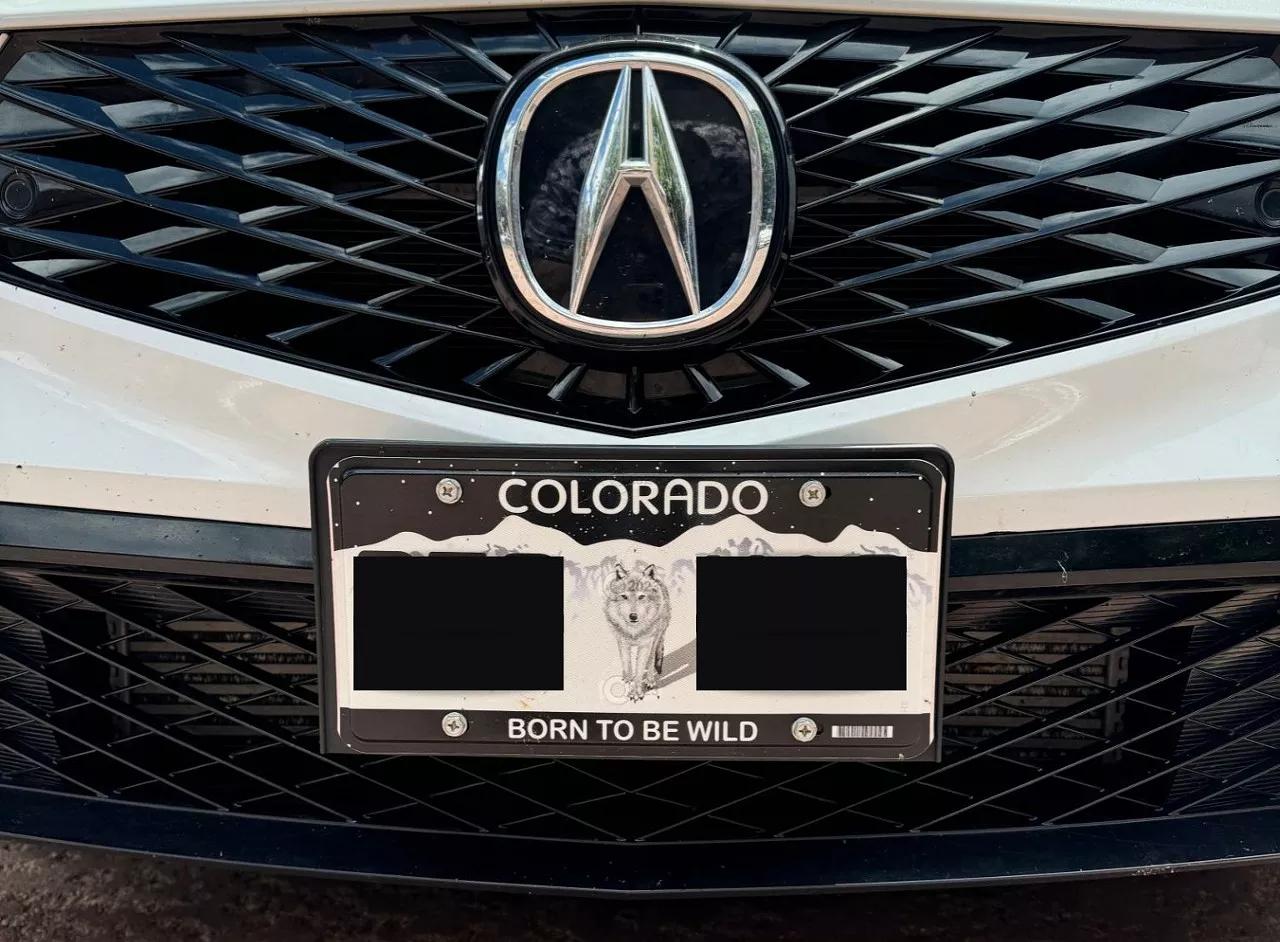
Although the lovely, white mountains with green trim of the standard Colorado license plate are pretty iconic, the state offers a multitude of special license plates for an extra fee, with the money going to various charities.
There are 11 types of regular license plates in Colorado. Most are dedicated to types of vehicles, such as motorcycles or electric vehicles. The “designer” plate with a light green foreground and a mountain range with the Colorado “C” logo in the background is considered a regular plate, and costs $50 with a $25 renewal fee.
The historic plates that took the state by storm a few years ago with all-black, blue, red and green versions (black being the most popular) are regular plates, too. Those cost a one-time $60 issuance fee and a $50 annual fee, of which $25 goes to the Colorado Disability Funding Committee.
Vanity plates cost $60. Swapping to a personal plate can be done online through the “replace license plate” option on myDMV.
Colorado also has 55 group special plates, which are all tied to nonprofits. Group special plates and alumni plates usually require a donation to the associated nonprofit organization in addition to the $50 issuance fee and annual $25 renewal fee.
Of the group special plates, the most popular are plates recognizing the victims and survivors of the tragic bombing and shooting at Columbine High School in 1999, according to the DMV. After that, the most popular include the Wildlife Sporting plate, the Pioneer plate, the Ski Country USA plate, the Adopt a Shelter Pet plate and the Breast Cancer Awareness plate.
Regular plates come with a $5.83 fee for the required set of front and back plates, in addition to registration fees, while special plates and print-on-demand plates, or vanity plates, come with a $9.40 charge in addition to issuance fees.
This article was first published in 2024 and has been updated.