Unsplash/Prasad Panchakshari

Audio By Carbonatix
Last year, victims of a Denver Lyft driver who kidnapped or assaulted at least a dozen women begged Gov.Jared Polis to sign a bill intended to improve safety in rideshares. Polis vetoed the bill instead, siding with Uber as the company threatened to leave the state over the policy.
State legislators reintroduced the rejected bill last week — and this time, the governor is signaling support.
“No one should have to fear for their safety when using ridesharing services, and we know there is more we can do,” Polis’ spokesperson says. “The Governor’s office has been engaging closely with the sponsors of last year’s legislation, and are encouraged to see the progress made since last year to ensure we are keeping riders safe.”
This comes as Uber faces more than 3,000 sexual assault and sexual misconduct lawsuits, recently experiencing back-to-back losses in court that set the stage for cases to come. Two federal juries found Uber liable for sexual assaults by drivers in Arizona and North Carolina, ordering Uber to pay $8.5 million in the former case, and $5,000 in the latter.
The new policy, House Bill 26-1424, would make many of the same changes proposed in last year’s bill. If signed into law, it will require large rideshare companies to procure background checks on drivers every six months, establish policies to crack down on unauthorized driver account sharing, and speed up the timeline to respond to law enforcement investigations and user complaints. It would also ban individuals from being drivers if they have been caught account sharing or convicted of certain crimes, including unlawful sexual behavior, domestic violence and stalking.
Polis’ office applauds the bill for “cracking down on imposter drivers and tightening driver vetting, including more frequent background checks and ensuring that accounts for drivers who are a serious threat to rider safety are removed.”
All of those elements were also included in last year’s vetoed bill. The governor’s spokesperson declined to comment further when asked to specify which differences between the two policies changed Polis’ mind.
According to bill sponsors, Polis was “diametrically opposed” to portions of last year’s bill that would have banned drivers from giving riders food or drink and established a private right of action for victimized riders to sue. This year’s bill instead requires that any food or drink be factory-sealed and includes no right of action clause.
“I will be honest, I’m continually absolutely sick about” removing the right of action, Rep. Jenny Willford, a bill sponsor, said during a House committee meeting on April 30.
The bill was inspired by Willford’s own experience: In January 2025, Willford said she was sexually assaulted by her Lyft driver outside of her Adams County home. The driver, Mukhammadali Mukadyrov, was charged with felony unlawful sexual contact in May 2025, but one year later, he still has not been found or arrested.
Uber
Last year’s bill easily cleared the House and Senate, receiving bipartisan support from 80 of 100 legislators before it ultimately died at Polis’ desk. The veto weighed heavily on the room during the House Business Affairs & Labor Committee meeting.
“It’s déjà vu all over again with this bill, as it is the same topic of the well-supported bill that we ran last year that was vetoed by the governor. This year, we have been assured that we will get a signature and not a veto,” Rep. Meg Froelich, another bill sponsor, said during the hearing. “We have been able to turn the page. …This bill took a long time to get to that place where we could get a governor’s signature.”
The new bill has a longer rollout period than its predecessor. It would require the Public Utilities Commission to adopt rules guiding rideshare companies by June 2028; the commission would be responsible for setting compliance deadlines. Rideshare companies that violate the bill would be subject to civil penalties of up to $1,500 per violation.
The bill would also require rideshare companies to report annual data, including on safety incidents, to the commission, attorney general and state legislature beginning on Feb. 1.
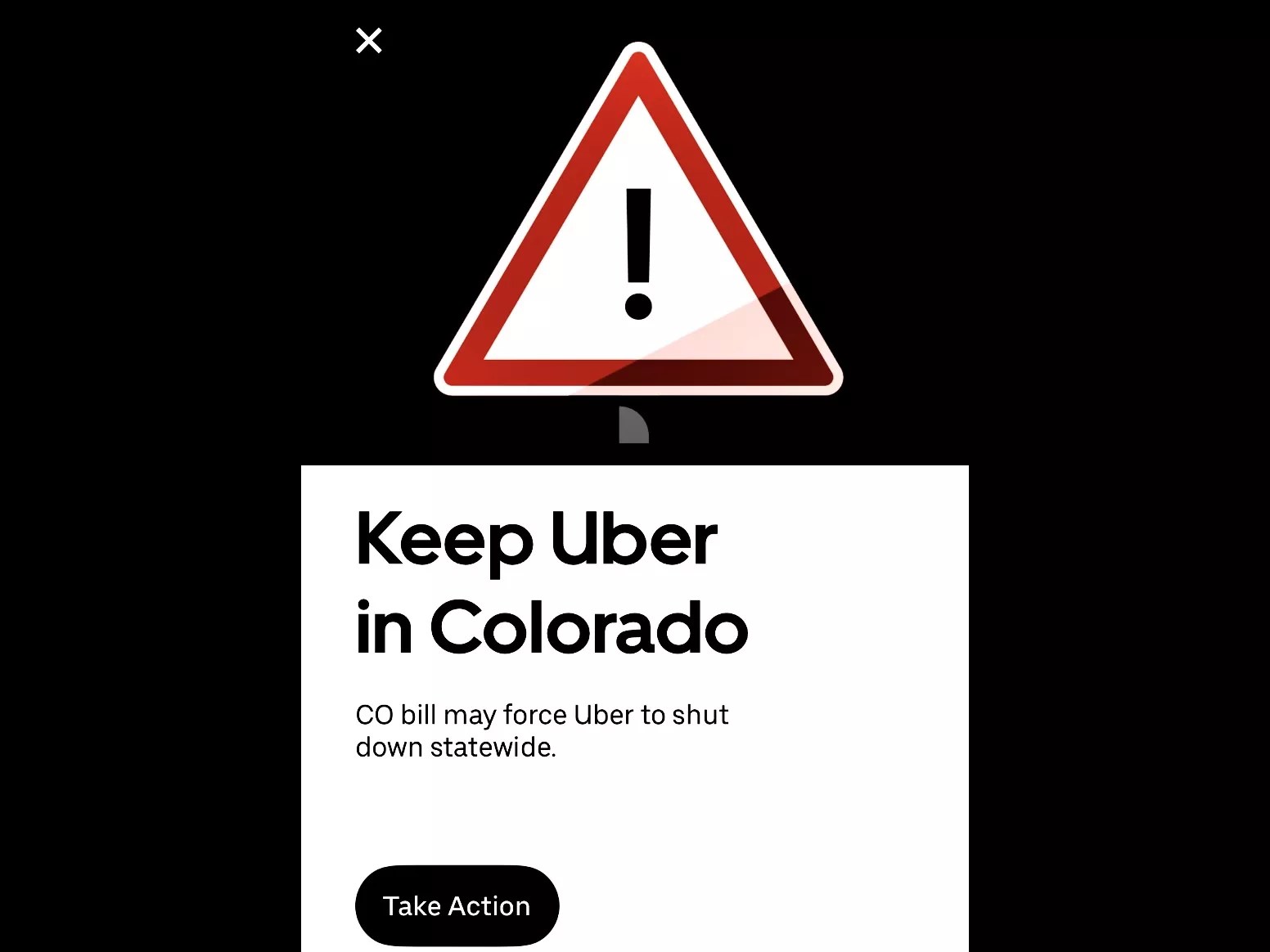
Rideshare companies have been much quieter this time around. Last year, Uber directly notified its Colorado users, urging them to advocate against the bill and threatening to pull out of the state if it became law.
Uber has since worked to shift its reputation. Over the past year, the company has spent tens of thousands of dollars partnering with domestic violence centers in the Denver area while sharing a series of online advertisements highlighting its work to support survivors.
“Can you imagine how much safer Uber might be if they’d taken that money and put it into their app to actually prevent the sex assault from ever happening in the first place?” Willford remarked during the committee meeting.
Uber and Lyft are both registered in an “amend’ position on the bill as of May 4, according to the Secretary of State’s Office. Organizations in support of the bill include the Colorado Coalition Against Sexual Assault, Colorado Organization for Victim Assistance, Colorado Trial Lawyers Association and Mental Health Colorado. No entities are registered in opposition to the bill.
“Building on our dedication to safe rideshare in Colorado, we value our productive dialogue with the bill sponsors, and we’re in an amend position as we collectively refine the language to ensure the final requirements are operationally feasible,” Uber spokesperson Stefanie Sass told legislators.
The bill sponsors described the dialogue a bit differently.
“Do you know what it was like to be in a room negotiating with you for all of last session with a survivor, in which you lectured us about how great your safety is and how great your safety protocols are, while sitting in the room with someone who clearly did not experience your awesome safety ratings?” Froelich said of Lyft and Uber.
Just last month, police arrested Uber driver Javier Delgado-Cordoba for allegedly driving off with and sexually assaulting a passenger in Arvada after her boyfriend exited the car. Last year, Lyft driver John Pastor-Mendoza was sentenced to 290 years in prison for kidnapping and/or sexually assaulting 12 women, targeting intoxicated passengers seeking rides home in Denver. In 2024, Lyft driver Shengfu Wu was sentenced to nine years in prison for raping a 13-year-old passenger in Aurora, and Uber driver Nesrelah Bedru Kemal was charged with sexually assaulting a passenger in Denver.
More than 400,000 Uber trips resulted in reports of sexual assault and sexual misconduct in the United States from 2017 to 2022, according to a New York Times report. That averages to one report almost every eight minutes.
“How many minutes should survivors have to wait for justice?” Willford asked. “How many minutes should we as legislators wait until we say we are done asking, and now we’re going to take action?”
The bill passed its first committee vote, 8-5, on April 30. It will next face consideration by the full House.