
Audio By Carbonatix
Plenty of happenings are on tap to celebrate Colorado’s 150th birthday. But arguably the largest and most geographically diverse is CO150, which Denver Film, a co-creator of the event alongside marketing firm Switchboard Strategies, calls its first-ever statewide film festival. CO150 movies will unspool at locations from the Western Slope to the Eastern Plains over six months, culled from a list of 150 flicks with Colorado ties.
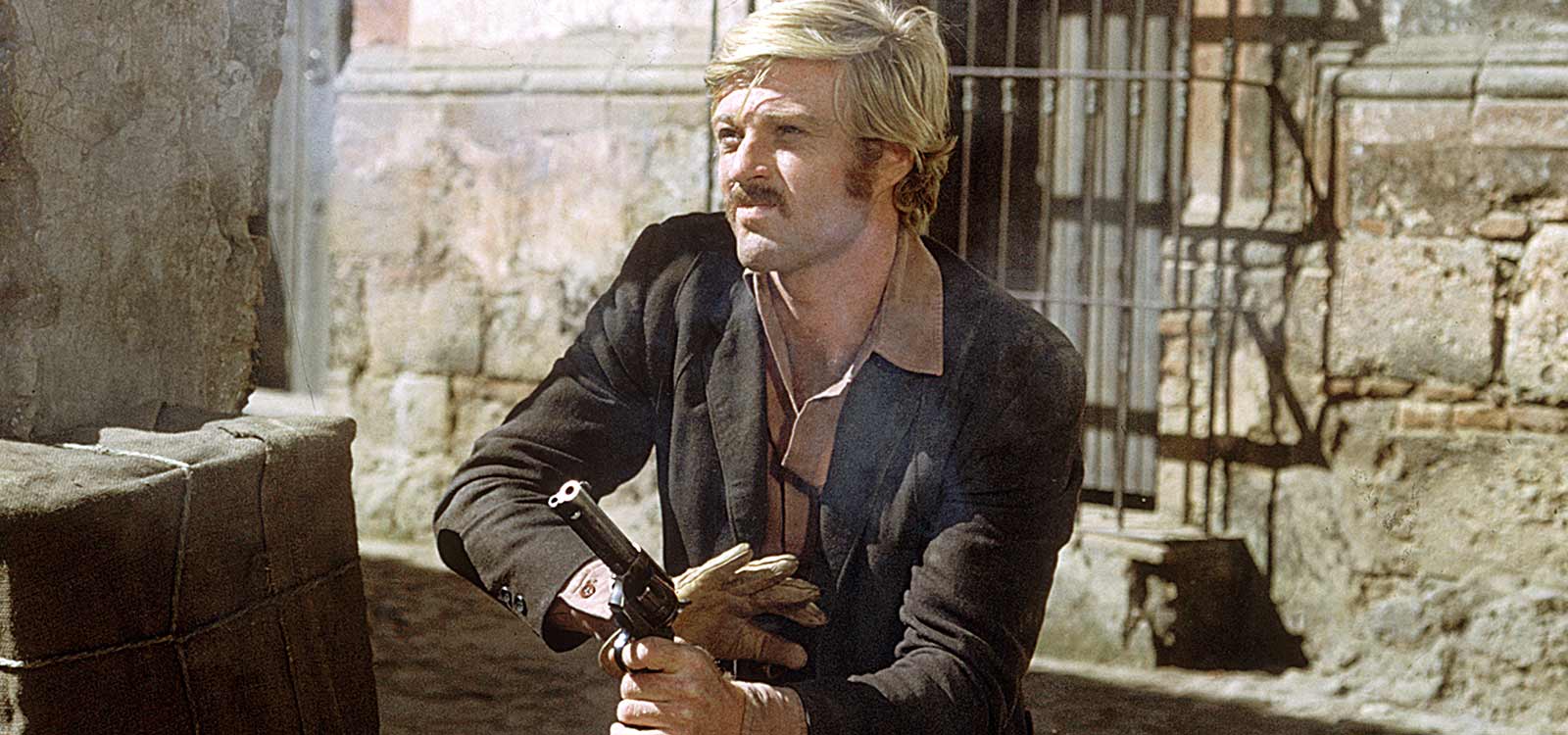
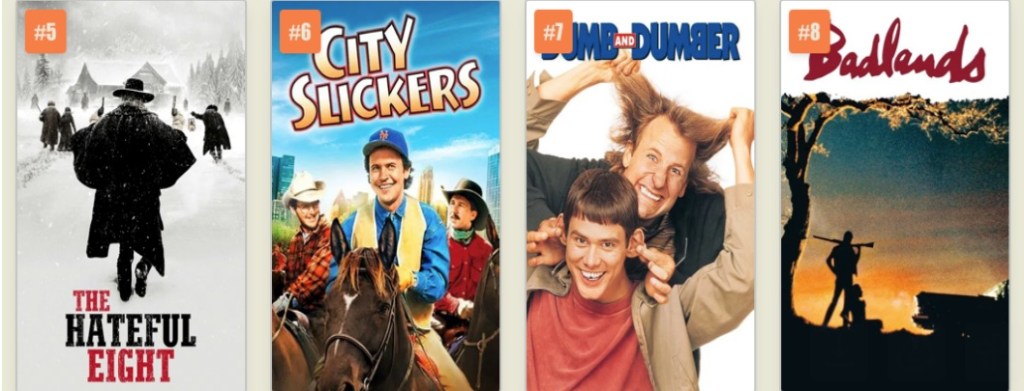
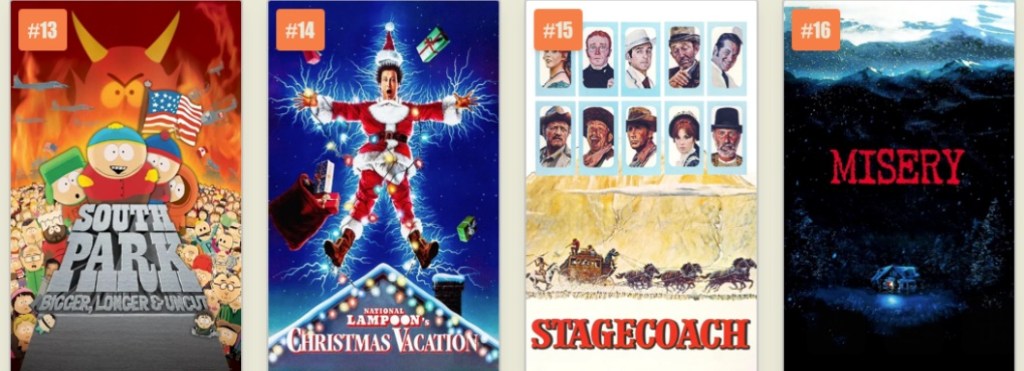
The fest officially opened with a May 23 screening of 1969’s “Butch Cassidy and the Sundance Kid,” the pic that tops the CO150, at Center, Colorado’s famed Frontier Drive-Inn. Next is 1991’s “City Slickers,” slated to light up the same location on Saturday, May 30, with dozens upon dozens of showcases to follow, capped by a chance to eyeball 1989’s “National Lampoon’s Christmas Vacation” at the Sunflower Theatre in Cortez on November 28.
Denver Film CEO Kevin Smith notes that CO150 has had a long gestation. Switchboard Strategies’ Rob DuRay and Chris Getzen “came to me early — it must have been the beginning of last year — and had a lot of ideas about what this could look like,” he says. “The primary things were, how can we make this into a program we can execute on, what are the areas of the state that we need to include, and who are the partners — independent theaters or film festival organizations that can be brought in.”
Just as important was coming up with 150 films that represented Colorado. The final criteria for inclusion was broad: Movies could qualify if they were narrative in nature — Smith salutes documentaries but didn’t want to muddy the mix — and at least partly filmed in the state, set within its borders, or made featuring prominent folks born in or associated with the state.
“Our team at Switchboard did a lot of research in building the overall list,” DuRay points out. “We did a lot of IMDB and Wiki research, and we looked at state files, because when people pull permits in Colorado counties, there’s a record of that.”
The result was a roster of more than 600 possible candidates, and plenty of them invite debate. For instance, 1954’s “The Bridges of Toko-Ri,” an opus about the Korean War, is alleged to be set in Colorado even though the main link involves dialogue in which actor William Holden’s character talks about being from Denver. Similarly, 2024’s Donald Trump bio “The Apprentice” earns the set-in-Colorado label because one scene takes place in Aspen.
Moreover, numerous notables are limited to a single offering. Denver-born director David Fincher helmed two entries on Rolling Stone’s 2025 rundown of the finest films released in the 21st Century to date — 2007’s “Zodiac” and 2010’s “The Social Network” — but landed only 1995’s head-in-a-box thriller “S7ven” on the initial CO150 inventory. Likewise, Denver native Douglas Fairbanks Sr., a megastar of the silent era who made over fifty movies, placed just one in the preliminary grab bag (1920’s “The Mark of Zorro”), and East High educated Hattie McDaniel, who had more than eighty credited roles and hundreds of others in which she wasn’t named, only pegged her 1939 Oscar winner, “Gone With the Wind.”
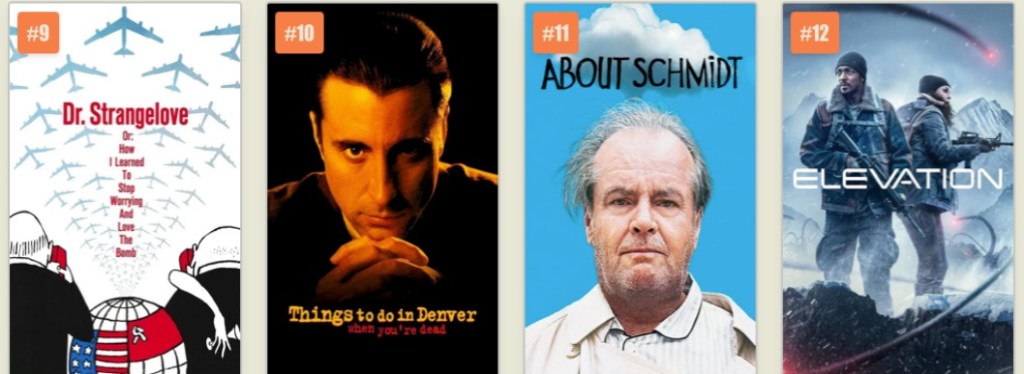
The master list was subsequently winnowed down to 150 options through surveys filled out by film-industry professionals, festival programmers and other cinema experts, as well as members of the general public — and the final results, based on a vote tally north of 500, are certainly quirky. “Citizen Kane,” released in 1941, is still regarded among the greatest American movies ever made, but it’s number 49 on the CO150, more than thirty slots below 2024’s “Elevation,” a poorly reviewed Anthony Mackie dud that currently has a 54 percent rating on Rotten Tomatoes. And while the aforementioned Fincher efforts, including “S7ven,” missed the final cut, 1989’s “The Return of Swamp Thing,” starring Denver Christian graduate Monique Gabrielle, sneaked in at number 147.
Smith expects that some cineastes will criticize aspects of CO150, and he’s totally fine with it. “One of our primary goals is we wanted to make sure there’s as much diverse storytelling as possible — and we want to have those conversations,” he says.
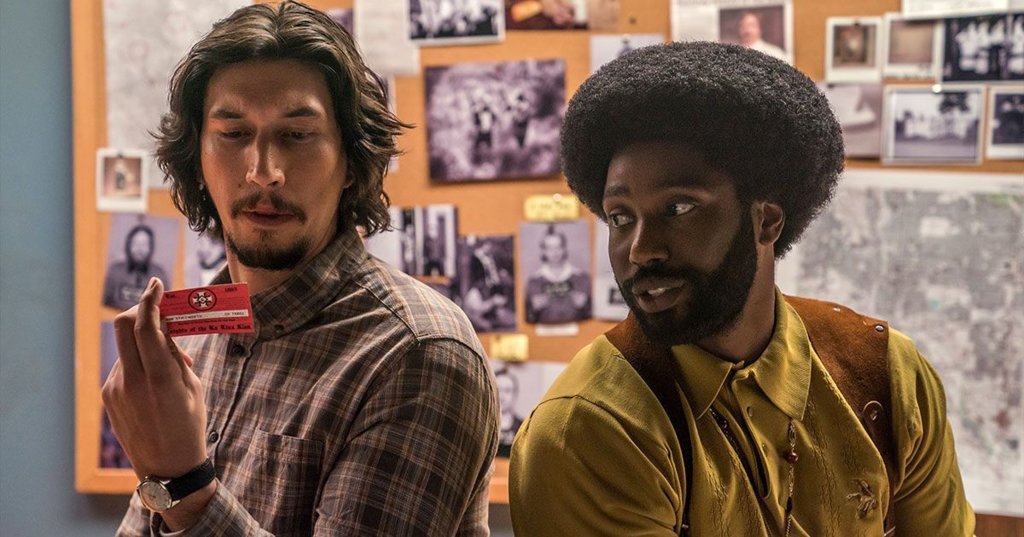
Take 2018’s “Black KkKlansman,” a Colorado Springs tale that director Spike Lee mainly lensed in New York. “Is being shot here more important? Should it be number four or number 25?” Smith asks. (Spoiler: It’s number four.) “But just having those conversations really adds to the excitement. Ultimately, it’s a subjective thing…and our goal at Denver Film is to build those community moments, where people can come together.”
Indeed, one of CO150’s main missions is to inspire folks to leave their couches and watch movies with their friends and neighbors.
“No matter how much people want to talk about, ‘Is the moviegoing experience dead,’ it isn’t,” Smith stresses. “What people ultimately want are these communal connections where they can come together to see these things we love, in whatever the film hub of their community is.”
Hence, the decision of Smith, along with the rest of the CO150 brain trust, to work mostly with independent venues embedded in the art scenes of assorted towns: “Maybe it was an art-house theater or a multi-faceted theater where they have plays or movies, as opposed to us just going to multiplexes across the state. That was a real challenge.”
Theater personnel also got the chance to request films that had specific appeal to locals, DuRay says. Take 1950’s “A Ticket to Tomahawk,” viewable at the Silverton Powerhouse in Silverton on September 3, “which is about the railroad that ends in Silverton. It basically tells the story of Silverton — the politicians and other folks coming to town. They wanted to show it and bring in some of the folks who worked on the movie from the train perspective who still live in town. And the actual train is at the Colorado Railroad Museum in Golden, and we’re hoping they’ll send somebody down to talk about it. They all have a cool story to tell. That’s a highlight for me.”
These days, fewer films are shot in Colorado — and while many area insiders cast the blame for this situation on the relatively small amount of incentives the state offers to lure moviemakers, Smith thinks that’s overly simplistic. “At the start of my career, I was in Michigan, and at the time, Michigan had the largest incentive package in the world: 42 percent. But with that, I still watched films that should have been shooting in Detroit go to Cleveland and pretend to be Detroit. So that’s always been a bit of a film-industry issue: Where can I get the biggest bang for the buck?”
He argues that “this state has something most states can’t offer, which is that if you’re starting in Denver, you can have any different sort of setting you can think of for a film within an hour and a half. Additionally, the core filmmaking community here has really grown over the past couple of years and has really started to unify. So I’m hoping we’ll see quite a bit more production, especially with Sundance bringing in an additional spotlight, along with the other film festivals in the state. Our hope is to get people excited about filmmaking coming back here in a general way. And if the public is excited about it, hopefully that helps legislators realize that it can be not just fun and exciting but economically impactful seeing all these stories made in our communities.”
In the meantime, DuRay hopes CO150 will inspire movie lovers to hit the road. “There’s something for everybody: westerns, dramas, comedies. And all the different venues are so interesting. [Author] Philip K. Dick is buried near the Cover 4 Theatre in Fort Morgan” — see 1994’s “Dumb and Dumber” there on August 8, with nine more classics to follow into October — “and Diane Keaton carved her name into the stage at the Mancos Opera House” — check out 1969’s “True Grit” on June 20. “So I really hope people make CO150 part of their summer plans.”
Access the complete CO150 schedule here.