
Courtesy of Alamo Drafthouse/CBS

Audio By Carbonatix
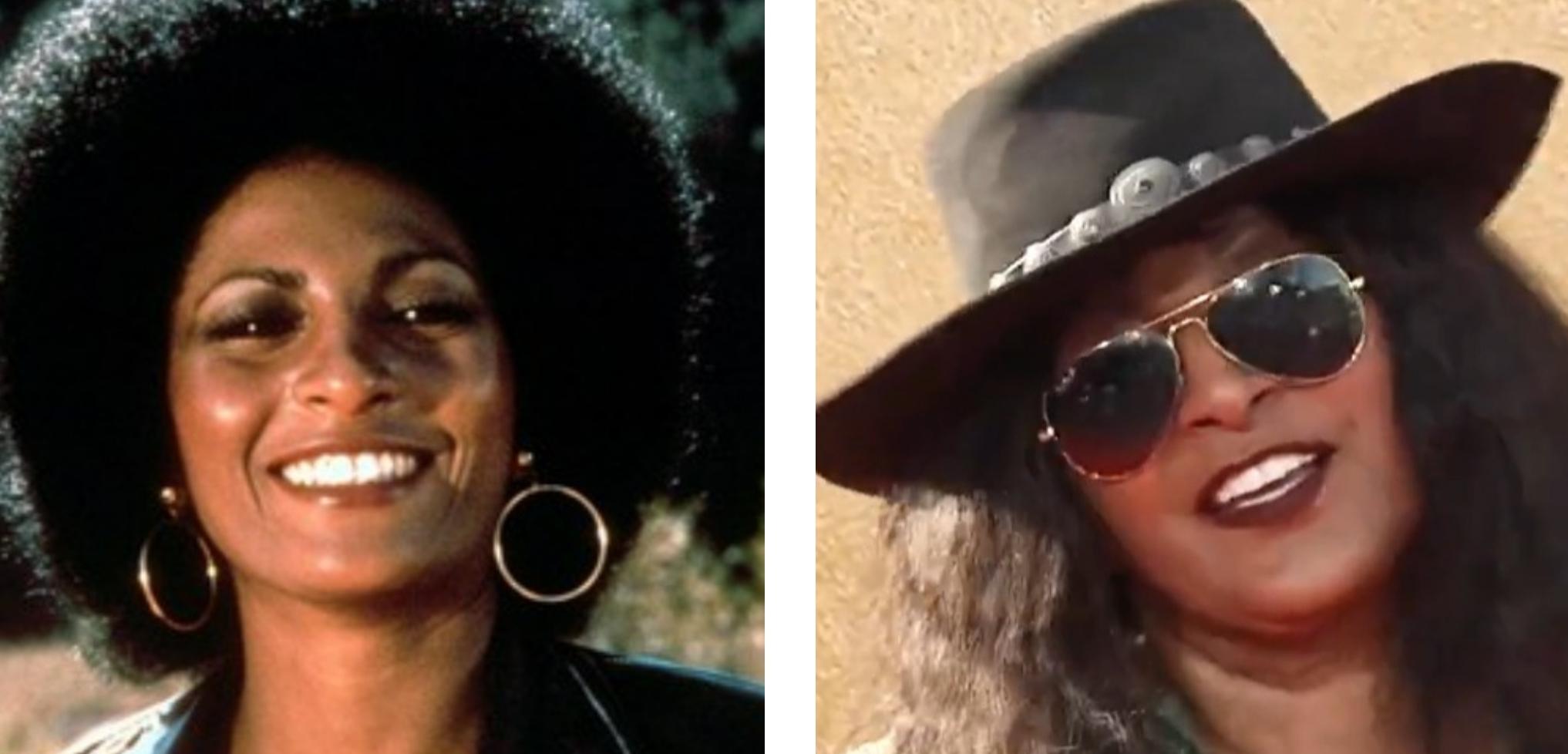
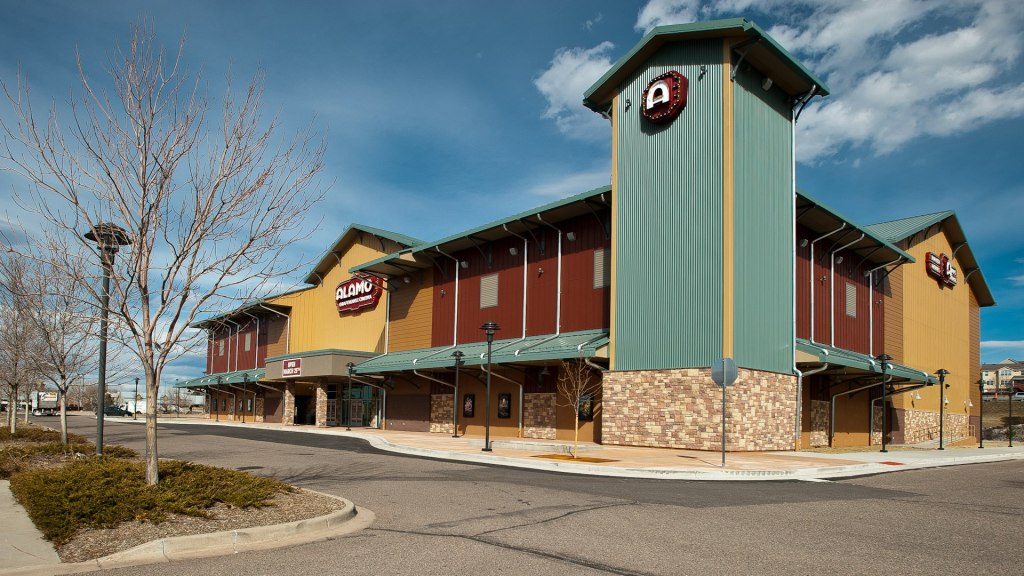
Not many performers are able to maintain a badass image over the long haul. But somehow, Pam Grier has managed to do so for more than half a century, which explains why the trendsetting types at Alamo Drafthouse Cinema are renaming the theater chain’s Aspen Grove branch, located at 7301 South Santa Fe Drive in Littleton, after the actor. The Pam Grier Cinema will be officially dedicated during a series of special events on Friday, May 15, which she will attend.
Although Grier has appeared in a wide variety of movies and TV series over the years, she’s best known as the queen of wham-bam action movies from the 1970s that were once slapped with the dismissive Blaxploitation label but are now simply considered to be killer pulp. As such, she has an innate understanding of swagger, which kicks in while talking about the Alamo salute.
When the firm’s reps floated the idea of her joining previous theater-name honorees such as directors Spike Lee, John Hughes and Bong Joon Ho, she says her first reaction was, “Well, I haven’t won any awards,” as if gold-plated baubles are more important than the iconic status she’s attained via movies such as 1974’s Foxy Brown and 1997’s Jackie Brown, the two flicks that will unspool during the venue’s re-christening. Likewise, she laughs off the notion that she’s still ineffably cool at age 76, declaring, “Are you kidding? I’m right off the ranch” — a casual reference to her longtime home on a rural spread south of Denver.
At the same time, though, she’s very clear about the underlying message she’s always wanted her hard-edged screen persona to deliver.
Courtesy of Alama Drafthouse
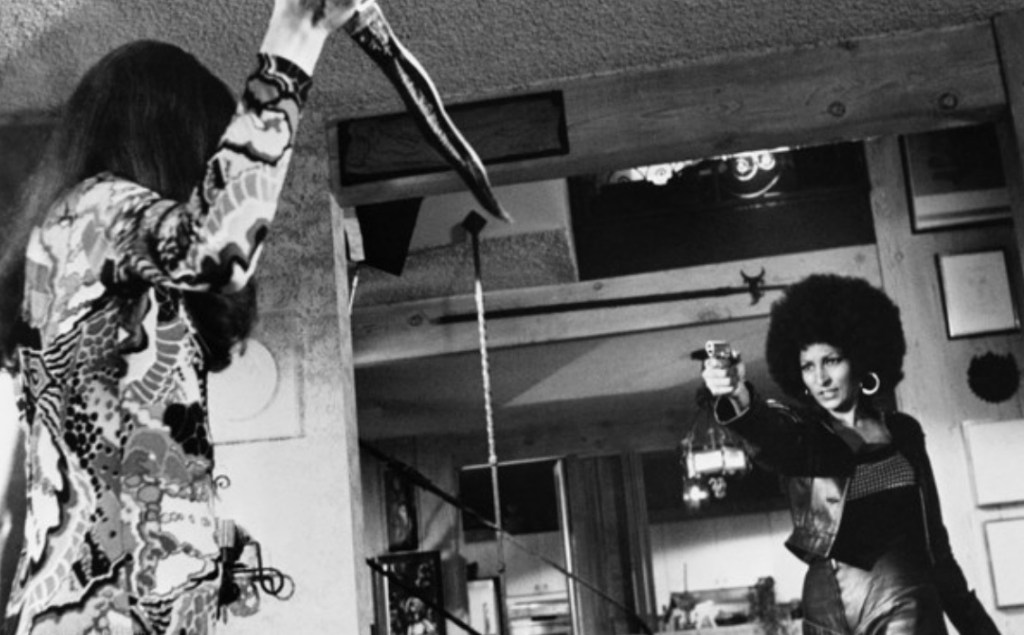
“The equity that women have given to society was being ignored, and I wanted to bring it to film at every opportunity, whether it was comedy, drama, death or mayhem,” she says. “I wanted to show that women are resilient. I felt that Foxy Brown could show that, because she was an operative who had to be smart, had to fight men in hand-to-hand combat and win. I might have gotten hit upside the head a few times, but I had a purpose and I was strong. I wanted people not to look at the color of my skin or the nappiness of my hair, but to see a female who knew how to survive. Without pontificating, that was my real mission.”
As for Jackie Brown, an adaptation of the Elmore Leonard novel Rum Punch that writer/director Quentin Tarantino shaped specifically for her, she calls it “an accumulation of a body of work — all my work, which Quentin wanted to present in this film. The intelligence, the cunning, the control. And it was great, because I really worked hard to reach that point where I didn’t have to fight my way and punch my way out of situations. I could think my way out, show the intelligence of a woman who you think has been beaten down and has nothing left.”
A native of Winston-Salem, North Carolina, Grier was the daughter of an Air Force veteran whose assignments caused the family to move frequently during her youth. The Griers eventually settled in Denver, and she has strong memories of her first movie-viewing experiences in the city. “I don’t know if it was the Paramount, but it was one of the theaters on 16th Street before it became a mall. My cousins, my friends and neighbors, all of us would be given a quarter to go to the movies. I think it was ten cents to get in, and the rest would go to popcorn and a beverage. We walked into the darkened theater, and I didn’t feel the steps. I listened and I could hear other people rustling in the dark. We found our seats and sat next to each other and we had our popcorn, and the screen lit up and we were transported into another world.”
Back on earth, Grier went on to attend East High School, whose celebrity alums include Hattie McDaniel, the first Black performer to win an Oscar (for 1939’s Gone With the Wind), plus actor Don Cheadle, singer Judy Collins, and Earth, Wind & Fire members Philip Bailey and Andrew Woolfolk. “I rode my bike in the snow from east Denver to City Park and East,” she says. “The claim to fame when you were in school, if you had good grades, was getting a job grading papers. It was a dollar a page.”
Courtesy of Alamo Drafthouse
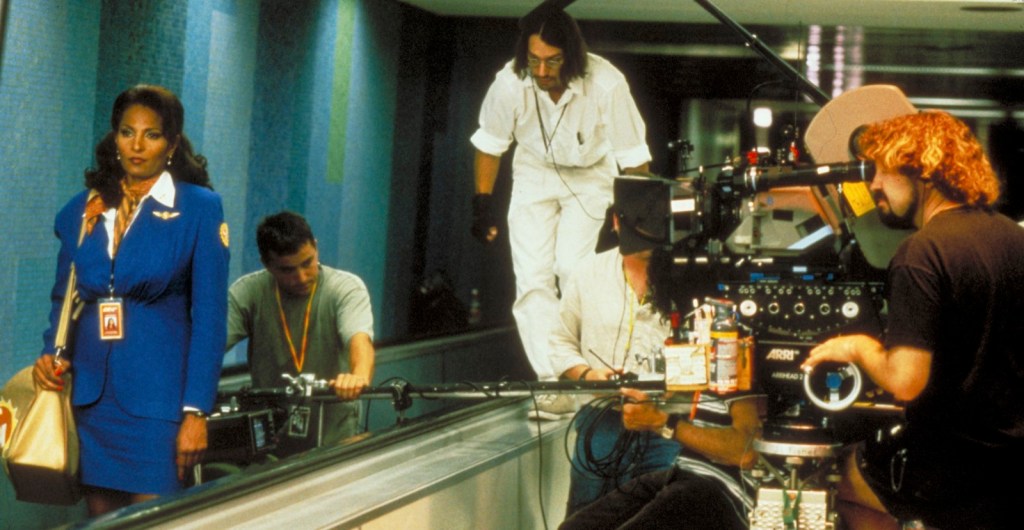
From there, Grier went to enroll at what was then Metropolitan State College, where a conversation with one of her instructors pointed her in a new direction. “I thought I wanted to be a doctor, but my psychology professor said, ‘Are you doing what you really want to do in life?’ And I said, ‘I don’t know. I’m just trying to go to college because of the movies I saw as a child.’ And he said, ‘You should go to film school.’ I said, ‘I’ve never heard of it.’ But he got the brochures and said, ‘You need to go to UCLA,’ whose film department was far ahead of its time. “That professor, I really need to look up his name, because I don’t think he knows what he did for me and my life.”
Shortly thereafter, Grier headed to California, staying with a relative and living in a garage. She couldn’t afford UCLA until she established in-state residency, a process that took two years. But she wasn’t one for sitting around and waiting.
“There were some film students loading up a raggedy, rusty old van,” she remembers. “I said, ‘What are you doing?’ And this guy says, ‘We’re film students. We’re about to do a short. Why don’t you come along, and you can be crew. Not a woman, not a man, but you’ll be crew.’ And that was the keyword: I’ll be crew. They said, ‘Meet us here. We’re going to shoot some footage on Hollywood Boulevard in the middle of the night. We might get arrested.’ But they embraced me and my big afro. I looked like [renowned political activist] Angela Davis, and because I was taller than everybody, they handed me a pole with a mic on it. And when they asked me where I was from and I said, ‘I’m from Colorado,’ they looked at me like, ‘What?’ And I said, ‘Yes, there are Black people in Colorado.’ I gave that information to Richard Pryor, which he gave to Mel Brooks when they wrote Blazing Saddles.”
Aside: Once upon a time, Grier and comic-genius Pryor were a thing — and she was also romantically involved for a stretch with basketball superstar Kareem Abdul-Jabbar.
She recalls working as many as five jobs at a time to earn her keep, and one of them was as a receptionist at American International Pictures, the low-budget studio that served as a home for director Roger Corman, a cheapskate visionary credited with helping the likes of Francis Ford Coppola and Martin Scorsese get some of their initial chances behind the camera. In Grier’s telling, Corman served a similar function for her. “When Roger saw me, he said everybody outside the room coming in to audition all looked alike. They looked like Dallas cheerleaders. But when I came in, he said, ‘You’re different.’ Everybody said they’d never met anyone like me, because I had a twang and I was brought up fishing and hunting and skiing and gun-slinging — everything they hadn’t seen yet. And they let me bring my culture, my universe to films.”
Courtesy of Alamo Drafthouse
Soon, Grier was at the center of pics such as 1972’s The Big Bird Cage, a gloss on the women-in-prison trope with more than a few crazy twists. Note that Grier is introduced singing to clubgoers who are shocked when she smashes a guitar to reveal a machine gun she uses to rob them. Moments later, her character goes from wrestling a fellow revolutionary in a muddy pigsty to having such vigorous sex with him that the shack they’re in practically shakes off its foundation.
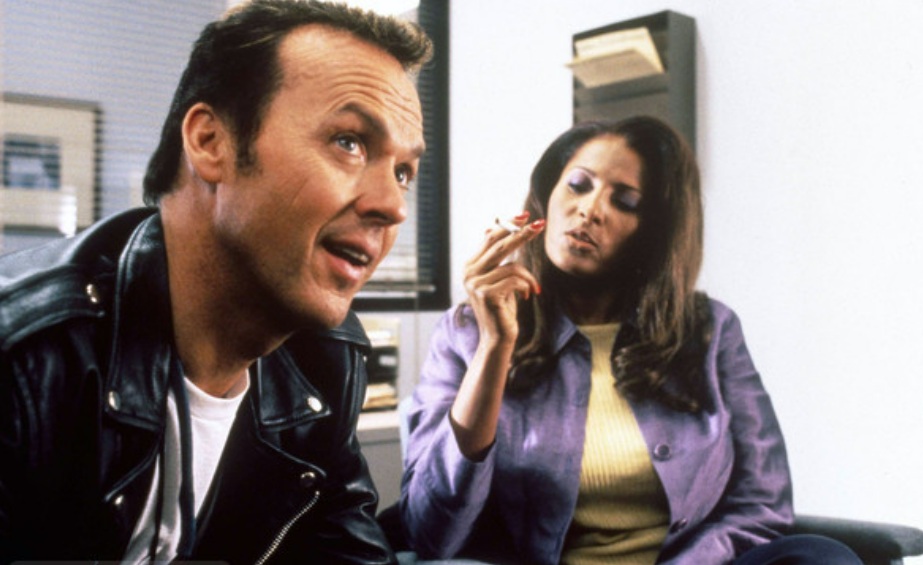
What followed were more genre smashes: Foxy Brown, of course, but also Coffy, Black Mama White Mama and Scream Blacula, Scream, which came out within months of each other in 1973. Their impact caught the attention of mainstream Hollywood sorts, who began casting Grier in higher profile vehicles such as 1977’s Greased Lightning (with Pryor), 1981’s Fort Apache, The Bronx (starring Paul Newman) and Walt Disney’s pricey 1983 Ray Bradbury adaptation Something Wicked This Way Comes. And that’s just the beginning of a filmography that includes hit television offerings (Miami Vice, The Cosby Show and many, many more) plus movies as varied as 1996’s Mars Attacks!, an underappreciated highlight of director Tim Burton’s oeuvre, and the 2017 farce Bad Grandmas alongside co-star Florence Henderson.
The passage of decades necessarily meant that Grier’s roles had to evolve — but they keep coming. “I’ve loved playing the great moms of people like Eddie Murphy [in The Adventures of Pluto Nash, a 2002 mega-flop] and RZA in The Man With the Iron Fists,” a 2012 martial-arts epic from the mastermind of the Wu-Tang Clan. She adds, “I just finished playing the mom of an incredible actor in a project I don’t think I’m allowed to mention yet.”
When she’s not on set or feeding her horses, Grier has enjoyed taking part in question-and-answer sessions about her career, like the one that is on the bill May 15; that conversation will be moderated by Griot Productions president Nina Henderson Moore.
Courtesy of Alamo Drafthouse
“I don’t just sit behind a desk and chair and talk about the films,” she promises. “I get into the anecdotes, the real guts and visceral bloodlines of each role — like in John Carpenter’s [1996] Escape From L.A., where I played a trans character. Maybe you didn’t know that if you saw it on TV, but she was Kurt Russell’s male buddy, and when Kurt comes to see his buddy, he’s a she. It went over everybody’s head, but John said, ‘I know you can do it,’ and I thought, ‘This is awesome.’ I just walked around having a penis strapped to my leg every day, just figuring it out. I talk about things like that so I can give everyone a more tangible, realistic engagement as to how these performances happened. I want to take audiences on a magic-carpet ride and immerse them in the soul of the characters I play — and hopefully that will bring them out of their man caves and garages and back into the theater.”
As this last comment implies, Grier is a big advocate for seeing films in public spaces such as Alamo Drafthouse, which could use some good publicity these days; the traditionally phone-phobic chain’s recent decision to require that guests order food and drink using QR codes on their cells has stirred controversy, and a brief strike in April over the issue by workers at the Sloans Lake affiliate only amplified complaints.
Folks who prefer to watch in the privacy of their own abode “are missing a lot,” Grier insists. “All they’re seeing is their vacuum cleaner in the corner and their kids and their dogs running around. That’s not an experience. You’re surviving, but you’re not sharing the precious moments of seeing a cinematic adventure. At home, toilets are flushing, doorbells are ringing. You’re there, but is that really the experience you deserve? I mean, if that’s their choice, who am I to judge? But I bet they can’t remember a lot of things they saw on Netflix or a streaming service — not from beginning to end, because your attention is fragmented. Instead of listening to all the noises and distractions, you need to pamper yourself and go to an Alamo Drafthouse.”
Sorry, though: Those who don’t already have a ticket to the Pam Grier Theater dedication on May 15 are out of luck — because it’s already sold out. That’s the power of a Colorado badass.