Kristin Bjornsen

Audio By Carbonatix
Advertising Can't Do It Alone
The challenges facing local news organizations are very real. That's why reader support matters more than ever. If you believe independent journalism matters, make a contribution today and help us reach our summer fundraising goal of $25,000 by August 9.
When the South Canyon fire burned in 1994, it was called a “hellfire,” an unprecedented nightmare that would forever change Colorado.
The spark started with a lightning strike outside Glenwood Springs. After a few days of minor growth, winds suddenly picked up on July 6, sending a wall of flames racing toward the wildland firefighters on scene. Over 2,100 acres were burned, and 14 firefighters were killed in the inferno.
“I remember thinking that day, ‘I hope to God we never see this kind of loss [again],’” recalls Mike Morgan, a then-firefighter with the nearby Rifle Fire Protection District. “I couldn’t believe how big that fire got that fast. … Fast forward to 2020.”
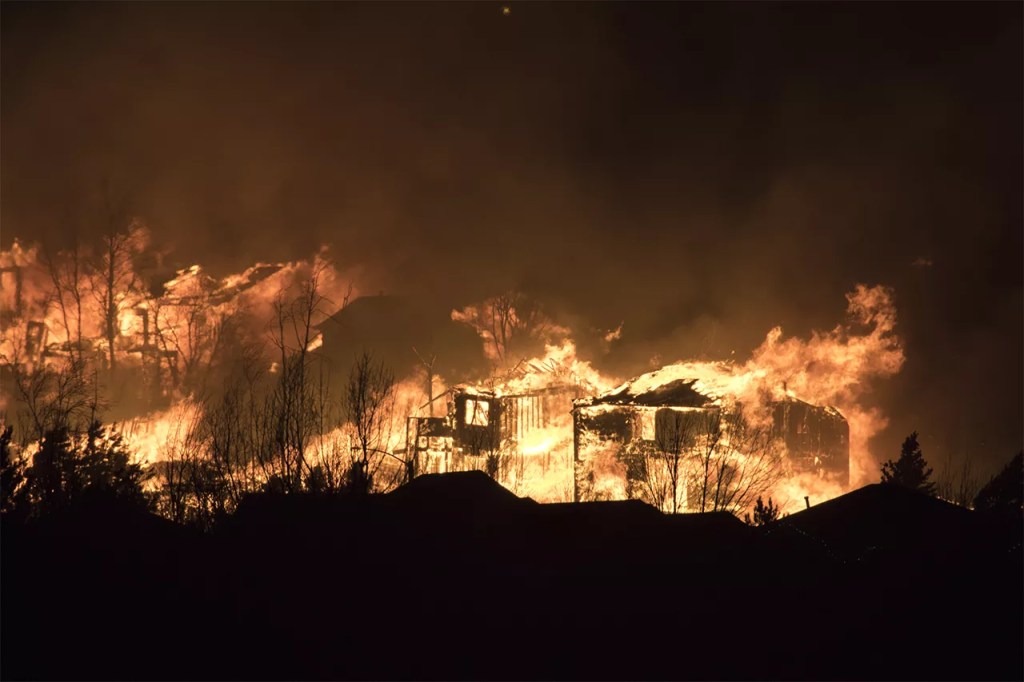
In the decades since the South Canyon fire, Colorado has been repeatedly devastated by blazes 100 times larger. In 2020, the Cameron Peak fire burned over 208,000 acres in the northern foothills, the East Troublesome fire burned nearly 194,000 acres around Grand County, and the Pine Gulch fire burned 139,000 acres in Mesa and Garfield counties. The Marshall fire sparked the following year, burning 1,084 homes in Boulder County, making it the most destructive wildfire in state history.
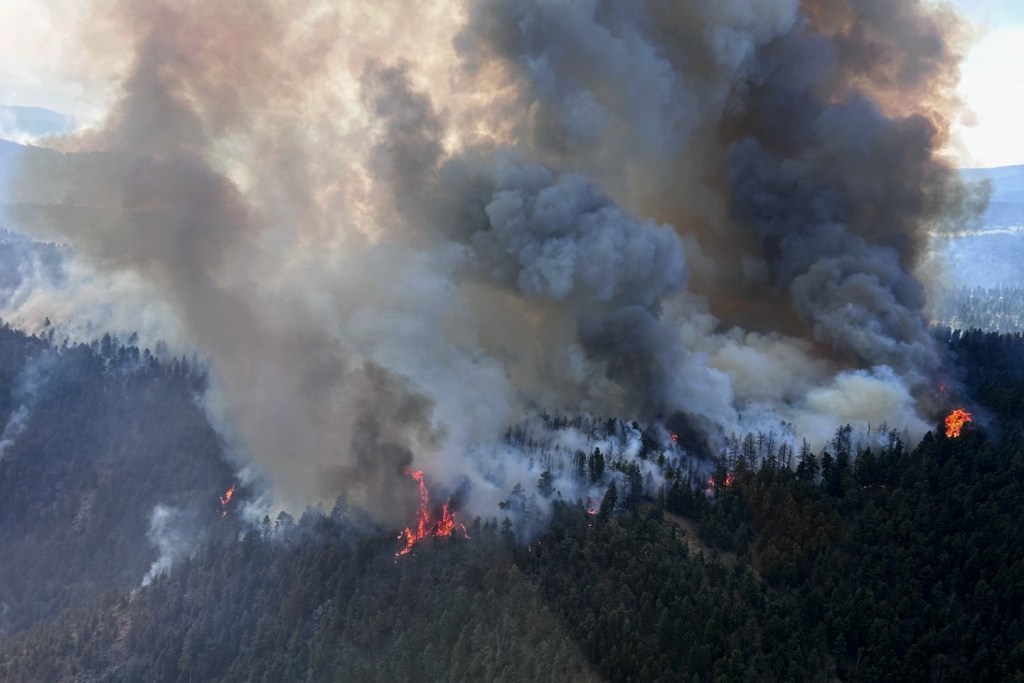
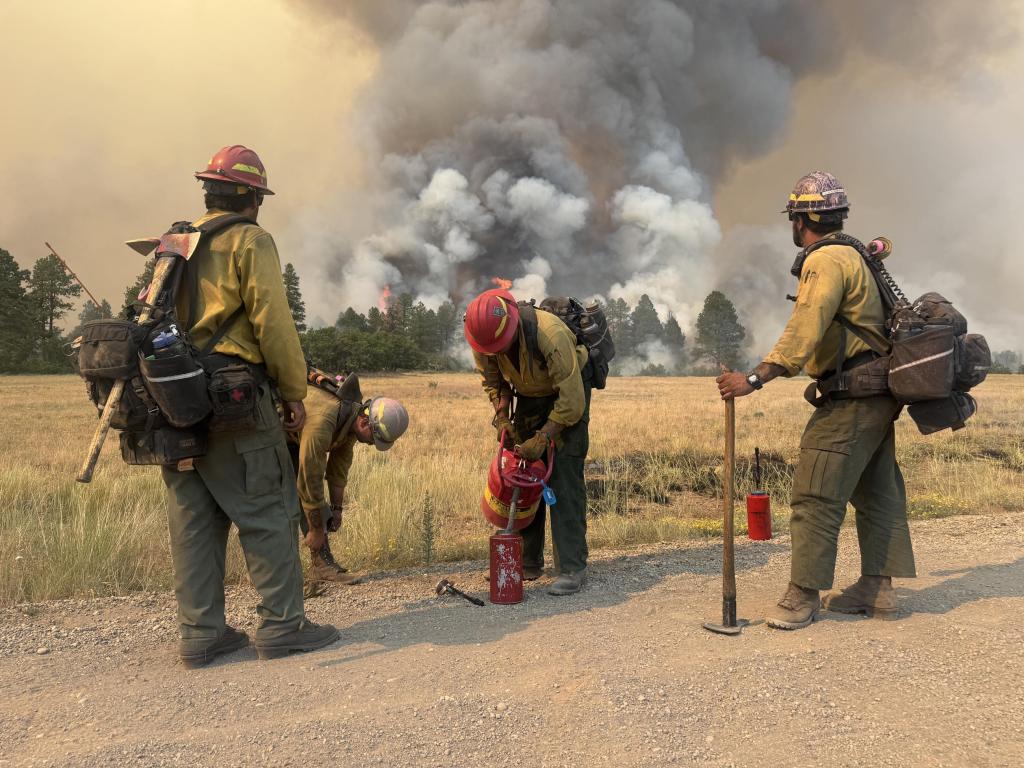
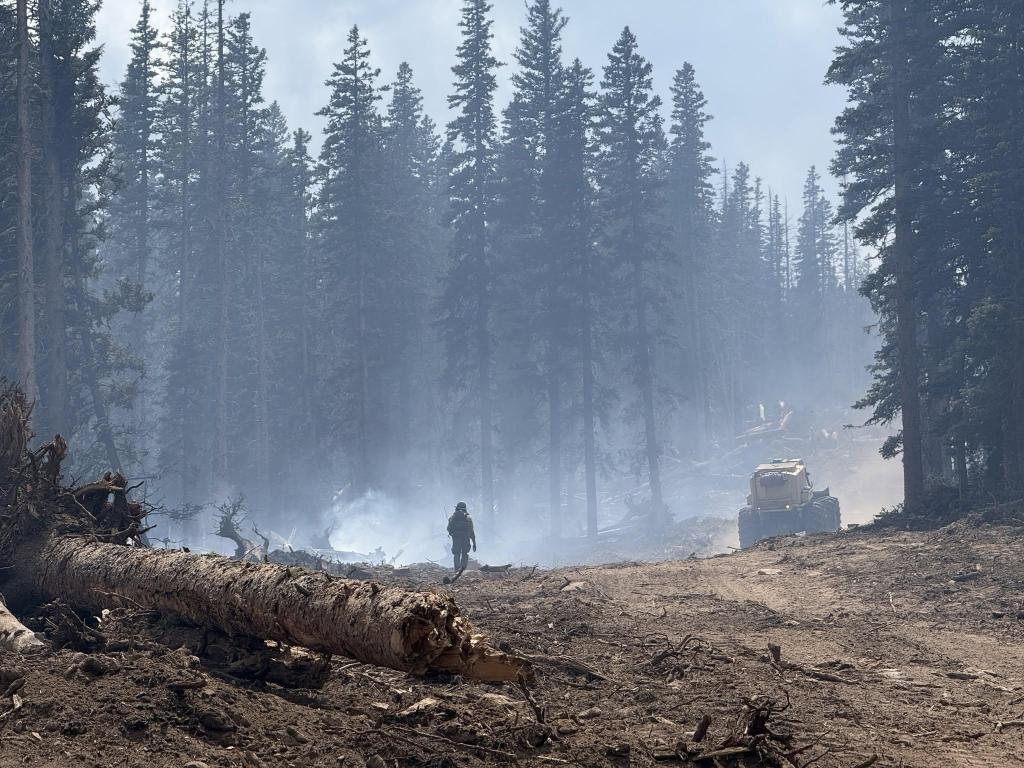
Six of the state’s 10 largest wildfires have happened in the last six years. Two of them are actively burning today: the Aspen Acres fire at just under 102,000 acres in southern Colorado, and the Ferris fire at nearly 65,000 acres outside of Dolores as of July 28. The Snyder fire near the Utah border is smaller at 30,000 acres, but four federal firefighters have been killed while battling the ongoing blaze.
“You can’t even compare the conditions and fire behaviors that we’re experiencing now to what we were experiencing 30 years ago,” says Morgan, who today is director of the Colorado Division of Fire Prevention & Control. “And they continue to progressively get worse.”
Wildfires scorched almost 2.1 million acres across Colorado from 2016 through 2025, a nearly 50% increase from the prior decade, according to annual reports from the Rocky Mountain Area Coordination Center. Wildfires are four times larger and three times more frequent in the western United States than they were in the 1990s, according to a 2022 study by Earth Lab at the University of Colorado Boulder. Climate change is a key driver, resulting in increased heat and extended drought.
“Is this the new norm? The answer is yes,” says Camille Stevens-Rumann, director of the Colorado Forest Restoration Institute. “We’re not going into a time of less fire globally. The climate conditions of the 2020 fire season are the norm for fire seasons in the next decade.”
The 2026 fire season is on track to become Colorado’s worst since the record devastation of 2020. So far this year, flames have consumed over 270,000 acres. That’s more than all of Colorado’s wildfires between 2021 and 2024 combined, the Denver Post reported.
This fire season comes amid a statewide drought on the heels of a record-breaking hot, dry winter, which experts predict will happen more frequently in the coming decades due to climate change. By the 2050s, snowpack droughts like this past winter’s will occur more than three of every 10 years, and nearly nine of every 10 years by the 2090s, according to a recent study by the Colorado School of Mines.
If things continue as they are, by 2060, Colorado will be up to five times more likely to lose homes in wildfires than it is today, says Earth Lab Director Virginia Iglesias, citing a new unreleased study from the lab. However, that future is not set in stone.
“Fire is a little different than other hazards because we are part of fire,” Iglesias explains. “Should we expect fires to keep happening in similar size, speed and frequency as they’re happening today? Yes, that’s very likely. But is destruction going to [continue to] be very high? It depends.”
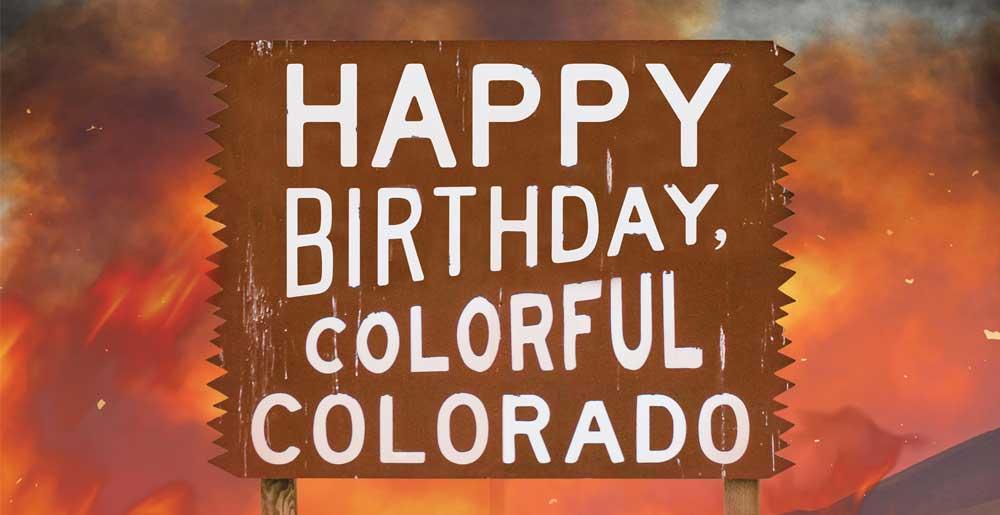
Colorado will celebrate its 150th birthday amid smoke and flames on Aug. 1. Wildfire decisions made today will help shape what the state’s 200th birthday looks like.
“If we act, we can change fire itself,” Iglesias says.
Aspen Acres Incident Management Team
A growing threat
In a single day, two airplanes found 33 wildfires burning throughout Colorado on July 20.
The state-owned aircraft use infrared and color sensors to detect fires, with the ability to identify tiny embers from 22,000 feet above the ground, according to the Colorado Division of Fire Prevention & Control. Once found, they dispatch local authorities to extinguish the flames before they spread. Their record is locating 37 fires in one day back in 2023.
The aircraft program is one of the division’s many strategies added in recent years to combat the growing threat of wildfires. In the last decade, Morgan says the division has tripled its staff, purchased two Firehawk helicopters, expanded dispatch centers to operate 365 days a year, started using military-operated satellites to spot fires in remote areas, and entered into a federal agreement allowing it to provide air support free of charge to fight fires that are still under local jurisdiction.
“We are better prepared than we’ve ever been,” Morgan says. “Our program works; it’s effective, it’s efficient. But we can’t catch them all. … The threat and the challenge is getting bigger.”
The reason fires are getting bigger is largely twofold, explains Stevens-Rumann of the Forest Restoration Institute. One, climate change is causing hotter and drier conditions for longer stretches of the year, and two, historic fire suppression has resulted in an accumulation of fuel in forests.
Fires are a natural part of a forest life cycle. Indigenous people in Colorado used controlled low-intensity fires to promote forest health and ecology. But when those groups were displaced in the mid-to-late 1800s, the emphasis shifted to snuffing out all fires as soon as possible. Full fire suppression remained the national standard for forest management until around the 1970s, when federal policy began to gradually shift away from the practice. However, this year, the Trump administration revived the full suppression policy.
Over a century of extinguishing all blazes resulted in the buildup of flammable trees, grasses and brush, which can cause wildfires to spread rapidly when they do spark.
“Large amounts of our forests in Colorado would have historically burned every five to 20 years, but haven’t seen fires in 120 to 140 years,” Stevens-Rumann says. “Historically, we would’ve had lots of places where fires could stop. Now, we’re dealing with continuous fuels, wall-to-wall forests.”
In addition, nearly 85% of wildfires in the U.S. are caused by humans via campfires, cigarettes, downed powerlines and other means, according to the National Park Service. Prior to industrial society, fires were mostly sparked by lightning, meaning they’d largely only burn during convective storm seasons.
“With that, what we have done is extend the fire season,” Iglesias explains. “Humans can provide ignitions at any time of the year.”
As wildfires grow larger and more frequent, Coloradans are also expanding further into the wildlands where the fires burn. Just under half of Colorado’s population, about 2.5 million people, lives in the wildland-urban interface, according to a 2023 analysis from the Colorado State Forest Service.
“So when you have a fire like Aspen Acres, there are a lot of people living in that landscape who are really, really impacted,” Stevens-Rumann says. “Even 20 years ago, you might not have seen that level of human impact for a fire that size in that area.”
All of these factors come together to create ideal conditions for devastating infernos. But that doesn’t mean the damage can’t be prevented.
Fighting fire with fire
“The best way for us to fight these catastrophic fires is with fire,” Stevens-Rumann argues.
“All climate projections show that more fire is likely on our landscapes,” she continues, “but we are at the precipice of making a decision: whether we are controlled by those fires — meaning we have these big catastrophic, really bad fires that we can’t suppress right away — or whether we use fire more effectively.”
Stevens-Rumann wants Colorado to utilize prescribed burns to improve forest health and reduce built-up fuel, preventing mass wildfire destruction. Those kinds of burns are permitted, performed only under certain weather conditions, and supported as an essential tool by expert organizations, including the National Park Service. However, they are rarely conducted in Colorado compared to neighboring states, Stevens-Rumann says.
Ferris fire officials/InciWeb
Much of the hesitancy is due to the Lower North Fork fire of 2012. The blaze started as a prescribed fire managed by the Colorado State Forest Service southeast of Conifer. Lingering embers and high winds resulted in out-of-control flames, killing three people and destroying around two dozen homes. “That put a screaming halt to prescribed fire work in the state of Colorado,” Morgan recalls.
Today, Morgan says conversations have restarted around how to do the burns safely. Officials conducted the first prescribed fire training exchange in northern Colorado last April, Rocky Mountain PBS reported.
“There’s definitely an appetite to do it. Now we just have to find the budget to do it,” he explains. “We have built programs very well to respond to and support fire suppression, but we haven’t built out the workforce and the programs needed for pile burning, prescribed fire and that kind of work. Our firefighting workforce is not the same workforce. We need to find ways to do more investment into that work.”
Recent years of billion-dollar state budget deficits leave Colorado in a tough spot for additional investments. The state also faces financial hurdles on the national level.
The Federal Emergency Management Agency has delayed billions of dollars meant to help states recover from disasters and prepare for future disasters. FEMA’s post-fire Hazard Mitigation Grant Program has not been approved for any major disaster declarations since March 2025, according to a July 16 letter from Colorado’s U.S. senators. Colorado and two dozen other states are suing the Trump administration over the matter, accusing the feds of illegally withholding grants to coerce states into adopting certain voting and immigration policies.
The Trump administration has also conducted mass staff and budget cuts throughout the U.S. Forest Service, Bureau of Land Management and National Park Service. The Forest Service lost 16% of its workforce as of last summer, resulting in less wildfire prevention work, as the limited staff is occupied with firefighting, National Public Radio reported.
“We’re arguing about status quo staffing levels when we need to be talking about [increasing] staffing levels to meet the threat and the challenge that we’re facing,” Morgan says. “The state of Colorado has invested very heavily in our staffing levels and our aircraft to help protect Colorado. But as a nation, we’re going to have to find ways to invest more to protect our communities.”
Jacob Tepsa/Aspen Acres Incident Management Team
Stevens-Rumann says the federal layoffs have long-term impacts, as well. High-level positions were lost, eliminating institutional knowledge and shaking the sense of career stability for those in the field. This year, the Trump administration has moved to shut down government laboratories studying the effects of wildfires, including 57 of 77 research labs at the Forest Service.
“As a professor, I’ve seen a big shift in students,” says Stevens-Rumann, an associate professor in the Department of Forest and Rangeland Stewardship at Colorado State University. “The majority of the students in my department have historically gone to federal positions. Now, there are lots of questions as to whether or not working for the Forest Service is a good idea.”
“These are passionate young people who really want to protect and conserve our natural spaces,” she adds. “If we lose that group of people, I don’t know what our federal land management agencies will look like in another decade.”
The state has taken some matters into its own hands. Colorado is using building regulations as a new line of defense against wildfires. In 2023, legislators established the Colorado Wildfire Resiliency Code Board to create building codes that make homes and neighborhoods more resilient to wildfires. The codes went into full effect on July 1 of this year.
“If implemented correctly, they should help reduce the vulnerability of homes to fire. But that applies to new construction,” Iglesias explains. “So we still have a legacy of homes that we built decades ago.”
Morgan says all of the puzzle pieces — fire response, forest health and resilient communities — must come together into a cohesive strategy to make a difference.
“There’s not a silver bullet to this,” he says. “It has taken us 50-plus years to get into this mess, and it will take us 50-plus years to get out of it.”
Getty Images/Mile High Traveler
The next 150 years
The effects of wildfires extend far beyond the scorch. Smoke from the fires harms air quality across the state and beyond. Throughout July, Denver has repeatedly ranked as having the worst air quality of any U.S. city and among the top 10 worst globally, according to tracking by IQAir.
Even after the fires are extinguished, they leave significant impacts on the water supply, Stevens-Rumann notes. Forests protect water quality for downstream communities and prevent snowpack from melting too early in the season. Wildfires contaminate the water supply, and denuded slopes can lead to hazardous flooding. Around 80% of the water Coloradans drink comes from the forested mountains.
In addition, the massive burn scars harm Colorado’s recreation industry. The Cameron Peak and East Troublesome fires burned hundreds of thousands of acres in and around Rocky Mountain National Park and the Arapaho and Roosevelt National Forests, destroying trails, campgrounds and views. Over five years later, the burn areas continue to experience significant declines in visitation, according to new research reported by Colorado Newsline. Outdoor recreation contributes $18.1 billion to Colorado’s economy, accounting for 3.3% of overall economic activity.
“Everyone in Colorado is affected by wildfires,” Stevens-Rumann says.
Experts are pushing for federal investments and state-level policy changes, but to protect Colorado, they say change starts on the individual level.
As the vast majority of wildfires are human-caused, Morgan urges residents to be cautious to prevent ignitions. And if fires do start, preparing homes and surrounding properties can reduce damage and slow the spread.
“We should start thinking about not if a fire comes to our door, but when, if you live out near the woods,” Stevens-Rumann adds. “That’s a really hard thing to internalize … but that is the reality.”
Though the future can seem bleak through the haze, Iglesias says she is optimistic. Community awareness is growing, new technology is emerging, and many of the nation’s best minds are on the case.
“We have unprecedented problems, but also unprecedented potential,” Iglesias says. “We can change how fire behaves by changing our behavior.”