
Hannah Metzger

Audio By Carbonatix
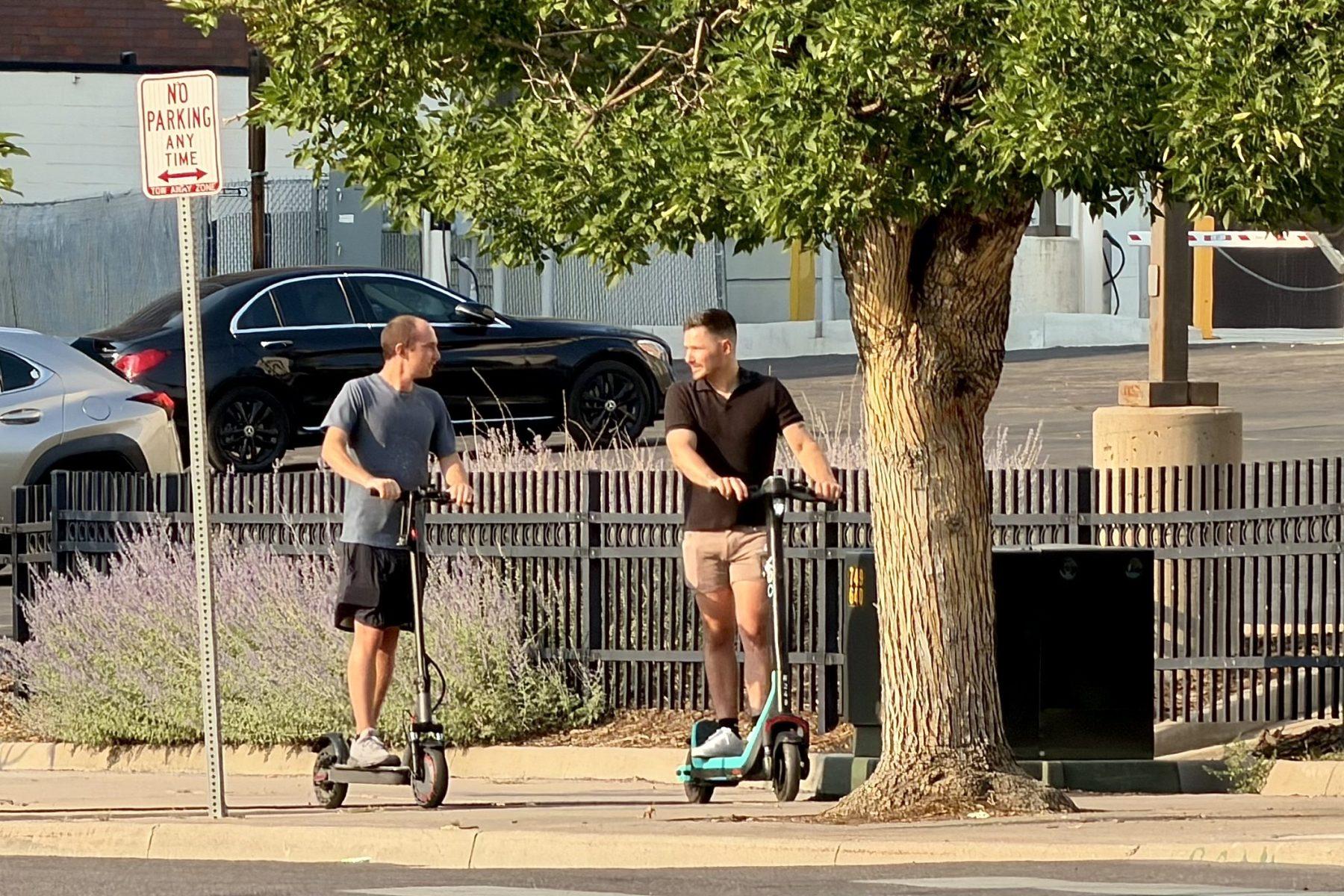
Riding electric scooters on sidewalks is prohibited in Denver, but you wouldn’t know it when you’re out and about in the city.
Illegal sidewalk riding has been a persistent issue ever since rentable e-scooters came to Denver in 2018. When the city began seeking new scooter vendors last year, one of its primary priorities was cracking down on the practice. That priority contributed to Veo being selected as Denver’s exclusive micromobility operator after a contentious separation from Lime and Bird.
Veo promised that its vehicles could detect when users ride on sidewalks and intervene, such as by automatically slowing down or stopping. However, more than three months after Veo launched in Denver in May, the vehicles are still constantly ridden on sidewalks. The behavior has continued even after a new city ordinance took effect on July 1, requiring rentable scooters to be equipped with sidewalk-detection technology.
Now Denver City Council is stepping in.
“We’ve received hundreds of emails from constituents with concerns about the current vendor,” Councilman Chris Hinds, who represents much of Denver’s urban core in District 10, says of Veo. “Constituents expected a change in behavior when the new vendor came to Denver, and then when the new law took effect. Clearly, a large group of people in District 10 feels let down.”
Hinds recently asked the City Attorney’s Office to review Veo’s contract. As first reported by BusinessDen, he believes that because the scooters can still operate on sidewalks unimpeded, it may constitute a breach of contract.
Veo claims that it has begun intervening when scooters are ridden on sidewalks, though not by stopping the vehicles. The company believes that its contract requires it to be able to stop scooters on sidewalks, not to actually do so.
“Veo is in compliance with the legislation in that our vehicles are equipped with the required technology, and we are implementing it in coordination with [the Denver Department of Transportation & Infrastructure],” says Paige Miller, spokesperson for Veo. “As the first phase of this implementation, Veo activated GPS-based sidewalk detection, including verbal warnings and geofencing, on July 1.”
Veo’s contract states that its vehicles “shall have the technical capability to implement deterrent features” when ridden on sidewalks, for example, “audible alerts or cutting of throttle power.” The city ordinance states that micromobility companies “shall equip electric scooters with sidewalk riding detection technology and utilize one or more sidewalk riding safety features” by July 1, such as fees, automatic deceleration or audible messages.
Hinds, a lead sponsor of the ordinance, disagrees with Veo’s reading of the law.
“There’s no world where I would want a vendor not to use technology that is required by law,” he says. “The spirit of the legislation is clear and was in every discussion I had about the topic. … The ordinance moves the responsibility to enforce our existing no sidewalk riding ordinance to the vendor.”
The City Attorney’s Office will decide whose interpretation is correct. The office confirmed to Westword that it is looking into the matter but declined to comment further.
Sidewalk crackdown on the horizon?
Miller says Veo’s sidewalk-riding enforcement system is advancing, with new measures coming this summer.
Beginning on Aug. 10, Veo plans to issue direct warnings and educational materials to users who ride on sidewalks. Users who repeatedly ride on sidewalks will eventually have their accounts frozen, the company reported in May, and the accounts can be reactivated once the user completes a rider education tutorial and quiz.
By the end of the summer, Veo expects to activate geofences that automatically slow down vehicles when they ride on sidewalks in certain areas, according to Miller. That system will continue scaling throughout the year, with initial enforcement focused on “sidewalk-riding hotspots,” which Veo is currently in the process of identifying.
“Veo is the first operator to deploy this technology across its entire Denver fleet after years without an operational sidewalk detection solution in the market,” Miller says. “As outlined in the city’s agreement, deployment is being carried out in close coordination with DOTI to ensure the system performs accurately and reliably before broader enforcement is implemented. This requires tailoring the technology to each neighborhood to ensure safe and effective deployment.”
However, ramping up enforcement relies on the sidewalk-riding detection system being functional. Veo vehicles often emit messages telling users to get off sidewalks when vehicles are ridden in bike lanes, or even on the sides of streets. In other cases, no message is emitted when the vehicles are actually illegally riding on sidewalks. Notably, Veo’s contract specifies that its technology shall detect sidewalk riding “with a high degree of certainty.”
Miller says the errors are part of a refining process.
“Our current system is intentionally calibrated to err on the side of reminding riders not to ride on the sidewalk, rather than risk missing instances of sidewalk riding,” she says. “We know that can occasionally result in alerts when someone is riding appropriately, and we’re working to improve that experience by supplementing GPS with LiDAR technology.”
Hannah Metzger
The city attorney’s contract review could potentially shift Veo’s implementation timeline. In addition, even if the office sides with Veo, Hinds says he is prepared to update the city statute if necessary to get scooters off the sidewalks.
“If the letter of the law does not reflect the spirit, I will ask my colleagues to help with a fix to match spirit and letter,” he says.
The City Attorney’s Office has no estimate for when the review will be completed. The office says next steps will be determined only after the review is finished. Under Veo’s contract, the city has the right to bring in another micromobility company or remove Veo if it does not comply with the terms of the agreement.
Complaints and compliments
Scooter-related grievances are not unique to Veo.
The city has long dealt with public outrage over scooters speeding on sidewalks and blocking right-of-ways, in addition to more critical concerns. Last year, Denver Health registered 1,868 patient encounters attributed to scooter injuries. The same year, eight people died while riding standing e-scooters in Denver, making it the deadliest year on record.
Many residents hoped Veo would bring about major change after the city dumped its previous scooter operators, Lime and Bird. Three months in, the impact of switching is still unfolding, but early problems have persisted. Veo’s first rider fatality occurred on June 10, after a 13-year-old boy was struck by a vehicle. The company has also faced scrutiny for illegal underage riding, amid complaints of more kids riding scooters since Veo arrived.
The Lower Downtown Neighborhood Association says it has heard “growing concerns” from local residents since Veo launched in May, particularly regarding sidewalk riding. However, the association says it is “also seeing measurable improvement.”
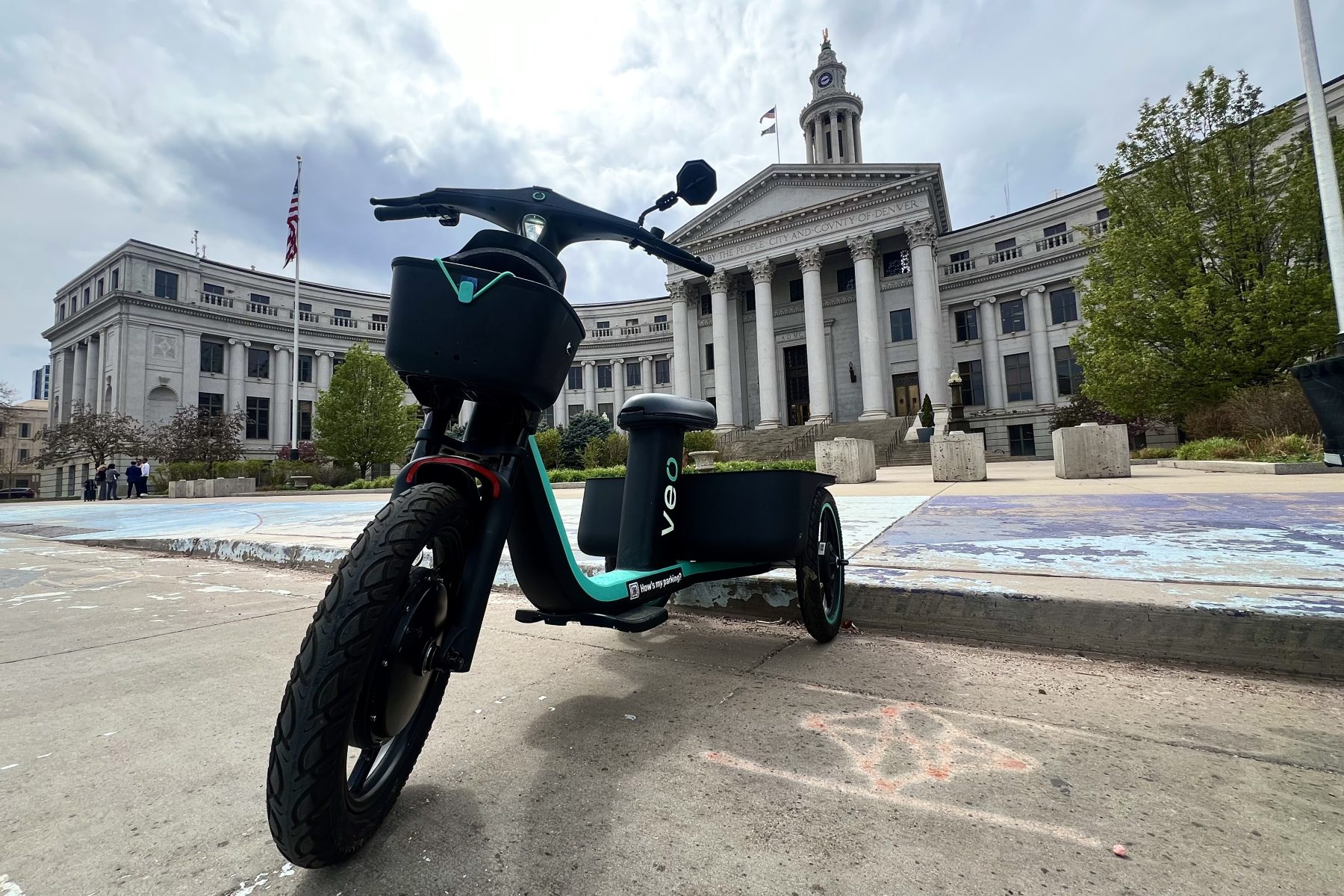
Veo’s diverse fleet of seated vehicles makes micromobility more physically accessible to users and, from the association’s perspective, has made riders more comfortable using the vehicles on streets and in bike lanes. The company has also successfully adopted a free ride program for low-income users, carrying on Denver’s world-leading equity program under Lime. And the association reports more communication and collaboration with Veo compared to the previous vendors.
“Whenever someone approaches us with concerns, we begin the conversation with a simple question: ‘Is the program better today than it was under Lime and Bird?’ Without exception, in the conversations we’ve had, the response has been, ‘Yes, but…’,” the downtown association leadership says in a joint statement. “The ‘but’ reflects legitimate issues that still need to be addressed, but that initial response is meaningful. It tells us the program is moving in the right direction, even if it hasn’t yet reached where everyone ultimately wants it to be.”
Users appear to have embraced the transition, as well. The seven-day rolling average number of daily e-scooter and bike trips taken in Denver jumped from under 16,000 as of April 30, to over 26,500 as of June 30, reflecting ridership before and after Veo came to town. That average is even higher than it was at the end of June 2025, which saw just over 25,000 trips taken under the previous scooter vendors, according to Denver’s micromobility dashboard.
“Much of the frustration we hear stems from expectations rather than disagreement with the program itself,” the association says. “We think Veo has a good story to tell.”