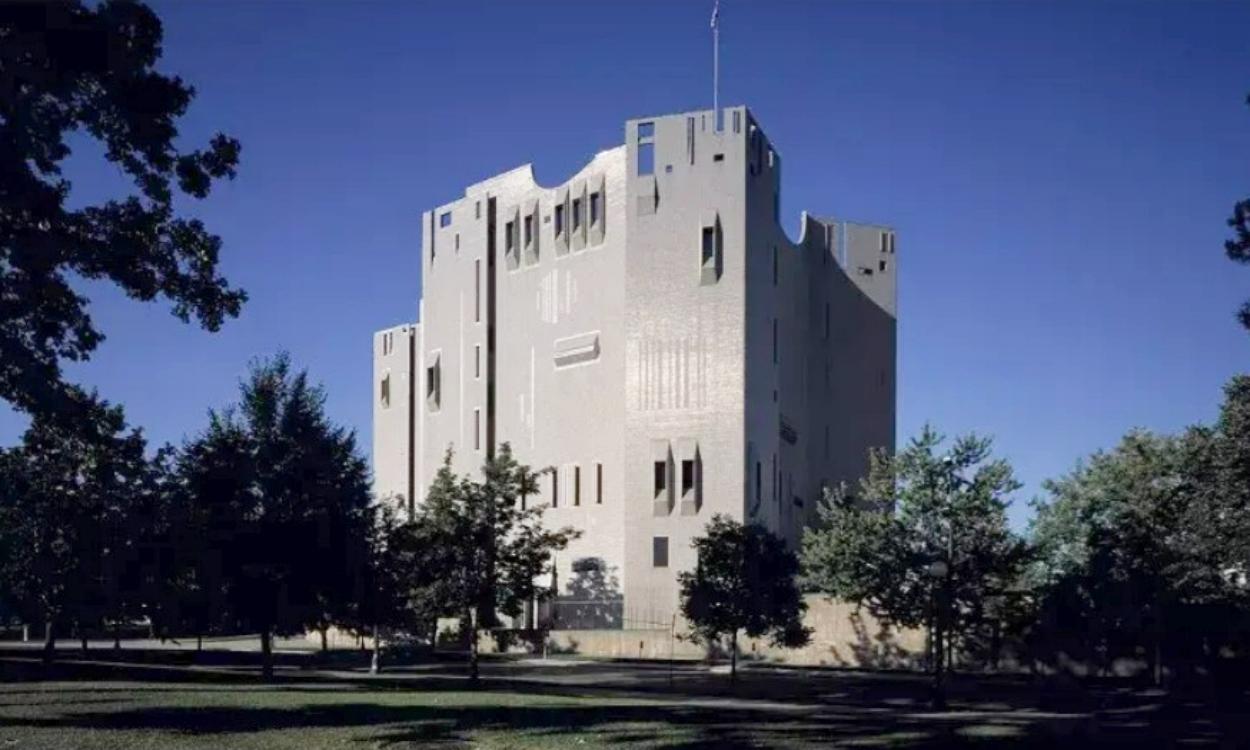
Provided by the Denver Art Museum

Audio By Carbonatix
Reader support matters more than ever
We're in the final stretch of our summer campaign. Our goal is to raise $25,000 to support the journalism our community relies on. Reader support is helping shape the future of local news.
There’s plenty to see at Denver Art Museum. The campus covers more than 400,000 square feet in the middle of the city, and its collection encompasses 80,000-plus works.
But behind the scenes, a drama has taken place.
In March 2024, DAM workers voted to unionize under the auspices of the American Federation of State, County & Municipal Employees (AFSCME), an AFL-CIO branch. It’s thought to be a first for a museum in Colorado, with negotiations for an initial contract on behalf of more than 200 workers beginning shortly thereafter and dragging out over the next two years before finally going into effect on Aug. 5.
The museum downplays any tension: A statement provided to Westword stresses that “The Denver Art Museum fully respects our employees’ legal right to organize and choose union representation.” But leaders of AFSCME Local 5280, the name given to the DAM union, say that the road to an agreement had plenty of bumps.
“There were some struggles,” Trudy Lovato, a gallery host who serves as president of the DAM union, says.
According to Kit Bernal, a senior curatorial assistant and union vice president, a staff gathering at which the union drive was announced turned into “a pretty standard kind of scare-tactic, anti-union meeting.” She vividly remembers the moment when one museum official said unions “were kind of a bummer.”
“That became a bit of a tag line throughout our organizing campaign,” she adds.
Along the way, AFSCME New Mexico and Colorado Council 18, the body that worked with pro-union DAM staffers, filed 13 unfair labor practice complaints, or ULPs, against the museum with the National Labor Relations Board, alleging violations of federal workplace regulations.
The matter was settled earlier this year, and while the museum did not admit to any wrongdoing, it agreed to rescind a rule pertaining to employee confidentiality and pledged not to disrupt the organizing process.
The now-deleted rule read: “Confidential information is any and all information disclosed or known to you because of employment with the museum that is not generally known to people outside the museum about its business.” As noted by Adam Schrader, the journalist behind Urgent Matters, the New York-based arts publication that first reported about the DAM matter on July 24, “Labor law generally protects employees’ right to discuss workplace conditions and organizing efforts with one another.”
A veteran of hard-news reporting for publications such as the New York Daily News and the New York Post, Schrader believes that most folks who cover the arts “don’t seem aware of public-records law,” and he certainly made use of it in his coverage of the Denver Art Museum matter. The formal NLRB case file, consisting of more than a half-dozen documents, can be accessed by Urgent Matters subscribers.
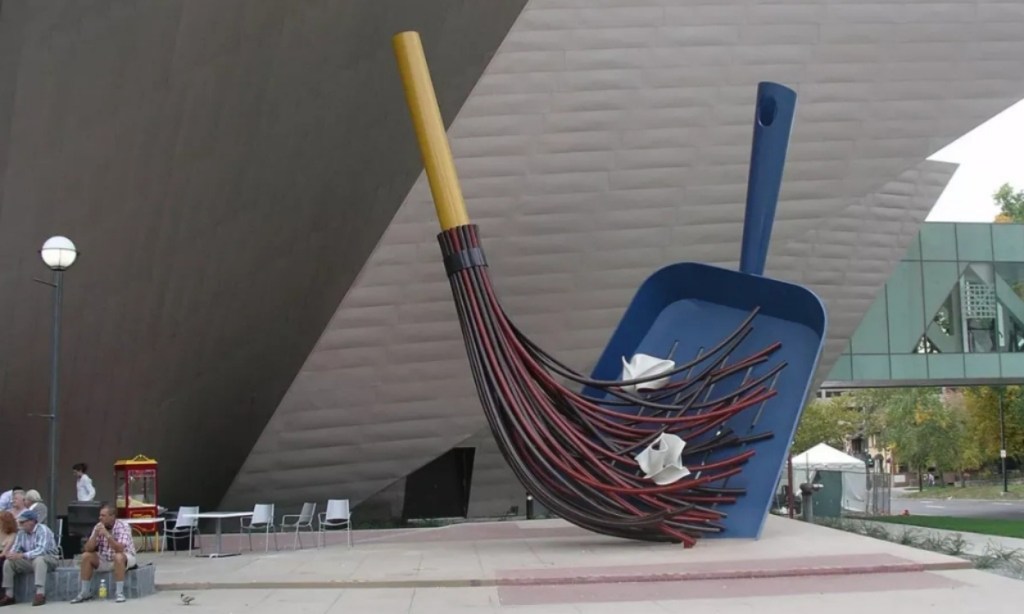
Courtesy of the Denver Art Museum
Lovato was a longtime patron of the Denver Art Museum before joining the staff. After doing so, however, “I noticed my co-workers were struggling a lot financially, and I heard about workplace safety issues, difficulty moving up in position and things like that.”
Bernal made similar observations. “I started working at the museum in 2021 in the sales-and-services department, which is very front-facing: working the membership desk, ticketing,” she says. “Then, in 2022, I moved into my curatorial assistant role, which is a lot more administrative, and I was not expecting there to be so much commonality between my experience in those two roles. But there was: I made no money, I was asked to do a lot with very little, and I didn’t have a lot of advancement opportunities.”
For these and other reasons, Lovato and Bernal joined the organizing effort.
After the museum declined to voluntarily recognize the union, an election was scheduled for March 2024. “We won in a landslide victory,” Lovato points out.
During collective bargaining, Bernal contends that “there were a lot of disagreements and pushback between us and management. Some things were really contentious regarding what the museum was willing to give versus what we felt were acceptable solutions for our colleagues and ourselves.”
The museum statement characterizes things differently. “Throughout the process, our primary goal was to ensure that all team members had access to clear information and an opportunity to make an informed decision through a fair, NLRB-monitored election. … Museum leadership engaged in good-faith negotiations with the union throughout the process.”
The museum contends that “the bargaining process was thorough, detailed and professional. Negotiating a first-time collective bargaining agreement involves complex discussions, and both bargaining teams worked rigorously to craft an agreement that balances staff priorities with operational sustainability.”
As for the unfair-labor-practice allegations, the museum offers a simple summary: “We reached a mutual resolution to address the administrative complaint raised with the NLRB regarding workplace policy language.”
Now that the contract is in place, labor and management seem equally eager to move forward in a positive direction.
“I think there can be a perception that because we have unionized, we were largely dissatisfied with our museum. And that’s not true at all,” Bernal stresses. “This work is really hard, and I would not have done it if I didn’t care so much about what I do, and if I didn’t think DAM could genuinely be a better place for its workers and for the community.”
Lovato believes cultural institutions, like DAM, are becoming “sacred” during such a “challenging time in our country.”
“I have a great love for the Denver Art Museum. I’ve been coming since I was a little kid, my son works for the museum, and I’ve been a member for a long time. I really have a passion for making it a great place to visit and to work,” she says.
“We completely echo that sentiment,” the museum statement emphasizes. “The passion our staff has for the museum and its mission is our greatest strength. We share a deep commitment to maintaining a positive, collaborative, and constructive workplace environment. Our staff members’ efforts and dedication make our exhibitions, educational programming, and community outreach possible. With the contract complete, our unified focus remains on welcoming visitors, supporting our cultural community and upholding the museum’s position as a world-class cultural institution.”
Neither Lovato nor Bernal are comfortable talking about potential unionization attempts at other museums and cultural institutions in Denver and beyond. “Those efforts are necessarily sort of covert for worker protection,” Lovato notes. Likewise, Bernal says that any such moves are “probably on the DL.”
Nonetheless, Bernal continues, “It’s really exciting that we were the first art museum in Colorado to unionize, and I’m so proud we are. A lot of people don’t think of cultural institutions as being workplaces, sites of labor, in the same way other workplaces are. We really need to reframe that. Not only are these places that serve culture, but they’re also places were people work. And I really hope we can be an example of things that can be achieved for other people to build on.”
For her part, Lovato confirms that “we definitely hope to inspire cultural institutions around the city and the country to organize a union, and we hope to pool our efforts and our resources with those cultural institutions and help them by way of sharing best practices…. I look forward to the day when Denver truly is a union town when it comes to our cultural institutions and would love to see better wages and better treatment for cultural workers all over the city.”