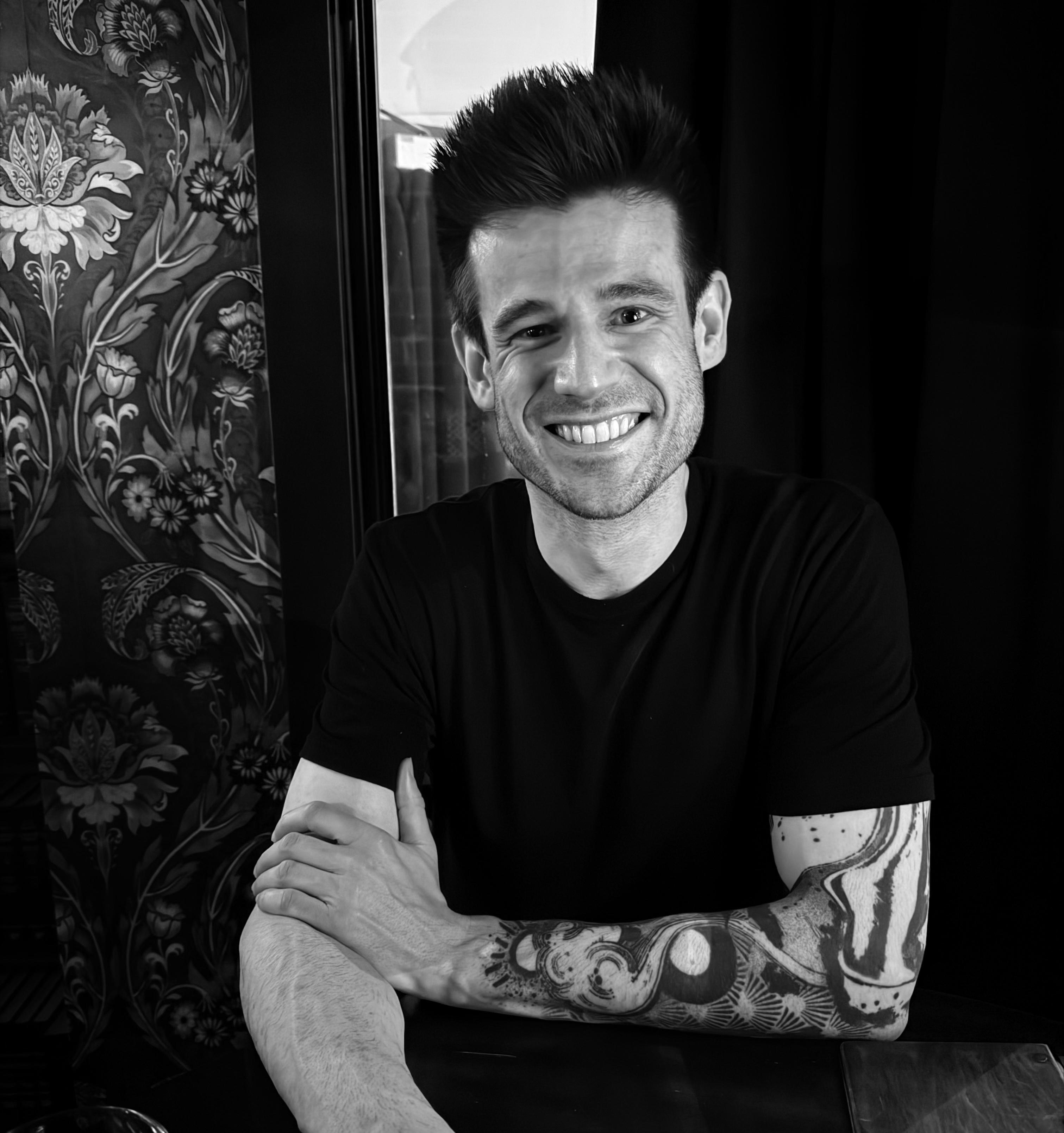
Photo by Andy Dixon

Audio By Carbonatix
In October 2025, the internet discovered that a GameStop in Denver still had a massive “Halo 3” mural plastered to an exterior wall. Diehard fans of the mega-hit video game series drove hundreds of miles just to stand in the presence of the peeling 18-year-old relic, and GameStop HQ commented on X, née Twitter, “We’ll take it down when something better comes out.” The post has since racked up over half a million likes.
Yes, love for the series runs deep in the veins of gamers all over the world — and Andy Dixon knows it. As president of the nonprofit Halo Growth Guild (HGG), he’s about to quarterback Citadel I, a grassroots “Halo” event taking place Aug. 15 and 16 at Localhost in Lakewood. It will bring players together from across the country to enjoy the series that once defined what shooting games — and competitive esports in general — could be.
But what is it about “Halo” that inspires such devotion, even in the twilight of its reign as a cultural juggernaut? Is there something to be learned here about play and nostalgia, something embodied in an event like Citadel I?
“There definitely was always a leaning toward militaristic things growing up,” Dixon says of his childhood. “My mom was in the Air Force, in the National Guard. So I think that made a huge impression on me, seeing her graduate in the Air Force blues. But also, we always joked that I played with too many G.I. Joes.”
It’s perhaps no surprise, then, that Dixon gravitated toward the “Halo” games, in which you play as the super soldier Master Chief, gunning down grotesque hordes of murderous aliens — or other players, of course. But for Dixon, as for many gamers, the virtual violence facilitated real-world bonding.
“The first friend I ever made as a kid, his name was Doug,” Dixon says. “He was just an absolute joy-of-life type of person. We reconnected in high school, and he was extremely good at ‘Halo 2’ and ‘Halo 3.’ He went to a [Major League Gaming] event, and the idea of that was so beyond what I could comprehend.
“Unfortunately, he passed away at 20,” he continues. “He was such a beam of light — it totally pulled the rug out from under me.”
Dixon fondly recalls how in their teen years, he and Doug would work together to set up LAN (local area network) parties, which were the apex of multiplayer gaming throughout the ’90s and aughts. As the graphics of first-person shooter (FPS) games got better and better, it got harder and harder to play with friends over a lackluster internet connection, as even minimal network latency could torpedo the split-second decision-making needed to achieve victory. And so the LAN party was born, a gathering in which groups of friends would haul their CPUs, CRT monitors, and whatever else they’d need to a single central location. They would then connect all their machines together, sitting shoulder to shoulder for lightning-fast, lag-free competition.
As documented in Merritt K’s book “LAN Party: Inside the Multiplayer Revolution,” LAN parties were (mostly, but not always) populated by young men. They were often sweaty from the physical strain of schlepping their equipment across town, and also from the heat given off by so many machines working overtime in a cramped space. Picture empty pizza boxes and soda cans littering the room, posters of Linkin Park taped to the walls. Imagine teens clicking and laughing and high-fiving their way through another game and another, as outside the dark of night steadily marched toward dawn.
Provided by Andy Dixon
Today, LAN parties are largely a thing of the past, and the competitive online matchmaking pioneered by “Halo 2” may have actually helped usher in their demise. But in our ever-more-isolated social media age, one can’t help but wonder if LAN parties captured something essential that gets lost when people game and socialize from home.
Dixon agrees that in-person gaming just hits different. “Everybody is rooting for each other, you know? We get competitive against each other, but at the end of the day, it’s nice to play side-by-side with people that you talk to online.”
And so this weekend’s Citadel I is, in many ways, an old-school LAN party. It’s the perfect outlet for local “Halo” players craving ’90s-style IRL connection — and trial by fire. “Online gameplay is great,” says Dixon, “but there are a lot of variables in terms of the internet connection, the servers, whether or not the game is functioning correctly at that time.”
Playing together in person, on the other hand, “is a test of your skill, your mental, everything you’re made of. If you want to be a competitor or a pro or an amateur, to really see what you’re worth, [you’ve got to] go to these events and put it all on the table.”
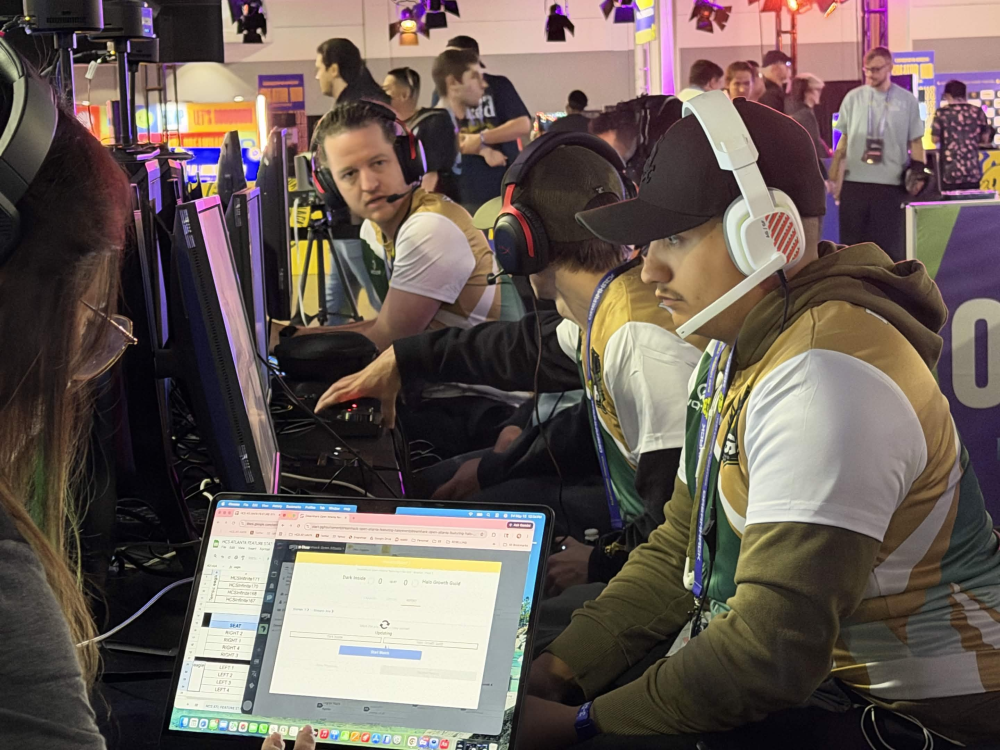
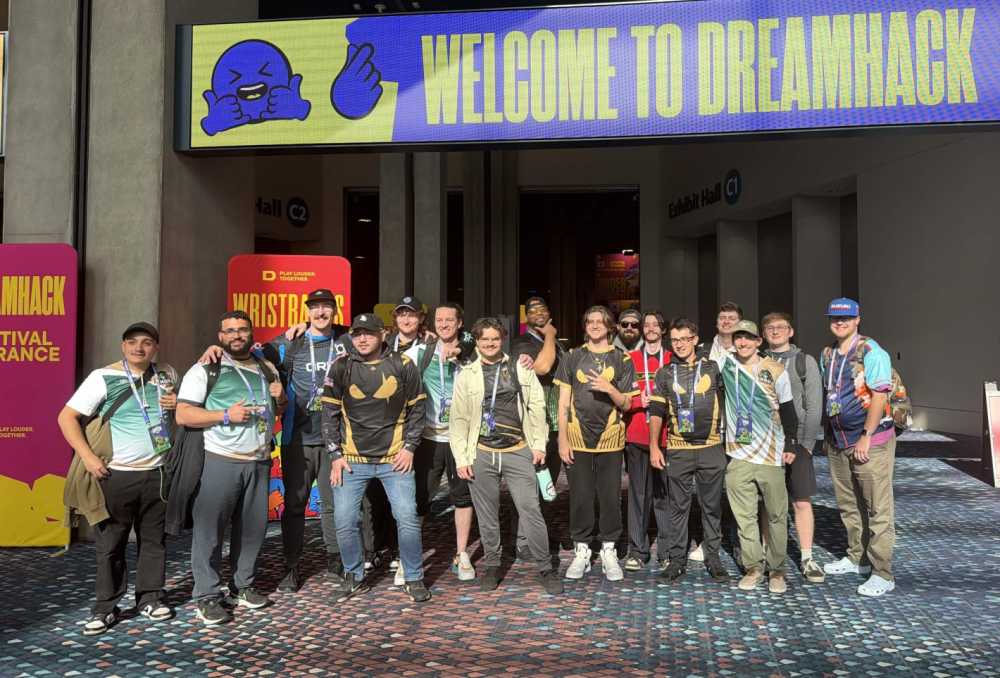
And Dixon does love to compete, though the impulse long lay dormant. After his teenage years he stepped away from “Halo,” thinking that his days of firing Needlers and swinging Gravity Hammers were over. Following in his mother’s footsteps, he joined the Air Force for a while. He moved to Colorado, got married, bought a house, stayed firmly within the lines of a traditional, culturally sanctioned adulthood. But then one day he gave “Halo” another try, which quickly rekindled his love for the series — and scratched a nagging itch for competition. He began to grind tournaments, getting rocked over and over by the more experienced players. But today he’s a sponsored “Halo” competitor known as “Sylva Phox,” shepherding the Halo Growth Guild squad through major esports events like DreamHack.
For Dixon, this evolution into skilled player, event organizer, and HGG president has happened in lockstep with profound personal growth. “I always prided myself on being the best follower in the group, whereas this has been an exercise in developing my leadership skills—not being afraid to trust myself, to try things and fail but learn from them,” he says.
“For a long time, I was scared to chase what truly made me happy, or to ‘follow my bliss,’ like Joseph Campbell says,” he continues. “I never imagined I would create a nonprofit in the esports world. I’m also a year plus into being completely sober off drugs and alcohol, and I have a baby boy on the way. I don’t think those things are not connected to this journey.”
He’s also kept his childhood friend Doug close to his heart. “Remembering him, I think that was a large part of my start back into this,” he says. “A part of pursuing this in ‘Halo’ was about keeping his memory alive.”
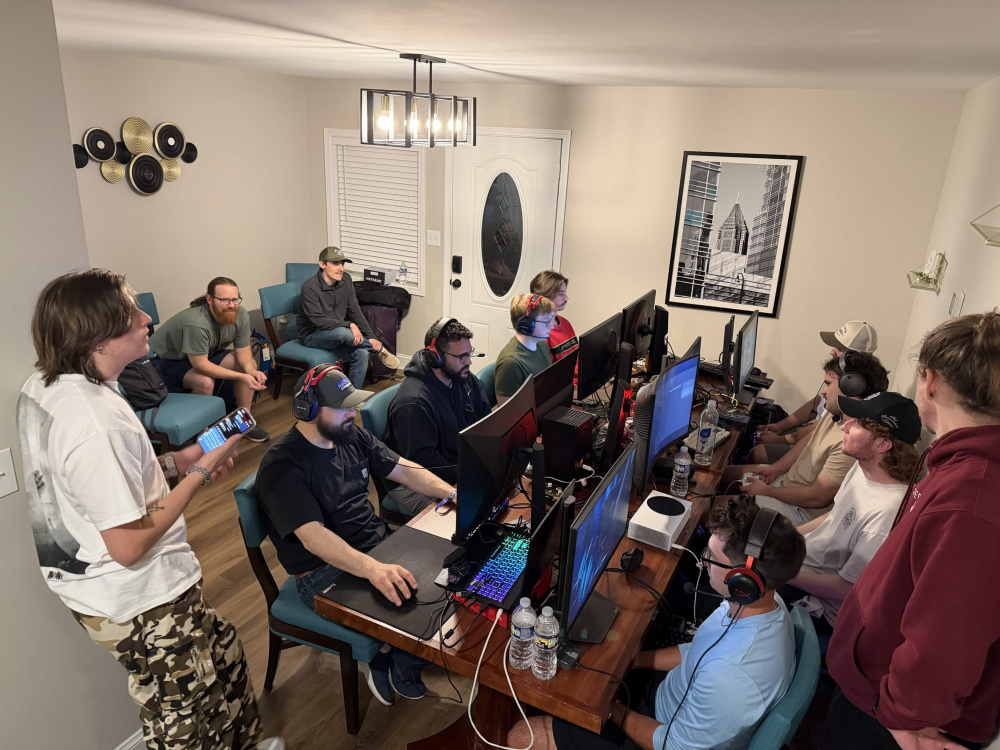
Photo by Andy Dixon
Maybe the overwhelming enthusiasm for that GameStop mural and Dixon’s renewed dedication to Halo are pointing to the same thing. Maybe “Halo” remains so beloved because for a certain generation of gamers, it provided early, formative experiences of play, competition, and friendship. It was the central focus of LAN parties and the joyful, Mountain Dew-soaked memories that came with them. Maybe “Halo” shows that if life is missing passion or connection in the present, the best place to find them could be in your past. Or as a recent viral post on X puts it, “all roads eventually lead back to the interests you had as a child.”
Building on the robust foundation laid by Colorado Evolved, which has been working hard to enrich the local “Halo” scene for years, Citadel I will host gamers from the Denver area and far beyond. “People are coming from New Jersey, from Florida, folks are coming from Oregon and Vegas and probably Texas,” says Dixon.
Whether you’re a casual or competitive player, the event is shaping up to be a memorable one. So if you miss rushing into battle armed with an energy sword and plasma grenades, or if you’re simply curious about local esports and LAN party vibes, you’re invited to check out Citadel I this weekend. Master Chief eagerly awaits your arrival.
The Citadel I Grassroots Halo Tournament is Saturday, Aug. 15, to Sunday, Aug. 16, at LocalHost Denver, 1882 S Wadsworth Blvd., Lakewood.