
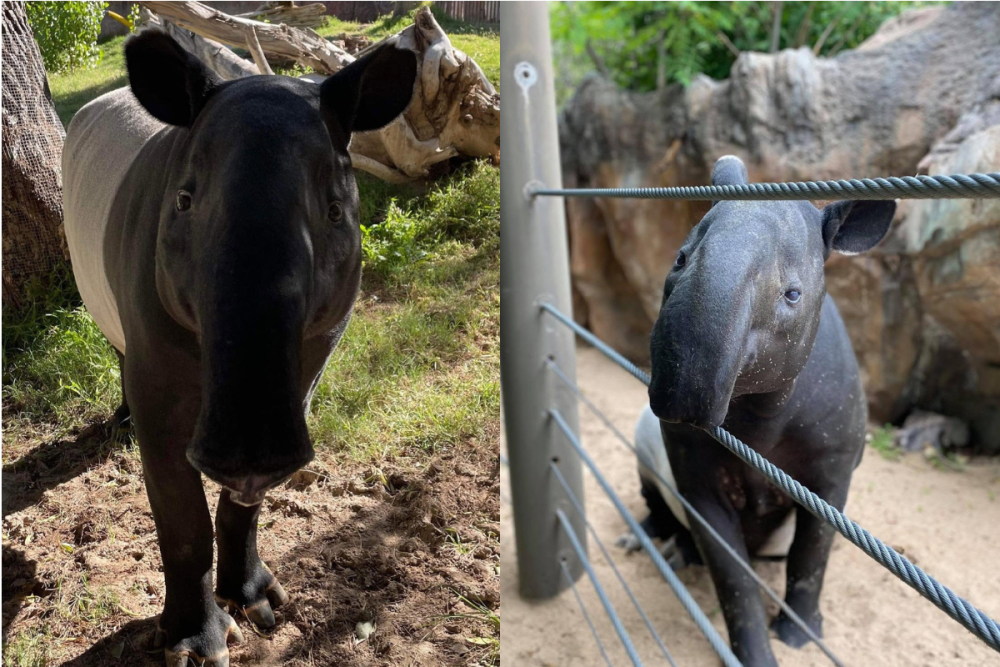
Provided by the Denver Zoo Conservation Alliance

Audio By Carbonatix
The Denver Zoo is bringing back an old friend after the investigation into the death of two Malayan tapirs.
Everyone say hello to Bengkulu (or Benny), the 20-year-old Malayan tapir who has returned to the the Denver Zoo Conservation Alliance‘s Toyota Elephant Passage this summer. But it’s not Benny’s first stint in the park. He lived at the zoo for 15 years between 2007 and 2022, and it seems like he is already comfortable, with some Reddit users posting videos of him chomping on leaves.
Benny returned Denver from the El Paso Zoo and Botanical Gardens back in May as part of a new breeding recommendation from the Association of Zoos and Aquariums (AZA) Species Survival Plan program, according to the El Paso Zoo.
“The Malayan tapir population has dropped significantly in the wild to 2,500 due to deforestation as their biggest threat,” the El Paso Zoo said in a post in May. “The zoo helps to conserve endangered species and maintain genetic diversity in zoo animal populations in a collaborative effort to prevent extinction.”
The reintroduction comes just a few months after two tapirs, 16-year-old JohHi and 18-year-old Rinny, died at the Denver park. The average lifespan of the cute, tubby relatives of horses and rhinoceroses is around 30 years, raising suspicion within the park.
The zoo’s Animal Care and Animal Health teams launched an internal investigation and, by the end of the month, determined the deaths were due to an “accidental overdose of copper,” according to a subsequent Facebook post. The zoo said copper is part of a common dietary supplement for the animal and the care team previously identified low levels in the two animals.
The zoo said it was “using this as an opportunity to review and strengthen internal protocols to reduce the possibility of incidents like this occurring in the future.”
Five months later, it brought in (or back) another tapir, something it says is a testament to the confidence it has in its improvements to “targeted enhancements to nutritional management systems, oversight and documentation to help prevent a similar incident from occurring again,” spokesperson Jake Kubié tells Westword.
“Benny’s arrival reflects that confidence, and we look forward to providing him with the exceptional care that every animal at Denver Zoo Conservation Alliance receives,” Kubié says.
Tapirs look a bit like an anteater crossed with an elephant. The mammals live in the jungles of Central and South America, as well as Southeast Asia, and often eat leaves, twigs and fruit.
Visitors can now say hello, or hello again, to Benny this summer.