The Center on Colfax

Audio By Carbonatix
At one point, Denver had five bars central to queer women. Since the late ‘90s, that number has shriveled to a heartbreaking zero, with Denver’s last lesbian bar, The Pearl, shutting its doors in April.
Though quieter now, Denver’s gay bar scene used to be vibrant. From the ‘70s to the 2000s, the queer scene held hubs in all corners of the city. From soft-pitch piano bars to booming disco clubs, queer people could congregate in spaces catered to their social auras.
Before the 1970s, most LGBTQ+ spaces operated underground — at home gatherings and in basements or upper floors of established businesses. Based on oral histories and business records collected by LGBTQ historian David Duffield, the first lesbian bar in the Mile High City opened between 1946 and 1957.
Up until 1972, Colorado enforced a sodomy statute that punished same-sex acts with up to 14 years in prison. After its repeal, police continued to target the community by enforcing lewd, loitering and solicitation laws.
It wasn’t until 1973, during Denver’s “Stonewall,” that these laws were repealed. On October 23, a major LGBTQ+ protest organized by the Gay Coalition of Denver erupted. Over 300 activists packed a Denver City Council meeting to challenge city ordinances that police used to arrest and harass queer people. The protest succeeded, and Denver eventually repealed several anti-gay laws and reduced targeted police harassment
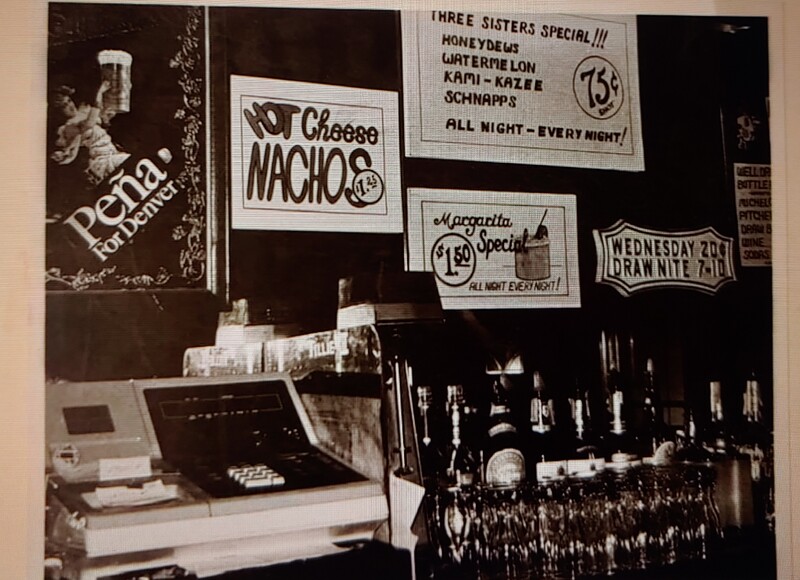
That same year, Denver’s first widely recognized lesbian bar, the Three Sisters — better known as “the Six Tits”— opened its doors at 3358 Mariposa St. in the Highland neighborhood. Since it was one of the first sapphic hubs in the West, lesbians would travel hundreds of miles from neighboring states just to get a taste of the scene.
“For so many women loving women, the story of the Three Sisters and the story of the lesbian bars in the 1970s … is that they were able to find love, they were able to find friendship, they were able to come out,” says Duffield. “They were able to be themselves. The bars were the social heart of the community.”
Bars were among the first central spaces for women to congregate and cultivate their empowerment. From here, networks of sapphic, community-based institutions concentrated in Capitol Hill began to grow outside of drinking culture. Among the most popular were bookstores and sports groups.
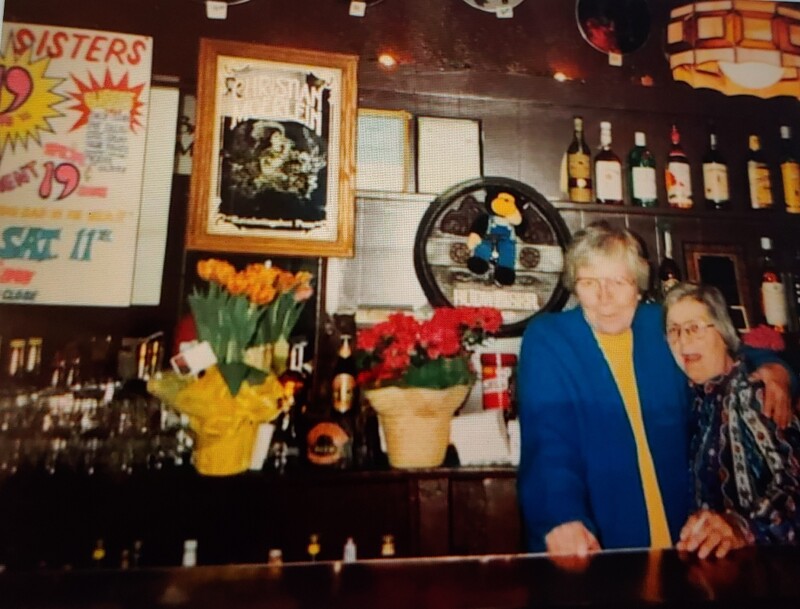
Jan Gibbons and Jessie MacDonald, along with a third business partner, sought to create a central hub for Denver’s queer women. That wish materialized into the Three Sisters. During this pivotal time, the bar provided a refuge for queer women that didn’t quite exist elsewhere.
Mary Romano
The establishment of the Three Sisters had its tribulations, at first receiving a cold reaction from the neighborhood. But over time, it became a staple in the area, with patrons lining up down the block just to take a peek inside.
As part of an older, guarded queer crowd, Gibbons and MacDonald strove to shield their clients from outside homophobic cruelties. They hoped to create a safe space where lesbians were free to be themselves and lean on one another.
For Ginger Elm, the Three Sisters provided a warmth of community she had left back home. Elm grew up in Nebraska and had few allies in Colorado. Being queer in the ’70s added another complex layer. But under Gibbons and MacDonald’s roof, finding solace was simple.
“For somebody like me who had moved out here and had no family, it was the next best thing,” Elm recalls. “I had nowhere to go on Thanksgiving. I had nowhere to go on Christmas and nowhere to go on the holidays. So [the Three Sisters] became my second home.”
In the absence of kin, chosen family filled the gaps. When those gaps needed filling, the Three Sisters provided.
“They were inviting; they were non-judgmental,” Elm says. “If you needed something, somebody always came through somehow, some way to be able to support you. Everybody had each other’s backs down there.”
The Three Sisters hosted several events, from community fundraisers to live music performances. The bar helped support Big Mama Rag, Denver’s feminist community paper, and in turn, the paper uplifted the bar. And when the AIDS epidemic struck, Gibbons and MacDonald helped organize charity events.
Mary Romano
The Three Sisters paved the way for other sapphic hubs to launch. In 1975, the Highland Bar, a common meeting point for lesbians, set up shop around the corner. The bar, quaint and tucked away, catered to both straight and queer individuals but featured a largely lesbian clientele.
One year later, the Velvet Hammer opened at 2638 W. 23rd Ave. near Jefferson Park. For feminist activists, the bar served as a focal point for organizing. The bar would support women’s issues through donations, advertisements, and hosting benefits, sometimes in a way that contrasted with the Three Sisters’ approach. Unlike the Three Sisters, the bar was less welcoming to men, as it strove to create a local women’s culture. After expanding, the Velvet Hammer moved to a second location at 38th and Chestnut, opening as a restaurant and bar, allowing women under 21 to access the organizing space.
Catering to just women loving women made it harder for these establishments to thrive. Women earned less than men and could only recently run their own businesses. Many sapphic bars tried to serve cheap drinks and food that their clients could afford. But with rent prices coupled with other expenses, many establishments closed after a few years. The Velvet Hammer was one, closing in 1979 — three years after opening.
Yet, nightlife remained a central part of the queer social sphere.
By the late 70s and the start of the ‘80s, the queer bar scene began to thrive. In 1977, the Globe International, Denver’s first women’s disco bar, opened at 38th and Chestnut, paving the way for a primarily lesbian club-like space. Earlier spaces had operated in quiet corners of the city, but disco demanded the opposite. For the first time, lesbians in Denver had a nightlife space that matched the energy of the broader queer movement. Disco was a sanctuary for empowerment, promoting self-expression, especially for queer women of color.
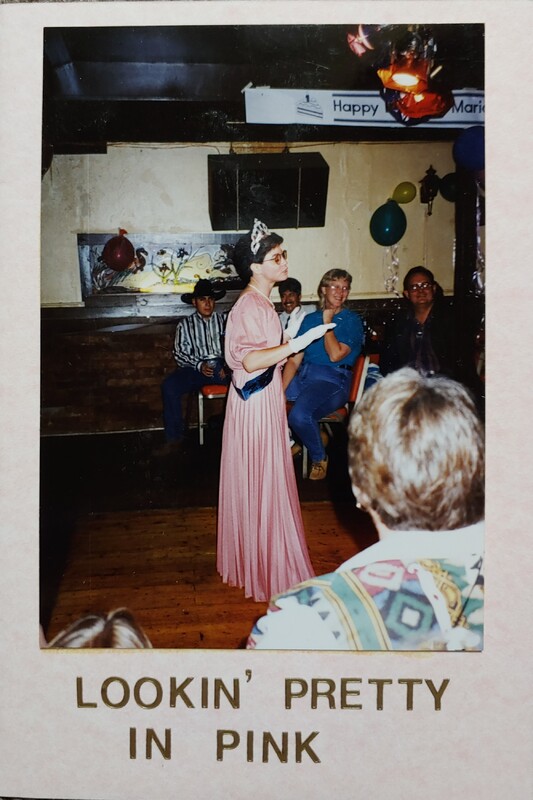
Mary Romano, who spent her 20s and 30s in Denver’s bar scene during the 1980s, remembers the lure of the Three Sisters and the Globe, and what it meant to be queer back then. Romano, closeted at the time, found comfort in her sexuality through her experiences at the bars.
Mary Romano
“I never felt like I couldn’t do anything,” Romano says. “And part of that empowerment was that I had found my people, so to speak. And the bars really were the place where that happened.”
Romano’s journey started at the Three Sisters, but as time progressed, she found herself also exploring other establishments in the scene.
The ‘80s marked the height of the bar scene. More people dared to come out, and the crowd flocked less cautiously. More clients meant more bars, and more bars meant a larger scene.
“In the ‘80s, you still had to be careful, but it was a lot more fun,” Romano recalls. “There were a lot of women who were out. There were more bars.”
In 1980, a lesbian-owned piano bar called the Orr House emerged in the Belleview Hotel on Broadway. Two years later, Lipps, a smaller predominantly lesbian bar, opened at 6300 W. Colfax Ave. in Lakewood.
The scene even began offering more services – like providing safe places to eat. For LGBTQ people, feeling comfortable in certain restaurants was difficult. Back then, only a handful of LGBTQ+ bars served food. In 1984, the Denver Detour took on this task at East Colfax and Pearl Street. The owner, a lesbian, naturally drew a sapphic crowd. But because of its menu, the Detour quickly became a mingled space.
Yet, it was harder for women to break into the male gay bar scene. Without being escorted by a group of men, part of a sports group or a performing act, it could be harder to gain access to those spaces. That made sapphic-specific spaces all the more necessary.
During this time, the Rubber Husbands formed, a lip-sync comedy theater group comprised of four women. Created in 1982, the group would dazzle their audience with performances of 80s hits, entertaining acts and creative costumes. Their performances at curated events helped open gay men’s bars to women.
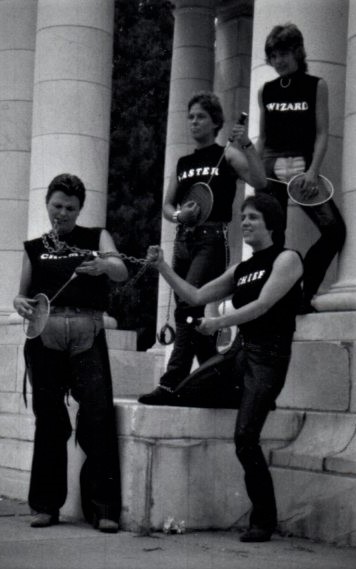
Bucy
One of their members, Bucy, recalls gaining access to the Ballpark at 107 S. Broadway, a notable gay bathhouse and nightlife venue in Denver, during the late ‘70s and ‘80s.
“We put on a ladies’ day at the ballpark,” says Bucy. “We were friends with the owners, and they allowed us to take over…We got to go as women— got to go and actually experience being in a bath house. We used to be the only women who got to experience that. And it was incredible.”
The Rubber Husbands provided much-needed comedic relief for the community, especially as the AIDS epidemic ramped up. Its effects rippled through the entire community, leading to further discrimination and setbacks. When doctors and scientists refused to care for patients, lesbians showed up.
As someone so involved in the gay bar scene, Bucy directly suffered through this period.
“Because I was so connected to the men’s bars, I basically lost all of my male friends to AIDS,” Bucy says. “I think a lot of lesbians were doing such positive things and giving blood to their male friends, you know, just trying to get through that terrible period.”
Most LGBTQ+ bars began holding fundraisers to combat the detrimental impact of the disease. Members of the community stood in solidarity with each other when the rest of the world shunned them.
Romano recalls the LGBTQ+ scene shifting during this time. Bars once exclusive to men or women began to blend.
“[AIDS] was really in the men’s community, but it did affect the women’s community,” Romano says. “Early on, we were very separated. We had men’s and women’s bars. There was some mixing, but not as much. But they started to mix more…The women’s community lost a lot of male friends as well, and it affected our community. And the way that people treated gay people because of AIDS, it was another little bit of a setback.”
Through strife, bars continued to raise money and expand. In the late ‘80s, Charlie’s, Denver’s popular country-western bar for gay men, opened a western-lesbian counterpart — Ms. C’s on East Colfax. Around the same time, Divine Maddness, a new large-scale lesbian-owned venue, appeared off West 6th Avenue. Unlike Ms. C’s, the space offered a unique layout, where patrons could bond over a volleyball game or let loose on the dance floor.
In these sanctuaries, queer people cashed in moments of release, away from the toils of the outside world. Battles of injustices were still to be fought the next morning, but for the night, some level of harmony transpired.
As the ’90s rolled around, Colorado’s LGBTQ community faced yet another struggle. In 1992, Amendment 2, a state constitutional amendment banning anti-discrimination protections for queer individuals, was passed. Labeled as the “Hate State,” Colorado’s queer residents suffered from the setback. But the community refused to hide away and stay silent.
Through it all, the Three Sisters’ doors remained open. But in 1996, MacDonald’s battle with Alzheimer’s progressed, and Gibbons decided it was time to close the bar’s doors. That same year, in the landmark case Romer v. Evans, the Supreme Court ruled Amendment 2 unconstitutional.
Over time, the community expanded into other areas, and the bar scene began to fizzle out. Tequila Rosas at Brighton Boulevard and York Street, and the Elle located at the corner of Speer and Colfax, two predominantly lesbian bars, emerged but did not remain open into the 2000s. Social shifts coupled with financial disparities led sapphic communities to disperse elsewhere.
“There was an ecology and an economy around women loving women,” Duffield explains, speaking on the past community bar structure. “That economy didn’t necessarily die — it got subsumed into other areas. The ecology, the visibility of women loving women, did decline in the 1990s and 2000s because it got absorbed into a larger culture.”
In 2012, what was thought to be Denver’s last lesbian bar opened on East Colfax. Blush and Blu, whose owner had previously run two other sapphic establishments until 2011, became a prominent space for lesbians. But in 2024, after operating for over a decade, the bar shuttered due to its poor reputation and a lawsuit by former employees for wage theft and racial discrimination.
Though structurally gone, bits and pieces of these bars remain. Thanks to The Center on Colfax and the History of Colorado’s archiving groups, several artifacts have been restored to serve as reminders of the city’s history.
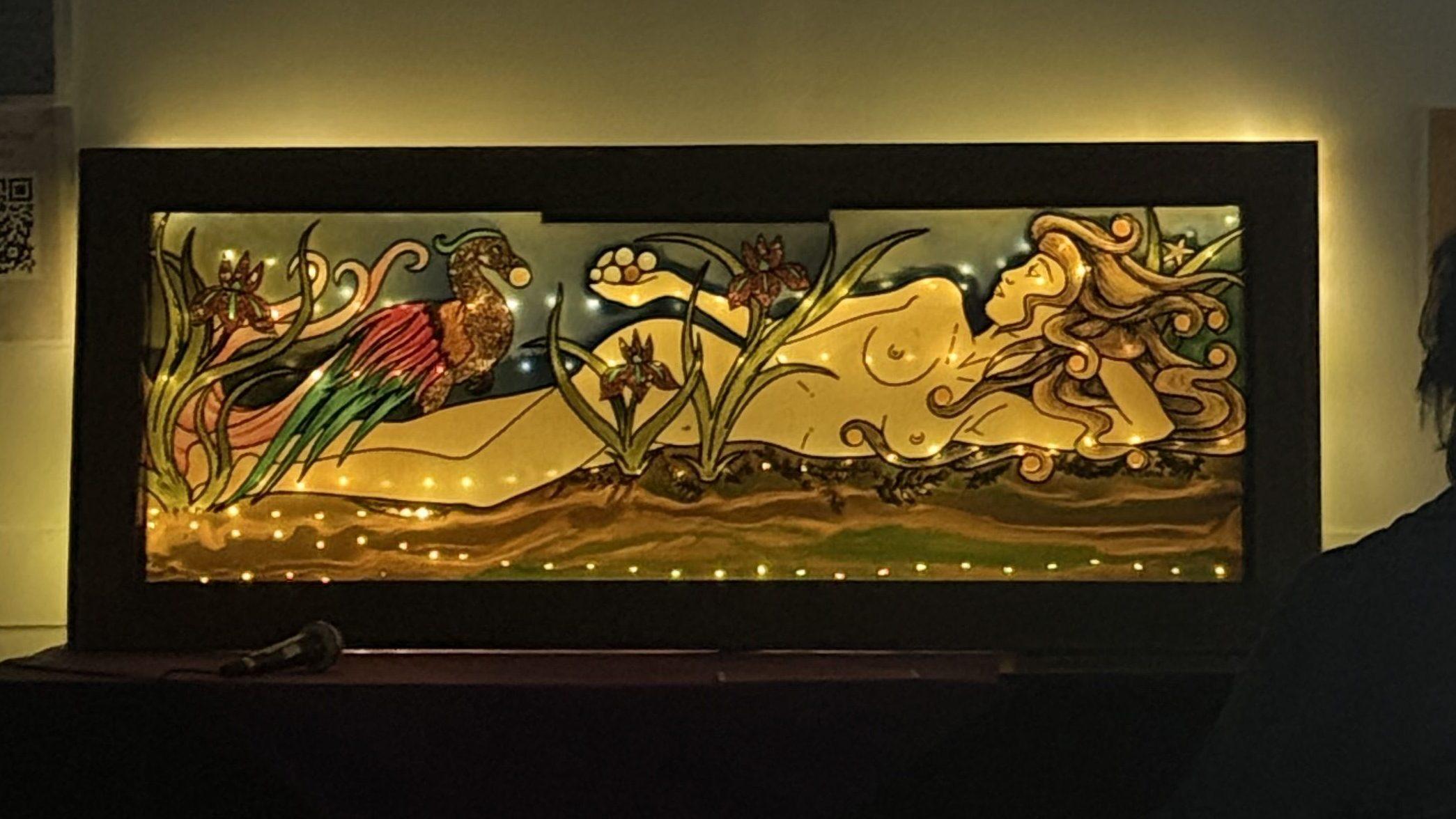
Recently, a hand-crafted stained glass piece of a woman named “Marge” was gifted to The Center by Elm. For 40 years, Marge sat among three other similar pieces in the Three Sisters, watching history unfold. Now, she resides in the Center, where patrons delving into queer history can learn about her roots.
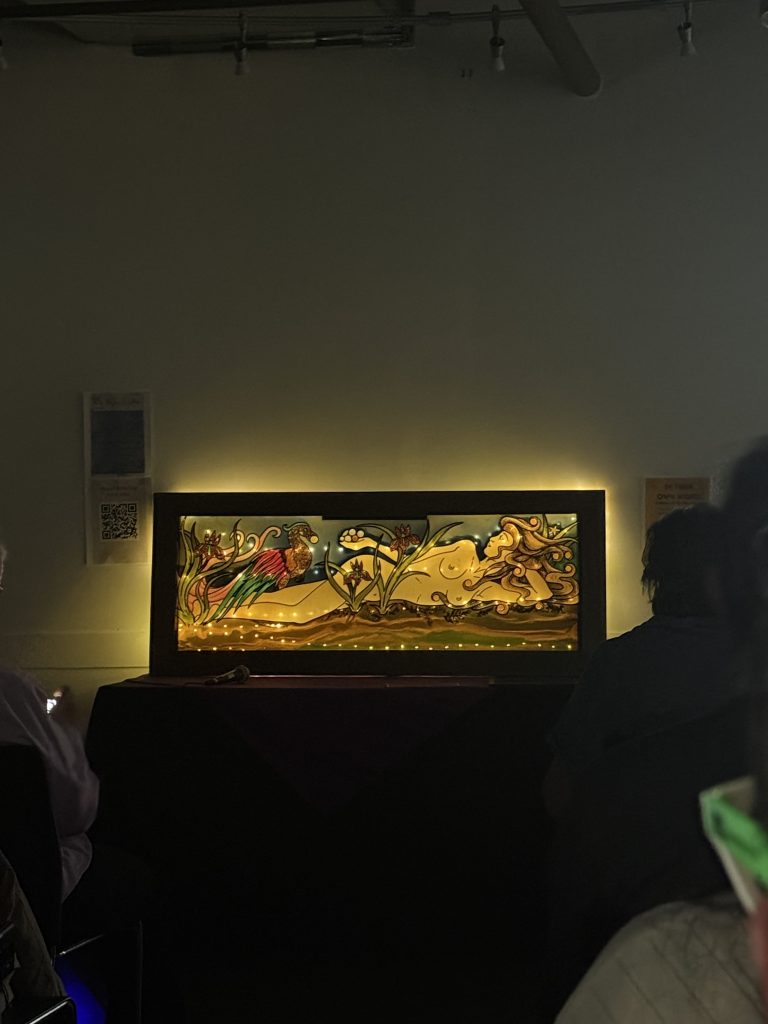
The Center on Colfax
All of Denver’s lesbian bars may be gone, but their historic roots endure, much like the community. Even without a permanent home, Denver’s sapphic community lives on through local organizational efforts and fragments left behind by the Three Sisters.