Jeremy Price for Westword

Audio By Carbonatix
“Magic: The Gathering” is having an unprecedented cultural moment. To entice citizens of nearby nerd kingdoms, “Magic” has recently collaborated with Marvel, “Final Fantasy,” and “Lord of the Rings.” Olympians and A-list celebrities are loudly celebrating their love of the game and even, in the case of Post Malone, spending $2 million on a single card. Indeed, with over 50 million players around the world, “Magic” is more popular today than ever before.
But there’s one city that has attracted and cultivated many of the best “Magic” players on the planet: Denver, Colorado. Two Hall of Famers live here, as do multiple champions of the Pro Tour, an invitation-only tournament series for the world’s top competitors. Beyond the famed professionals, scores of dedicated grinders regularly hone their skills in strip mall game shops all over the city, making Denver’s competitive scene one of, if not the best, in the entire country.
Which, at first glance, may seem a bit odd. After all, Denverites are often thought of as outdoorsy, adventurous, always itching for another camping trip or weekend on the slopes. So what exactly is “Magic,” and how did Denver, of all places, become a world-class destination for such an eccentric and sedentary subculture?
Long before Pokémon and Yu-Gi-Oh! cards hit store shelves, “Magic” pioneered the entire trading card game genre in 1993. Sometimes described as chess meets poker with a high fantasy theme, “Magic” involves preparing a deck of meticulously selected cards and facing off against one or more opponents with decks of their own. You then begin what becomes, in your mind’s eye, a high-octane magical duel, with dragons and elves and bolts of lightning zipping past your ears. If you can outmaneuver your opponent’s spells and slash their life points down to zero, you win.
At a casual level, “Magic” is easier to learn than many board games. But at the highest echelons of competitive play, like at tournaments with tens of thousands of dollars on the line, “Magic” requires a depth of knowledge and strategic prowess that few games, if any, can match. In 2019, the MIT Technology Review even dubbed it “the world’s most complex game.”
That’s essentially “Magic” in a nutshell — except for the important parts. Like the sickening lurch in your stomach when all your brilliant plans and incremental victories are undone by a single careless mistake. Or the bone-deep surge of relief and elation and pride when you win a nail-biter, friends clapping you on the back and nodding wordlessly.
So how is it that so many all-time “Magic” greats, those with the cognitive horsepower and emotional fortitude to compete and win on the world stage, ended up in Denver, Colorado?
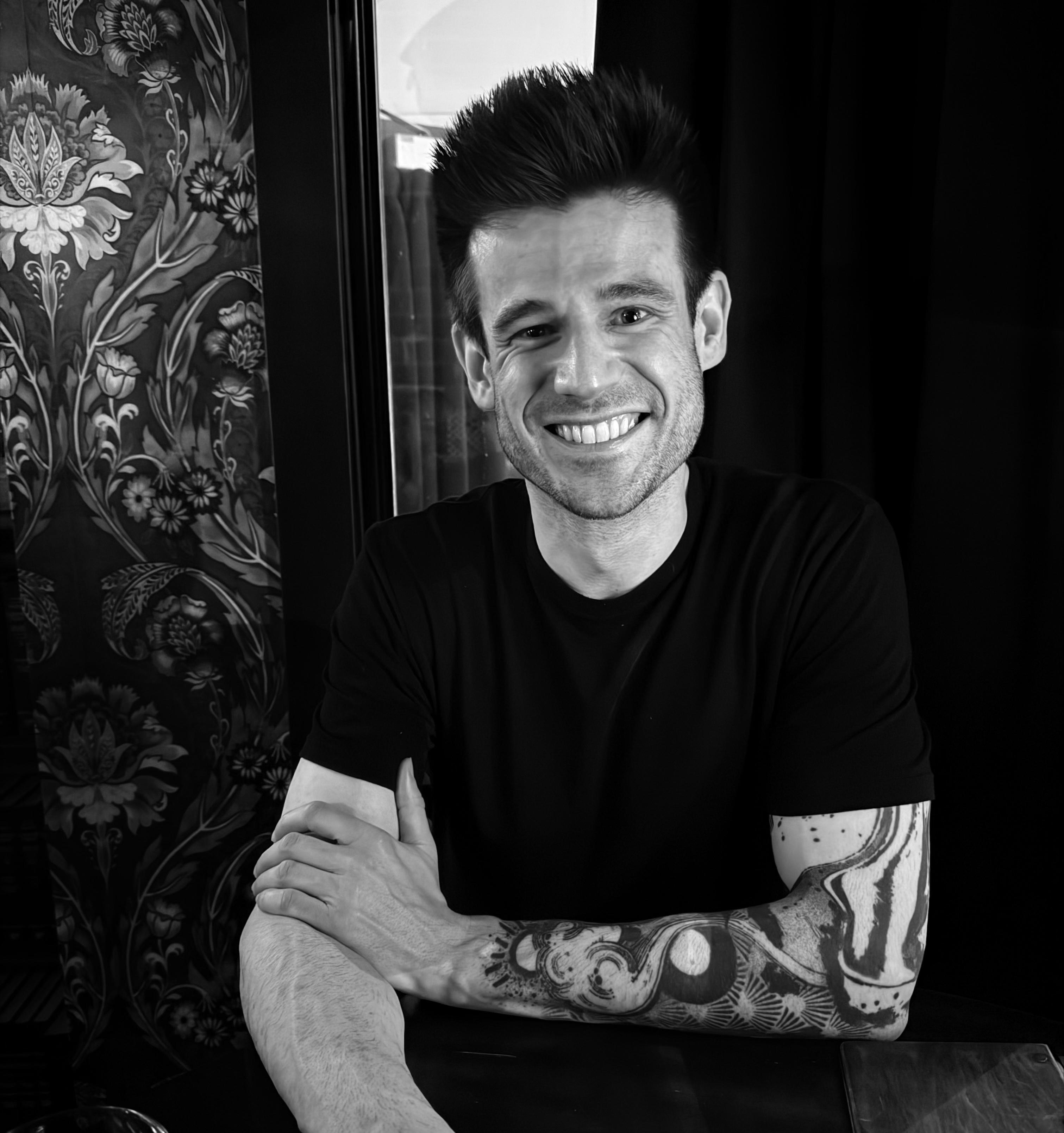
Luis Scott-Vargas, known in the “Magic” world as LSV, is a professional player and community leader whose mile-long list of accomplishments makes him a certified GOAT, one of the best players in the history of the game. In 2013, he was inducted into the “Magic” Hall of Fame. Today, he remembers how he learned to play at age eleven, and how his career was almost cut short in high school.
Jeremy Price for Westword
“My parents actually told me, ‘You can’t play ‘Magic,’ your grades are too bad,’” he says. “So I stopped playing, and I got good grades after that — so they weren’t wrong.”
He later jumped back into the game while attending University of California, Davis, and started entering bigger competitions in 2003. After making a name for himself as an elite player, one day he got a call from Denver-based game design studio Dire Wolf Digital. The company was scouting the “Magic” world, searching for skilled players they could mold into sophisticated game designers.
“They hired … Patrick Chapin, who moved out here,” Scott-Vargas recalls. “Chapin is another Hall of Famer, and he hired me.”
Scott-Vargas relocated to Denver in 2012, joining the Dire Wolf team and working on acclaimed digital card games like “Eternal” and “The Elder Scrolls: Legends.” In the process, he helped turn Dire Wolf into a renowned industry leader, one trusted with top-tier IPs like “Game of Thrones” and “Dune.”
Through it all, “Magic” players were often the architects of the studio’s success. “They were always on the lookout for talented designers, and “Magic” players are really good at game design — a lot of the skills overlap. Eventually I was in a position to be hiring at Dire Wolf… and I basically hired a bunch of my friends,” Scott-Vargas says with a laugh.
All in, Scott-Vargas handpicked about half a dozen “Magic” pros from around the country to move to Denver and work on games for Dire Wolf. One of Scott-Vargas’ recruits, 2025 Pro Tour Aetherdrift Champion Matt Nass, adds: “The number one skill for game design is empathy, because you’re trying to create an experience for a wide variety of people.”
Dire Wolf likely isn’t the only company to bring “Magic” players to town — Denver is a hotbed for tech talent, and the problem-solving elements of “Magic” often appeal to STEM-inclined brains. (Richard Garfield actually created the game while finishing a PhD in combinatorial mathematics at the University of Pennsylvania.) But Dire Wolf became a unique pipeline for bringing the best, brightest, most empathetic “Magic” experts into the city, changing the local scene forever. So what exactly were those ripple effects? And what other factors make Denver players so good at the game?
Denver residents Sam and Carolyn Pardee, the “Magic” world’s premier power couple, shed light on these questions. Sam is another Scott-Vargas Dire Wolf hire who won the Strixhaven Championship in 2021, while Carolyn was the co-chair and three-time champion of the Venus and Mercury League, a “Magic” community and tournament organization for people of marginalized genders.
As Sam tells it, Dire Wolf was only the beginning. Once he and other pros had moved to Denver for work, the city began to exert a magnetic pull on their fellow competitors, who might crash on a local player’s couch for a while or even become residents themselves — but not simply to get better at “Magic.”
“Josh [McClain, for example] didn’t move here for the ‘Magic’ scene, or because we’re all great players,” Sam clarifies. “We just became friends through playing, and he wanted to live where his friends live.”
When contemplating a big move, who wouldn’t be drawn to a city with a ready-made friend group? This effect began to snowball, creating an increasingly high density of first-class players in Denver.
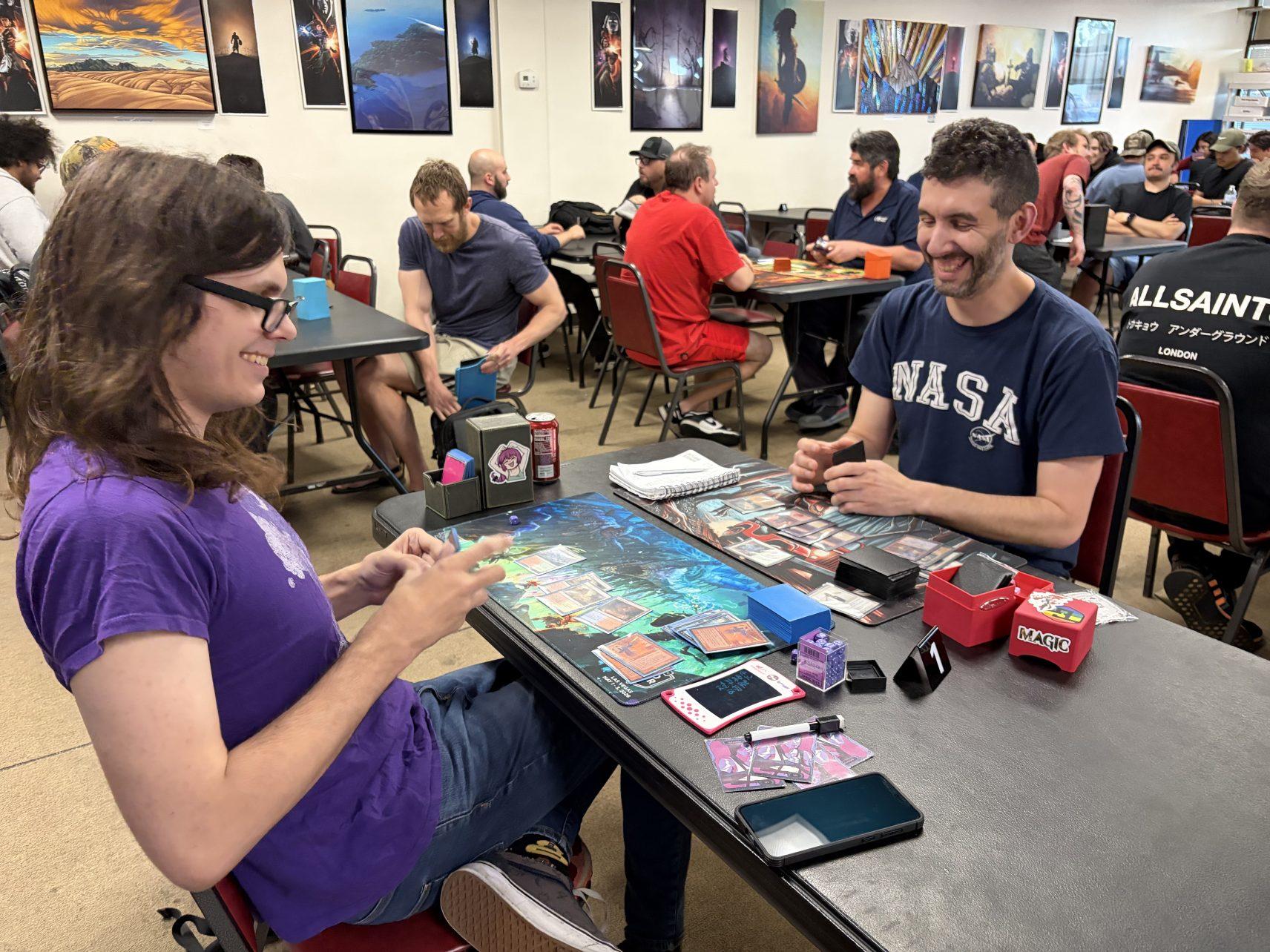
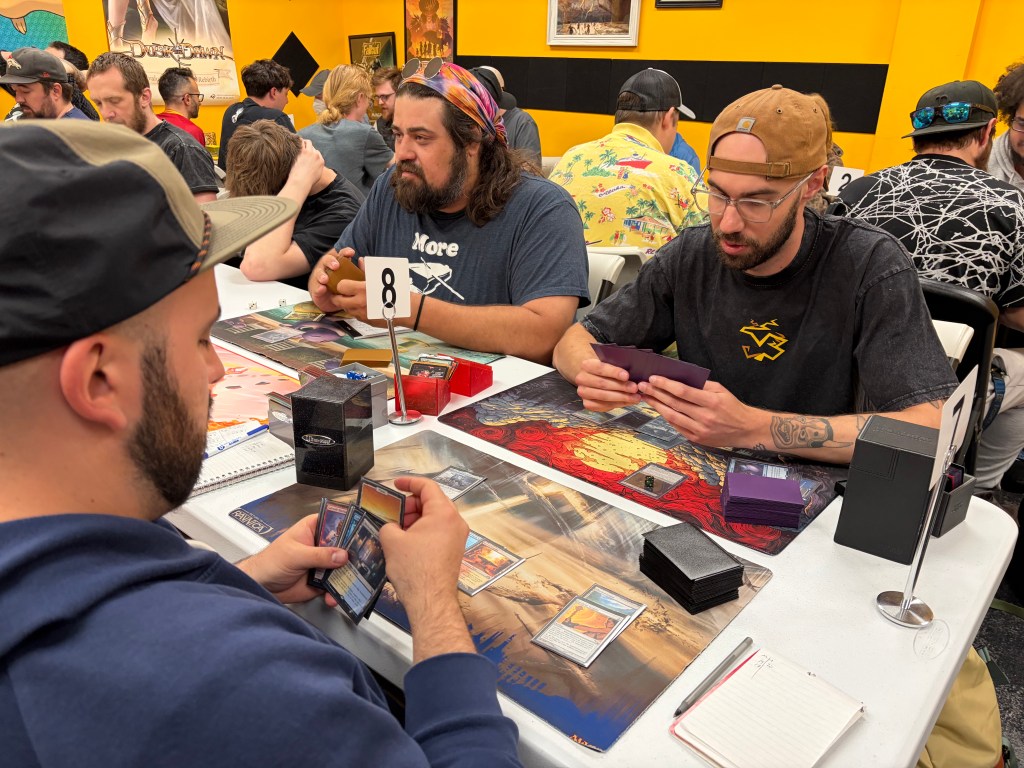
Carolyn elaborates on another detail critical to Denver’s success: the unusually high number of game stores, like Denver Central Games, Mythic Games, and Enchanted Grounds. These beloved shops provide players with the cards they need, serve as third places for community socializing, and host events and tournaments. Denver-area stores are distinctly creative and collaborative in working around one another’s schedules so that their events don’t conflict, even hosting hours-long Regional Championship Qualifiers (RCQs) on weeknights if weekends are already booked. The end result is far more opportunities to compete than you’ll likely find elsewhere: “A friend from Atlanta is like, ‘We don’t even have an RCQ every weekend!’” Carolyn says.
RCQ tournaments are, in general, for serious spell-slingers only — they’re the first step toward a coveted Pro Tour qualification and really making it as a player. But Carolyn explains that because there are so many of them in Denver, “they’re almost treated like local events. Some people like me want to win, and some people show up just because they like ‘Magic.’”
Jeremy Price for Westword
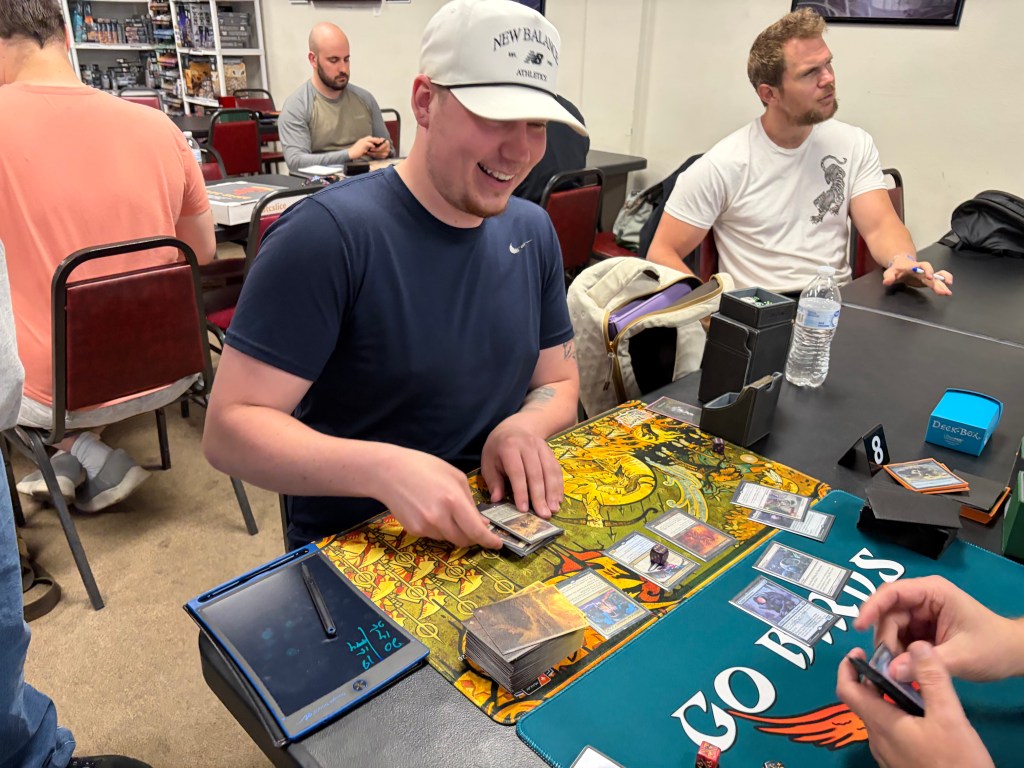
In other words, maybe the high frequency and availability of RCQs lower the barrier to entry for more casual players, exposing them to higher-level play and creating an on-ramp to their own competitive greatness. They might be paired against Luis Scott-Vargas or Matt Nass or the Pardees, which, for a “Magic” player, is the equivalent of shooting hoops with Nikola Jokić. If you pay attention to their moves and maybe ask a question or two, you’re sure to learn something and sharpen your skills. But you’ll also come away with a memorable story — and when told again and again around the card table, that anecdote becomes local lore, which reinforces social cohesion and subcultural identity.
Not that the most meaningful lore is limited to pro player encounters. When Denver players were asked via Discord about their favorite “Magic” memories, responses flooded in describing sensational come-from-behind tournament wins, raising thousands for charity, getting matching tattoos, and meeting partners and spouses. Among the many heartwarming stories was one from a player named Vivian: “My favorite memory is coming out to the server, which I was really nervous about. There was just a huge outpouring of support and love and honestly I still think about that, I’m so glad to have found this space. I have never done anything outside of a dedicated queer space that has this density of trans folks and allies, and I LOVE IT SO MUCH.”
Reading such accounts, one can’t help but recall that surprising word Nass used to describe what’s needed to succeed at Dire Wolf: Empathy. As Denver players strive toward shared goals and offer one another kindness, friendship, and belonging, the puzzle of their devotion to “Magic,” and their correspondingly high skill level, seems far less confounding.
So yes, Denver may be a place for hikers and skiers and craft beer lovers, but it’s just as much a haven for techies, designers, gamers, and anyone who thinks dragons are freaking cool. As Italo Calvino captured so poetically in his 1972 classic “Invisible Cities,” a city isn’t a monolith. It contains multitudes; it’s many things all at once. It’s a canvas upon which each resident paints with their memories, their desires, their delightfully dorky passions.
So if you’re interested in “Magic,” there are plenty of local shops ready to welcome you into the fold. Maybe one day, you’ll join the ranks of Denver’s greatest competitors. In the meantime, you’ll find players eager to shake your hand, exchange tips and jam games until the store lights go dark.
Editor’s note: A reference to Conley Woods has been removed from this article after Westword was alerted of Woods’ criminal activities.