
Photo by Dallas Padoven

Audio By Carbonatix
Nearly five decades after disabled activists occupied a San Francisco federal building to force the government to enforce Section 504 of the Rehabilitation Act, the protections they fought for are again under pressure.
Nine states renewed a lawsuit in January challenging federal Section 504 regulations and the integration mandate, which protects disabled people’s ability to receive services in their communities rather than being unnecessarily confined to institutions. Several states have since withdrawn, leaving Alaska, Florida and Texas actively pursuing the case, but disability-rights advocates continue to warn that the remaining claims could erode long-standing protections.
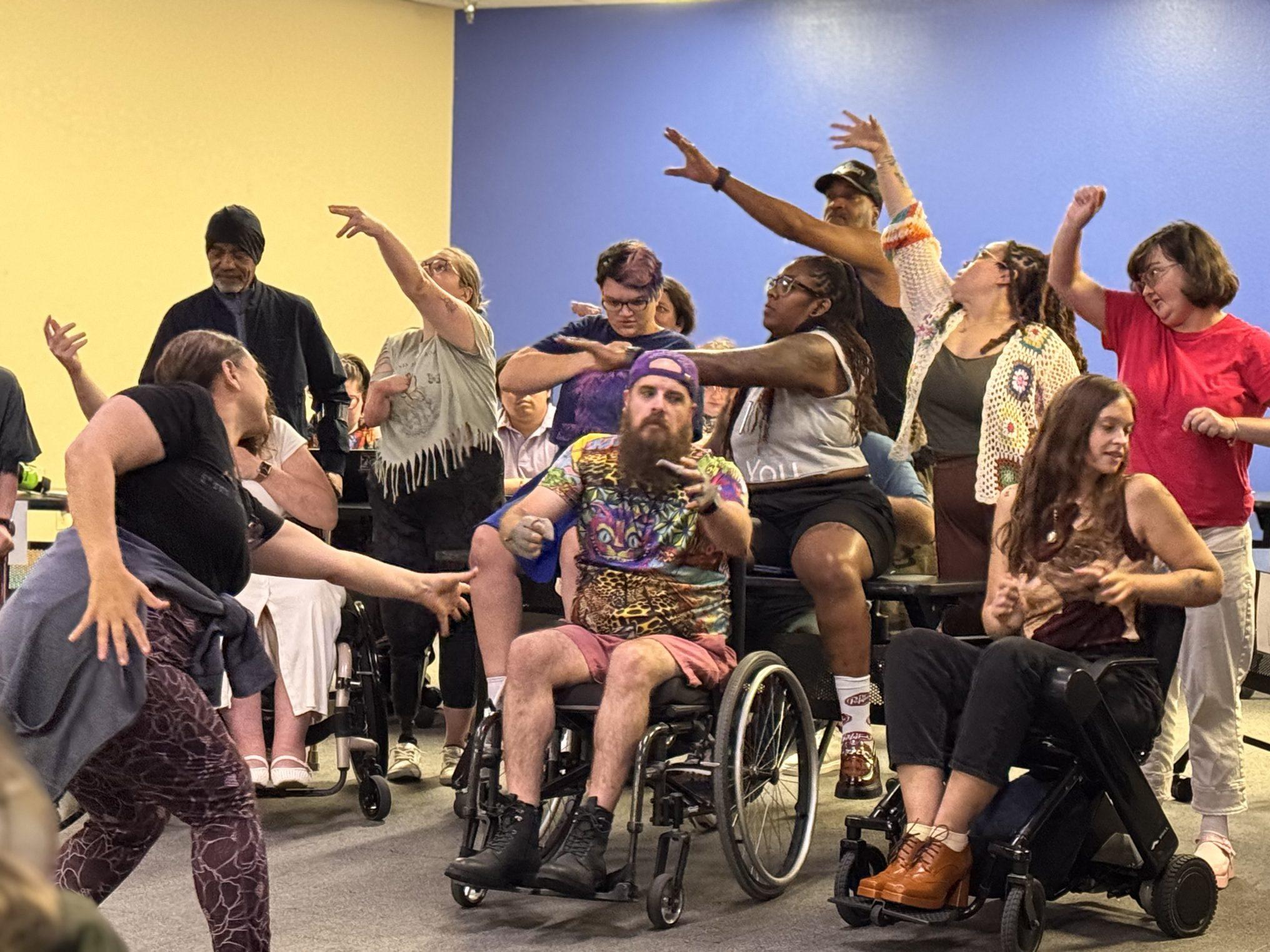
That uncomfortable echo between past and present hangs over Phamaly Theatre Company’s world premiere of “504: The Musical,” which opens Saturday, Aug. 8, at Denver’s Kilstrom Theatre. Written by book writer and lyricist Abbie Goldberg and composer Mason McDowell, the fictionalized musical follows sixteen disabled activists who refuse to leave the building until federal officials sign the regulations needed to put Section 504 into effect.
“A big thing that we wanted to convey with the show was that the fight is not over,” Goldberg says. “Although this was a very important win for these people and all of us that set the stage for things like the ADA, it was never over. But to have it so directly challenged is, of course, extremely shocking and upsetting.”
Phamaly artistic director Ben Raanan, who is directing the production, puts the coincidence more bluntly.
“We thought we were telling history,” he says. “We’re not. We’re telling the present.”
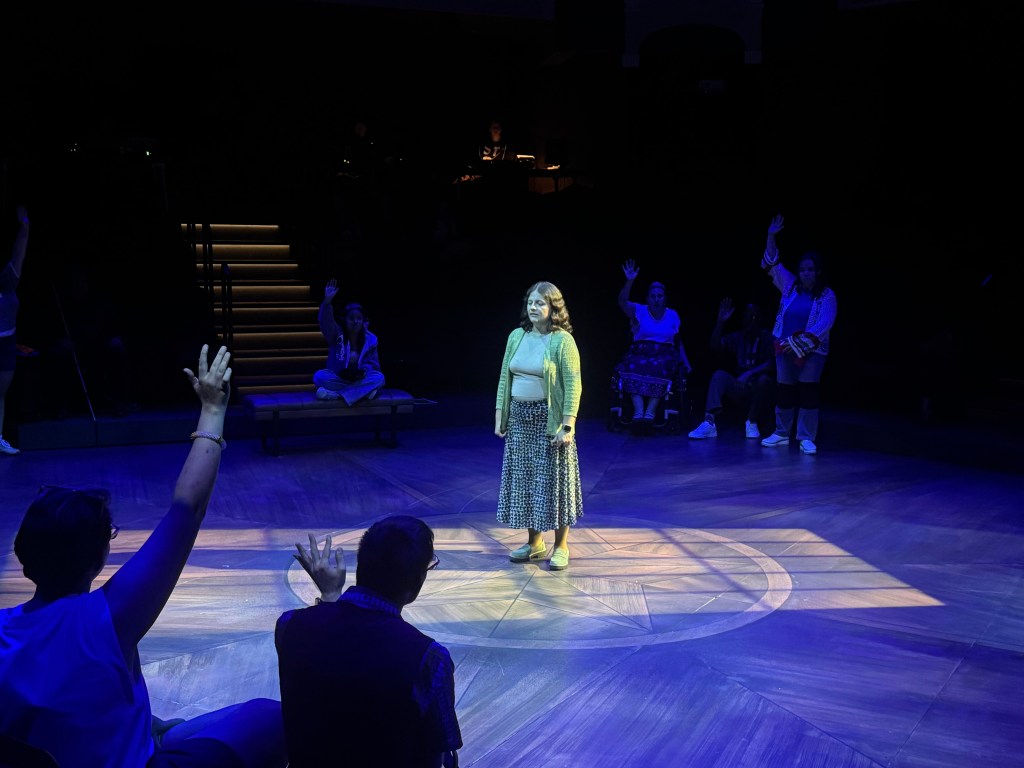
Photo by Dallas Padoven
Section 504 became law in 1973, establishing that disabled people could not be excluded from or discriminated against by federally funded programs. Yet the federal government spent four years refusing to issue the regulations necessary to enforce it. In April 1977, disabled activists occupied federal buildings across the country and announced that they would not leave until the regulations were signed.
Most demonstrations, including one in Denver, ended quickly. The San Francisco occupation lasted 25 days, with protesters receiving support from groups such as the Black Panther Party and the Butterfly Brigade. The action brought together activists with different disabilities, political beliefs and approaches to protest, including Judy Heumann, Kitty Cone, Brad Lomax, Corbett O’Toole and Hale Zukas.
Goldberg, who is disabled and neurodivergent, first encountered that history while working as an organizer for the Boston Center for Independent Living. Their first assignment was creating a one-page informational sheet about the sit-ins.
“I had never heard of that story before, which is ridiculous, because it’s an important part of our history,” Goldberg says. “From the moment I heard about it, I just thought it was the most amazing story.”
Goldberg and McDowell began writing “504: The Musical” in spring 2021 while attending NYU’s Graduate Musical Theatre Writing Program. Both had personal relationships with disability and saw a shortage of stories that centered disabled people while creating substantial roles for disabled performers.
“The show is fundamentally about community,” Goldberg says. “So we really wanted it to be shaped by the community that it represents.”
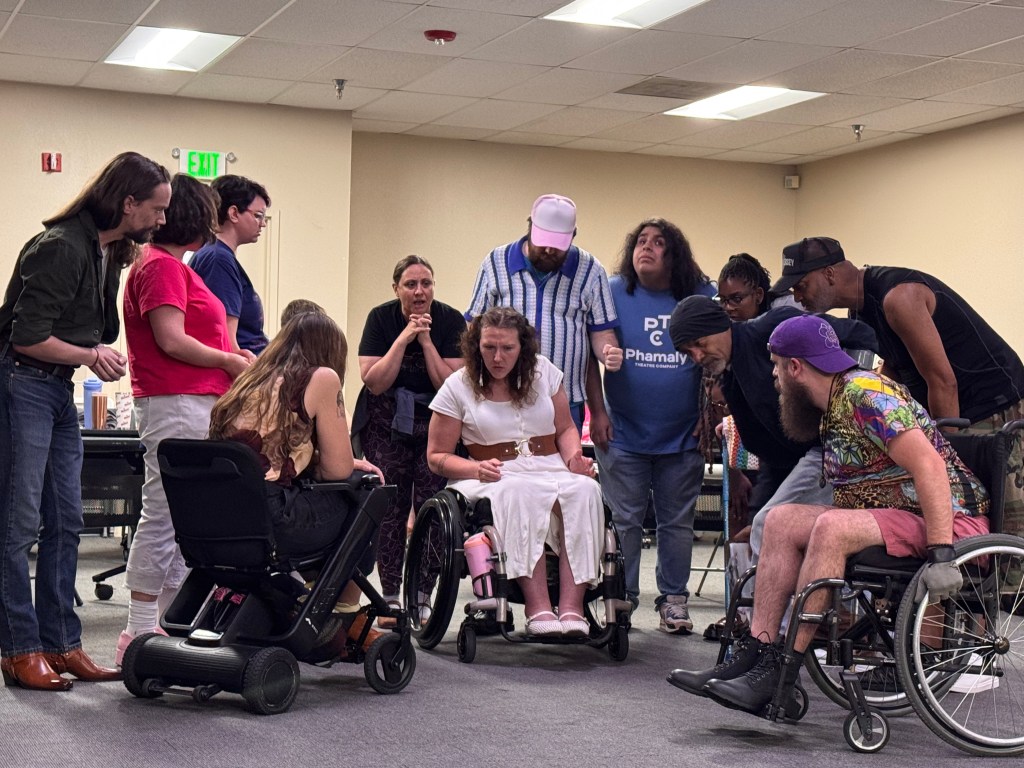
Photo by Dallas Padoven
That philosophy makes Phamaly a natural home for the musical’s first full production. For more than 37 years, the Denver company has created professional theater with casts composed entirely of performers with disabilities, building its rehearsal processes around artists’ needs rather than expecting artists to conform to an inaccessible industry.
Goldberg says the difference was apparent almost immediately. In New York, Goldberg and McDowell have had songs accepted into cabarets only to discover that the disabled performer could not physically reach the stage. At Phamaly, accessibility is built into the way the work is created.
“When you do meet people’s needs, people are able to bring so much of themselves and so much honesty and so much caring and compassion for each other,” Goldberg says. “It makes the work better. It’s a dream come true and really amazing to be working with Phamaly here in Denver on this world premiere.”
Leonard Barrett, who plays Bruce, has experienced that culture for more than two decades. He first saw Phamaly’s production of “The Pajama Game” in 2003. After being diagnosed with multiple sclerosis, he joined Phamaly in 2004.
“It’s home. Simply,” Barrett says. “These are not individuals to be ignored. They are on fire, incredibly talented and beautiful.”
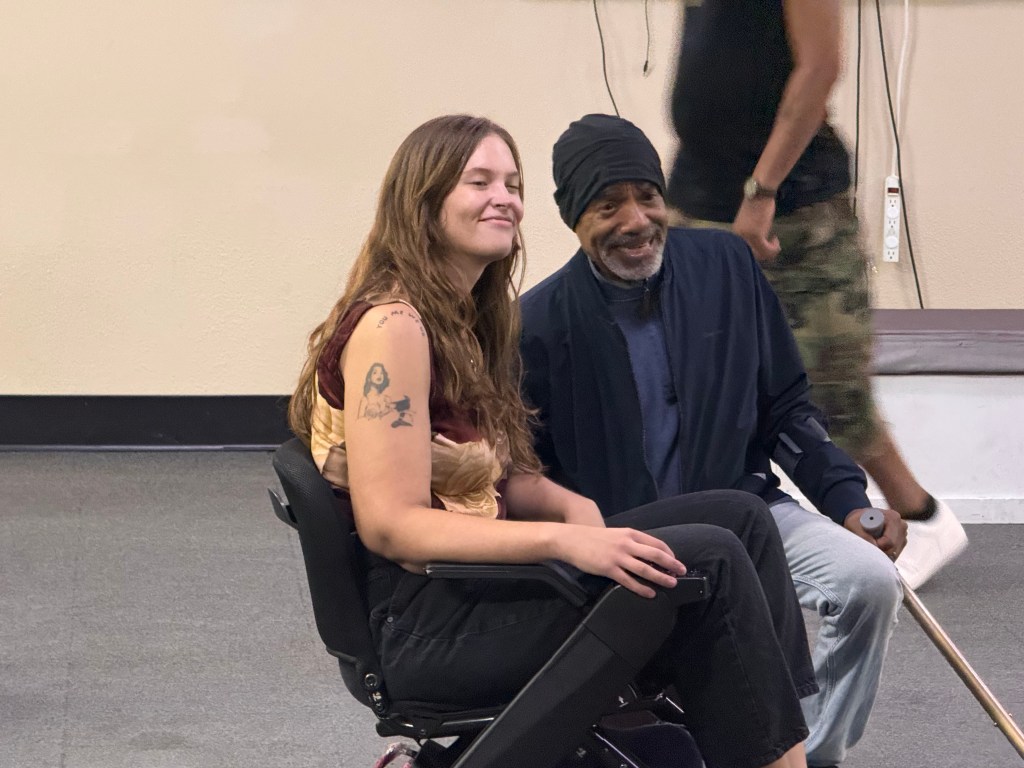
Photo by Dallas Padoven
Phamaly nearly did not become the show’s home. After arriving as the company’s artistic director in 2021, Raanan received an early version of the musical, read it and passed.
“I didn’t love it, to be honest,” he says.
Four years later, Jenna Bainbridge, a Phamaly actor currently starring in “Wicked” on Broadway, asked him to look again. Goldberg and McDowell had spent the intervening years workshopping the show in New York, interviewing activists, listening to disabled performers and rebuilding the material around what they heard. Raanan was still searching for Phamaly’s 2026 summer production when he opened the revised script.
“I took a look at it, and I went, ‘Yeah, this is what we’re doing,’” Raanan recalls.
What changed was the complexity of the community depicted in “504: The Musical.” The characters are fictional, allowing Goldberg and McDowell to explore tensions that might emerge when sixteen disabled people spend weeks trapped together while fighting for a shared cause.
That approach moves the show beyond what Raanan calls a “hip, hip, hooray for disability” narrative. Its characters argue over whether alcoholism should be considered a disability, whether the movement can accommodate conflicting identities and how much of themselves they must expose to be accepted.
In “Another Label,” Heather, a closeted character who is Black, Korean and disabled, confronts the exhaustion of carrying identities that each make her a target. “Access Intimacy” draws on a concept developed years after the sit-in by disability-justice writer Mia Mingus. Goldberg says the goal was to honor the politics of 1977 while acknowledging conversations disabled communities are having now.
“We wanted to make sure that it was complicated and nuanced,” Goldberg says, “and not just representing the surface-level fight of all these people against the government, but also the internalized ableism and the differences in identities and different perspectives about strategy.”
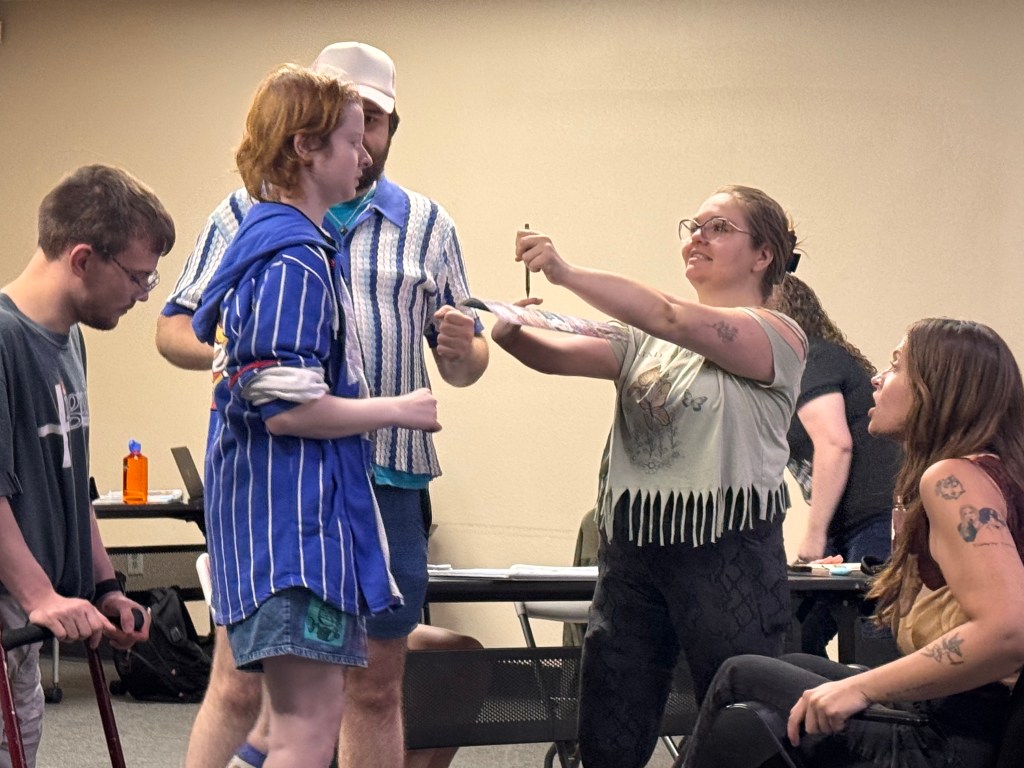
Photo by Dallas Padoven
That complexity has continued to develop in Denver. Goldberg has been present throughout rehearsals, rewriting with McDowell as Raanan and the cast tested the material. Although changes can be particularly disruptive for performers who need consistency, Raanan says the cast repeatedly chose to keep refining “the show “504: The Musical” rather than freeze the script prematurely.
“I would frequently be like, ‘If I’m doing too much, tell me to pull back,’” Raanan says. “And they would say, ‘No, we want all the notes. We won’t always agree with them, but tell us.’ I’ve never had a collaboration like this.”
Raanan calls the resulting musical a “collage of disabled experience.” McDowell’s score shifts among R&B, gospel, jazz, musical-theater patter and “just a drop of Weird Al,” matching each musical style to the person singing.
The Kilstrom will become the atrium of the federal building, initially pristine, orderly and inhospitable. As the activists settle in, they drag furniture across the floor, unroll sleeping bags and leave food throughout the space.
“I told our set designer, ‘Give me the most pristine set in the world, and then we’re gonna dirty it up,’” Raanan says. “These disabled people come in and they dirty it the fuck up.”
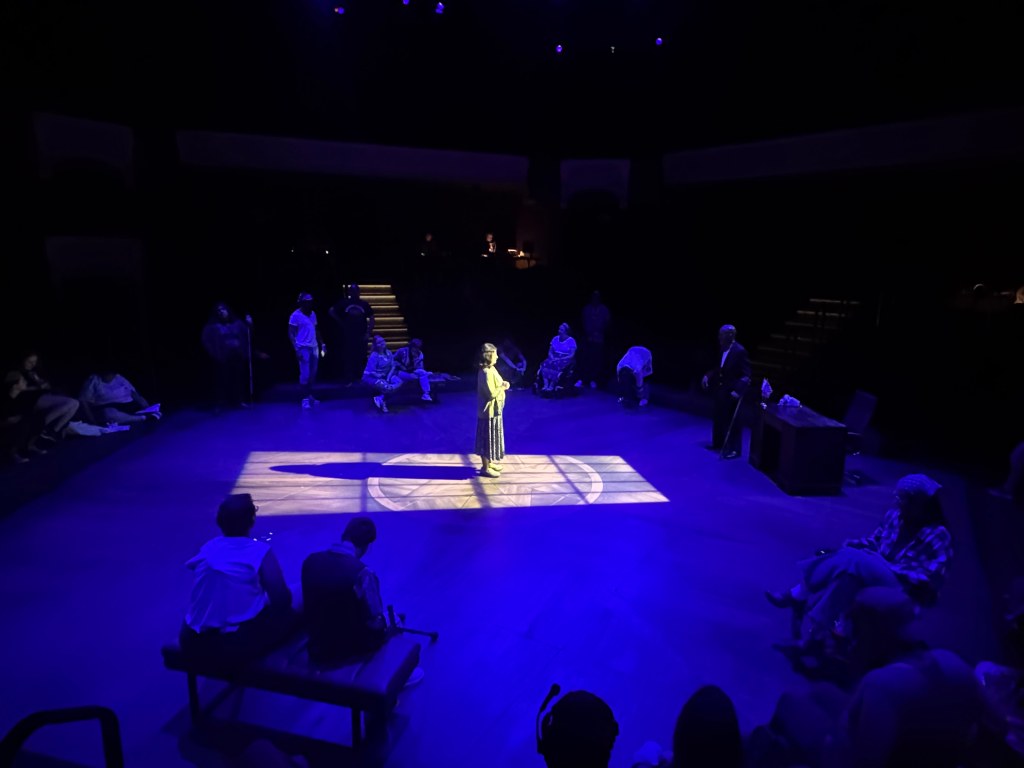
Photo by Dallas Padoven
The occupation offers a reminder that the rights now being contested were not handed down willingly. Disabled people entered government buildings, made themselves impossible to ignore and remained there until officials acted. Goldberg finds the musical’s renewed relevance frightening, but also finds hope in returning to a story about disabled people organizing, sustaining one another and winning.
“I feel really lucky and grateful to be surrounded by incredibly brilliant, resourceful disabled people who are continuing today, through their art, to make themselves seen and make themselves heard,” Goldberg says. “We’re here. We’re not going away. We’ve won before. We will do it again.”
“504: The Musical” has a preview on Friday, Aug.7 and opens Saturday, Aug. 8. It runs through Sunday, Aug. 23, at the Kilstrom Theatre in the Denver Performing Arts Complex, 1400 Curtis Street. The production runs approximately two hours and ten minutes, including an intermission. Tickets are $47. Learn more at phamaly.org.