Antony Bruno

Audio By Carbonatix
Reader support matters more than ever
We're in the final stretch of our summer campaign. Our goal is to raise $25,000 by August 9 to support the journalism our community relies on. Reader support is helping shape the future of local news.
The word “obsession” wouldn’t fairly describe David Wang’s approach to ramen, because it’s even more than that.
The chef can talk about the popular Japanese noodle dish at length, in detail, with palpable reverence. For instance:
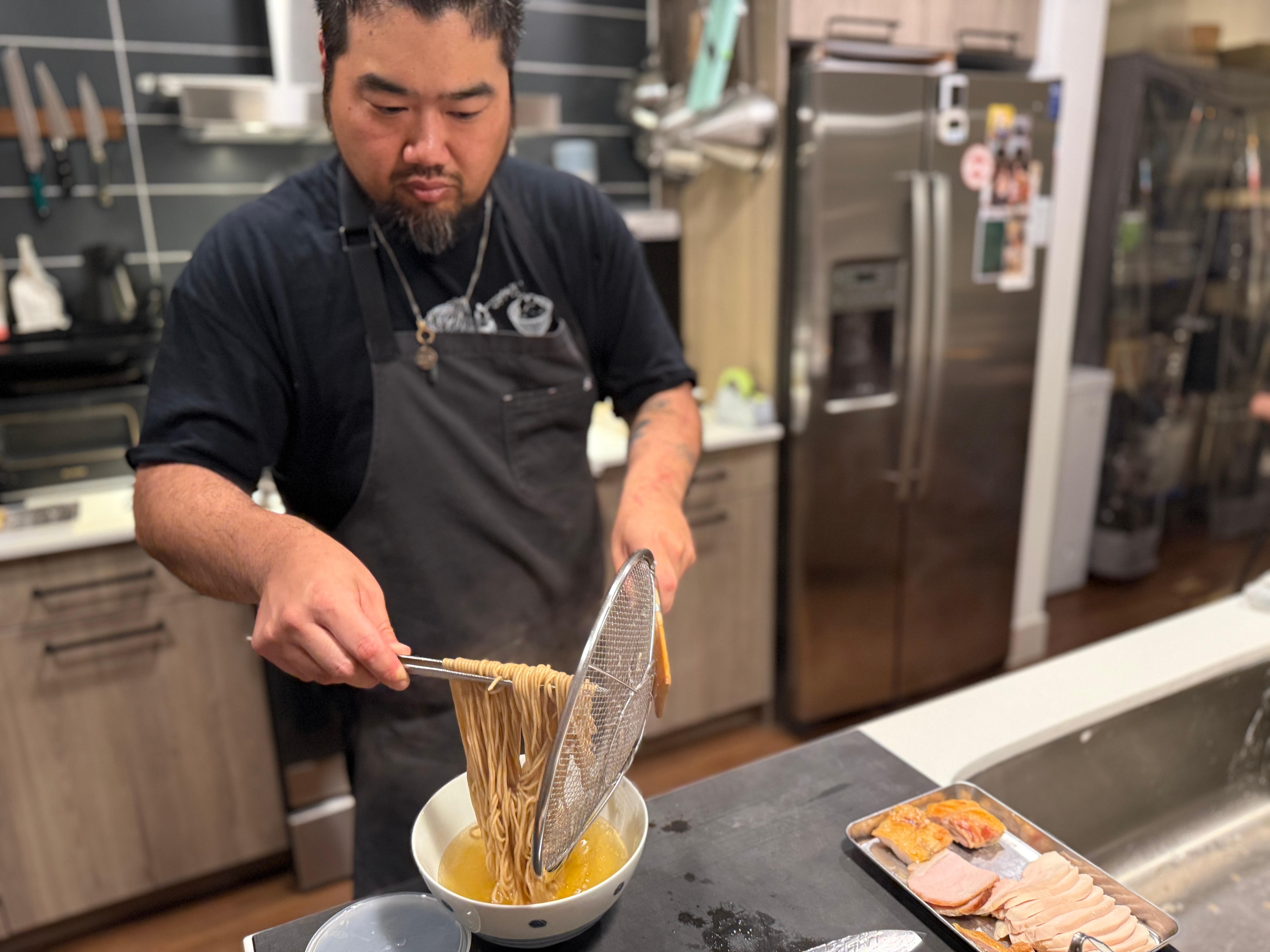
“There are three different kinds of soupless ramen in Japan,” he explains while preparing a type of soupless ramen. “Well, arguably four. So there’s maze soba, which is mixed noodles, kind of like Korean bibimbap, like bibimmyeon. There’s another version called abra soba, which is an oiled noodle, very similar to Chinese-style, like you po mian. The third kind is hiyashi chuka — cold noodles with a more citrusy ponzu-type of sauce. The fourth style, that’s tsukemen,” referring to cold buckwheat noodles dipped in sauce.
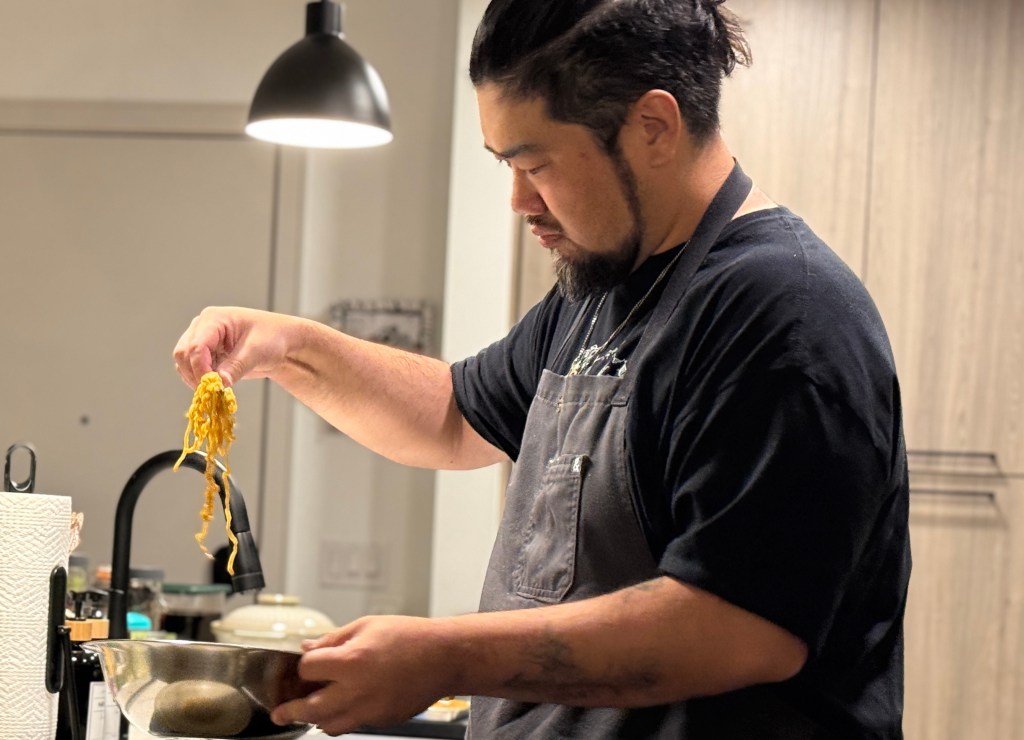
He’s rattling off terms and references in a free-flowing manner, from memory, all while dervishly running fresh dough through a ramen-cutting machine, heating up stock in a pot for the next course, pan-crisping chicken skin, and pulling out handmade ceramic bowls from the counter below to serve.
This all takes place in the kitchen of Wang’s tiny one-bedroom RiNo apartment, where, since May, he’s hosted his Little Kitsune ramen pop-up dinner series: a five-course tasting menu designed to destroy everything you thought you knew about ramen, leaving you with a new appreciation for the dish.
“There are all these misconceptions and preconceived notions of what ramen is,” says Wang. “The more I saw that, the more I wanted to defend it.”
In Japan, someone who dedicates their entire life to the perfection of a single task can, as a result, feel a kind of responsibility to it — they are often called “shokunin.” It takes more than obsession to earn that title, however, so the better word is “devotion.”
Antony Bruno
Beginner’s mind
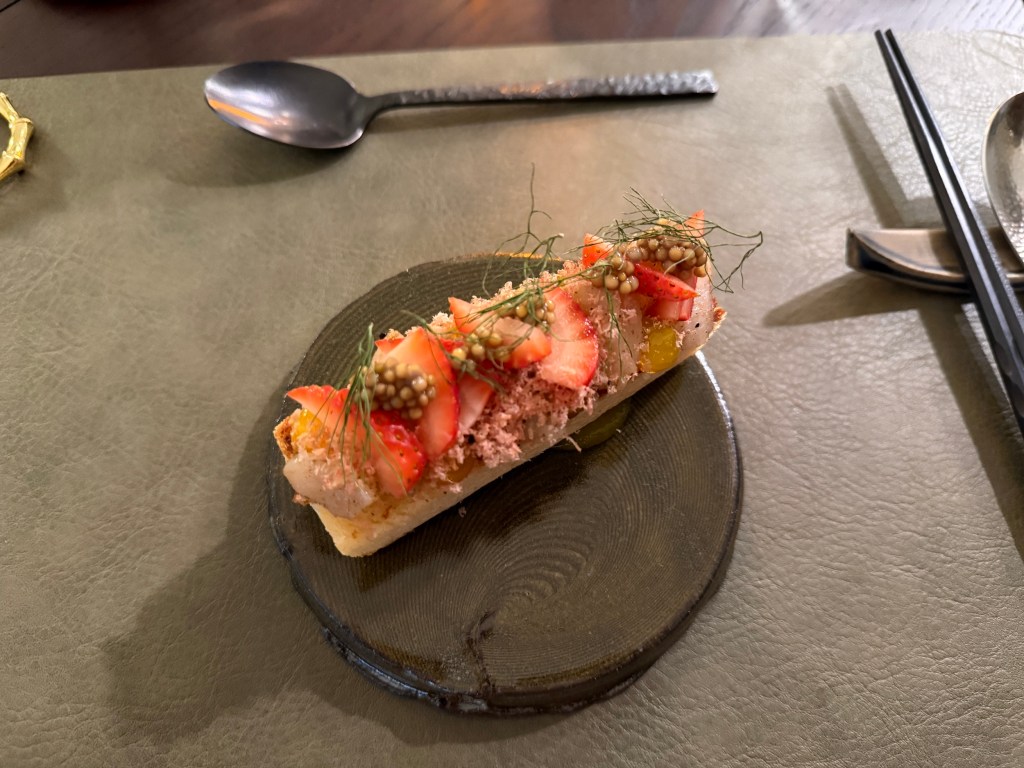
The first course of the Wang’s tasting menu is dubbed “shoshin” — Japanese for “beginner’s mind” — which appropriately sets the tone for the evening by not being a ramen dish at all. It’s a slice of Japanese milk bread seared in duck fat and layered with confit scallops, egg yolk caramel and a cured ham from Jinhua, China.
“This allows me to really play around, to experiment, to try ideas that have been bouncing around my head,” he says. “Finally, I have an avenue to try some of these dishes and approach things with a beginner’s mind, allowing my guests to also approach this dinner with a beginner’s mind, to be accepting of something different.”
But Wang is no beginner in the kitchen. Originally from Southern California, he graduated from the Culinary Institute of America and moved to Aspen to work with chef Will Nolan at the Viceroy in Snowmass. Eventually, he wound up running the kitchen at Meat & Cheese as head chef for three years before pivoting to working as a private chef for the ski town’s well-heeled clientele.
He first started experimenting with making ramen simply because he liked it and couldn’t find it anywhere else in the small town.
“I was, like, one of 10 Asians there,” he says. “There was nothing else around. Nobody else was doing it, so I wanted to do it.”
Antony Bruno
And thus his side hustle began. Wang established the Umami Underground, a private ramen supper club series hosted on his apartment’s rooftop. Entrance required finding Wang around town to purchase a ramen-logo token from him directly, in classic guerrilla-marketing style.
“They were total strangers, asking for ramen coins because they had heard about it,” he says. “People would be tapping me on the shoulder, saying, ‘Hey, man, you got coins?’ like it was a drug deal.”
Umami Underground eventually outgrew the rooftop and moved into local restaurants during off hours as a pop-up called Ramen Monster, where he ladled out as many as 250 bowls of ramen a night. But after the pandemic, he grew tired of the insular monoculture of Aspen and moved to Denver in October 2025, seeking a greater connection with an Asian-American community with hopes of opening a ramen restaurant of his own.
Antony Bruno
Beauty in imperfection
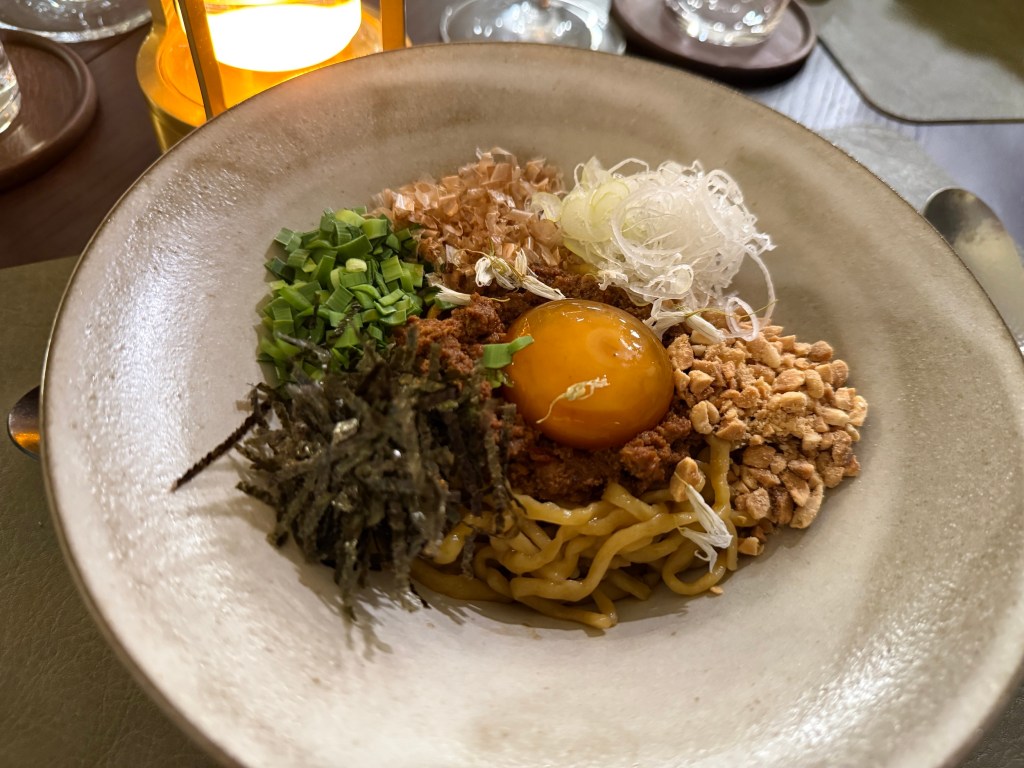
The second course of the dinner is the soupless ramen mentioned earlier, the noodles for which Wang has been hand-massaging for several minutes to tighten the gluten and make them both chewy and firm in preparation for service.
The theme for this dish is “wabi sabi” — a Japanese term for the concept of “beauty in imperfection.” Unlike the precisely plated dishes found in other tasting-menu establishments, this dish is a mess of noodles piled high with toppings like Chinese chives, dried seaweed (“nori”), ground spiced meat, scallions, peanuts and a beautifully soy-cured egg yolk.
The point, he says, is to mix it all up and let the flavors and textures blend together. When the noodles are gone, he adds a little rice to help you mop up the remaining sauce and other ingredients. Besides being absolutely delicious, the dish is a striking metaphor for Wang’s Third Culture philosophies as a cook.
“Third Culture is the idea of where you’re from, where you’ve lived, and then this new culture that you’ve created,” he says. “To me, that is a more appropriate definition of my cooking versus just calling it ‘Asian fusion.’ Real fusion is actually adapting knowledge from where you’re from, where you’ve lived, what you’re doing, what you’ve learned, and then combining it intentionally.”
Antony Bruno
Pause
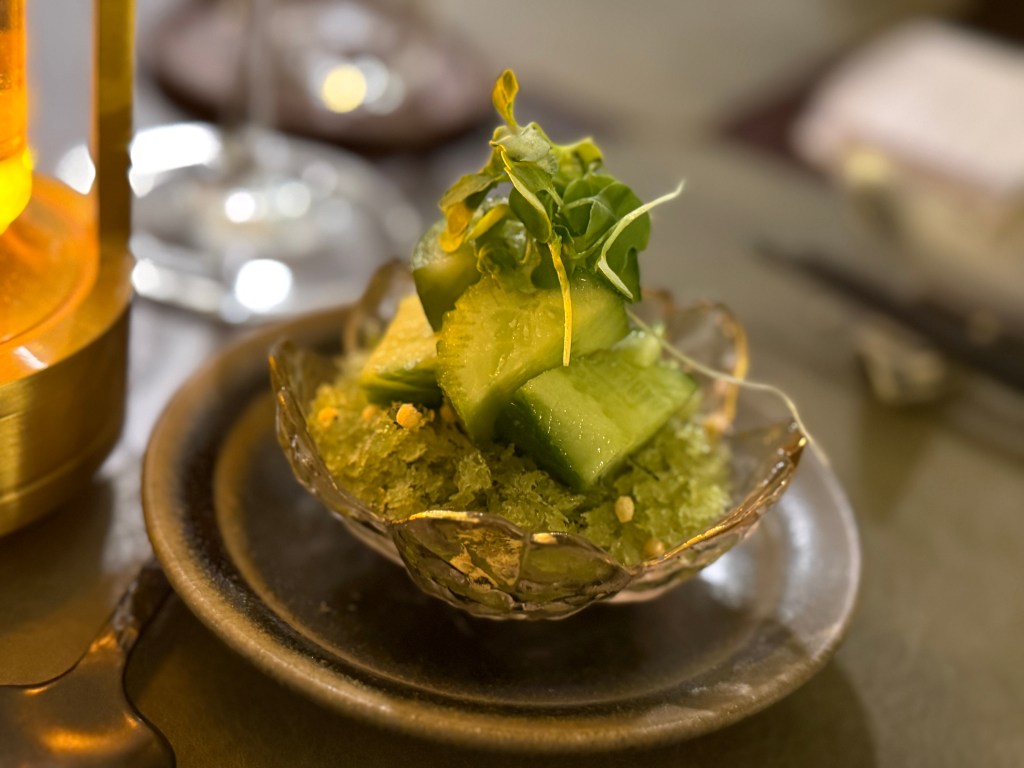
Course three is called “ma,” which in Japanese means “space,” or “pause.” But here it is presented as the intermezzo of the dining experience. It features a cucumber-ginger granita with a ginger-garlic dressing and a surprisingly bracing kick from wasabi sprouts. Basically, a palate cleanser to prepare diners for the next noodle course.
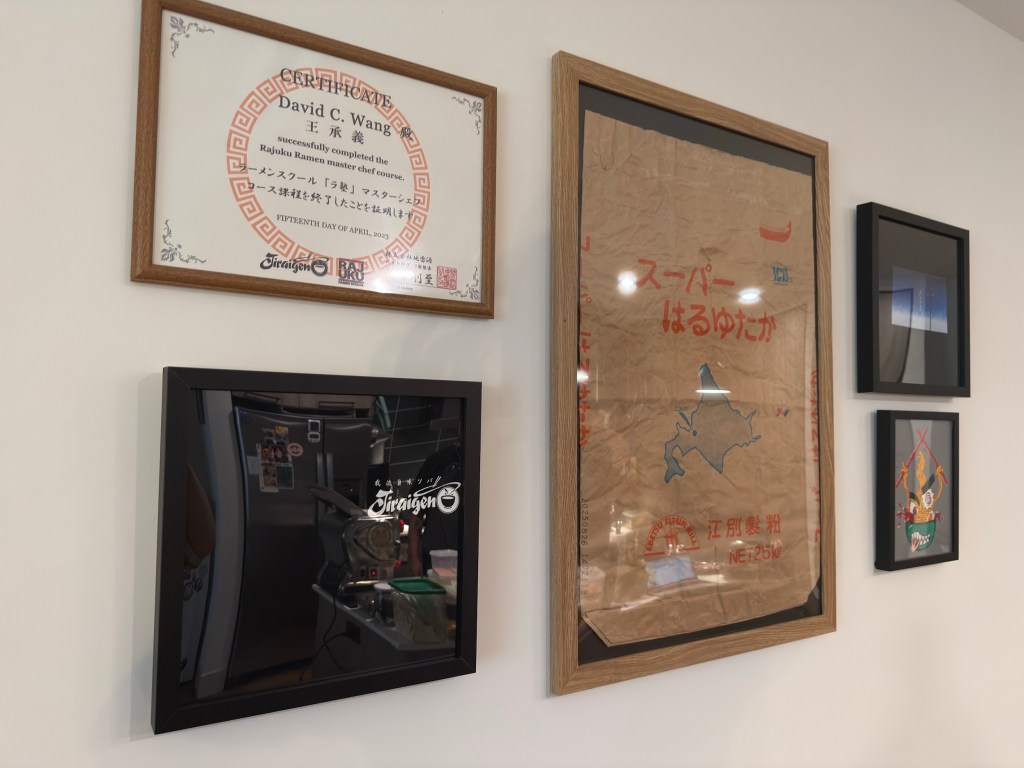
Over the years, Wang has taken several career breaks to visit Japan, where he’s trained with some of the nation’s greatest ramen chefs. The most recent was a stage (internship) at Ramen Feel, the now-closed, world-famous ramen shop in Tokyo run by chef Daisuke Watanabe, who was the only independent disciple of the legendary chef Iida Shoten authorized to strike out on his own. He previously attended the Rajuku Ramen School in Tokyo, run by veteran chef Takeshi Koitani, whose logo is the Japanese symbol for a land mine.
“His whole philosophy is that he wants unassuming-looking ramen that then blows up in people’s faces with flavor,” Wang says. “If I’m gonna learn, I want to learn from the best.”
Antony Bruno
Continuous improvement
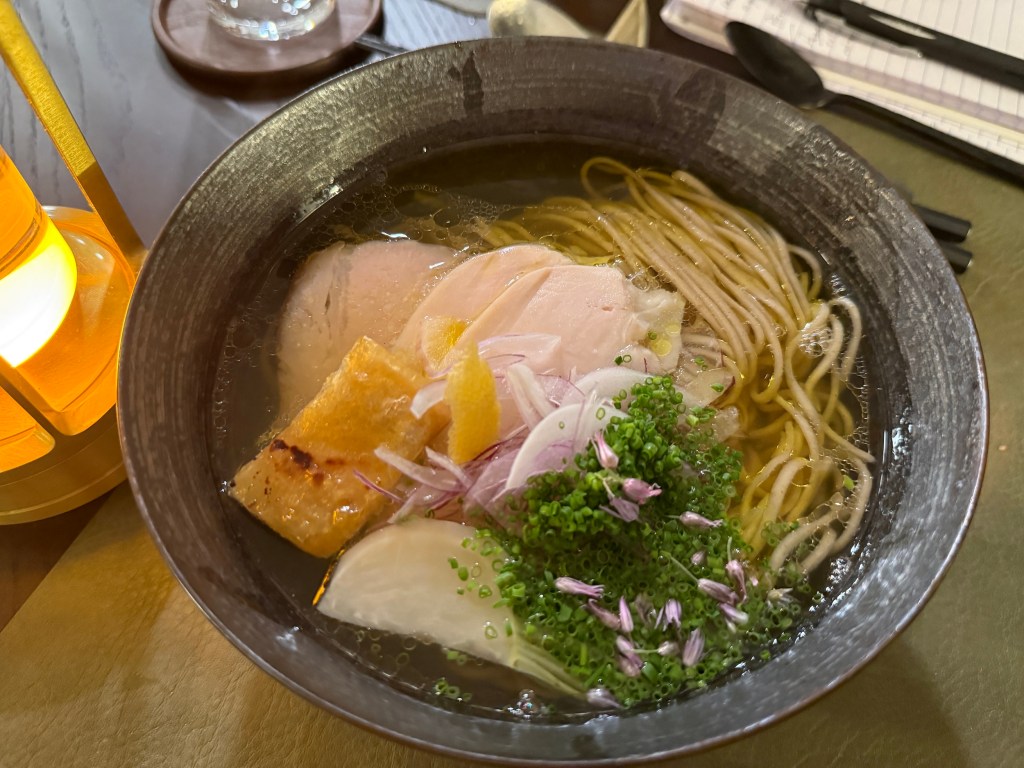
The fourth course is the main event, a big bowl of steaming broth, noodles, meat and vegetables dubbed “kaizen,” which means “continuous improvement” and reflects Wang’s obsessive effort to refine and perfect every component of the bowl.
The noodles are made fresh daily with a blend of flours imported from Japan and Dry Storage flours sourced locally. Ramen noodles are made from an alkaline dough, created by adding a mixture of carbonate and potassium carbonate, and are boiled in kasnui, an alkaline water solution. The alkaline alters the flour’s gluten, making it firmer and giving ramen its springy, chewy bite.
“When it comes to ramen, that alkalinity matters. It makes it more resistant; it makes it firmer so that it can actually hold up to the hot soup in the bowl.”
That soup, or broth, is a blend of three different styles — including a “mother” glace made from the first ramen night he hosted over 10 years ago — that takes three days to make and clarify into a consommé. Layered atop the bowl are a crisp-skinned chicken thigh cured with shio koji, a slow-roasted pork loin, and a just-perfect Hakurei turnip. It’s unlike any ramen you’ve likely had — and that’s entirely the point.
“That is what my ramen is,” says Wang. “It’s constantly improving, constantly being refined, constantly being honed.”
Antony Bruno
The impermanence of things
The final course of the evening is an homage to the Zen concept of mono no aware, or “the pathos of things.” Nothing lasts. Everything ends. And this last course marks the end of this dinner: a simple broken meringue with white chocolate, a summer berry compote and strawberry tuile.
As for Wang, Little Kitsune will last as long as it needs to, and no longer. He already has plans to bring the ramen experience to new places and formats, including collaborative pop-ups with fellow in-home noodle “omakase” concept domi and the Chinese-meets-Southern duo Magnolion. At the end of the year, Wang will move into an artist-in-residence program at Flora, the RiNo cultural incubator, where he’ll live and host dinners for three months.
But whatever the name, wherever the place, Wang intends for his ramen mission to remain largely the same.
“I hope guests get a new appreciation of what it takes to make good ramen, and that it’s not just something that you can put together; it’s not a quick thing,” he says. “I want them to appreciate all the intention and work that goes into it, and also understand the differences — that cultural aspect — knowing that a bowl of ramen isn’t just soup out of a pot and some noodles. If we can all demand more from it, then the level of ramen in America just gets better and better and better.”
To request an invite or learn more, visit www.littlekitsuneden.com or follow on Instagram at @littlekitsuneden.