
Antony Bruno

Audio By Carbonatix
Over a decade ago, former Westword food editor Mark Antonation began his food-writing career by eating his way up Federal Boulevard. Now, we’re turning our attention to another vibrant culinary corridor.
The four-plus-mile stretch of Havana Street between Dartmouth and Sixth Avenue in Aurora is home to the most diverse array of international cuisine available in the metro area. From restaurants and markets to take-and-go shops and stands, food lovers of nearly any ethnicity or interest can find a place that will remind them of home or open new culinary doors. In Eat Up Havana, Antony Bruno will visit them all, one by one, week by week. Check out his previous stops.
This week, Bruno visits Geez Habesha Bar & Restaurant.
Antony Bruno
Finding Geez Habesha along Aurora’s Havana Street is no easy task.
This intimate eatery is tucked deeply away, past a very large and very busy auto service center. The massive parking lot is full of automobiles waiting to be serviced, with the lights shining from eight bays full of cars on lifts providing the main illumination.
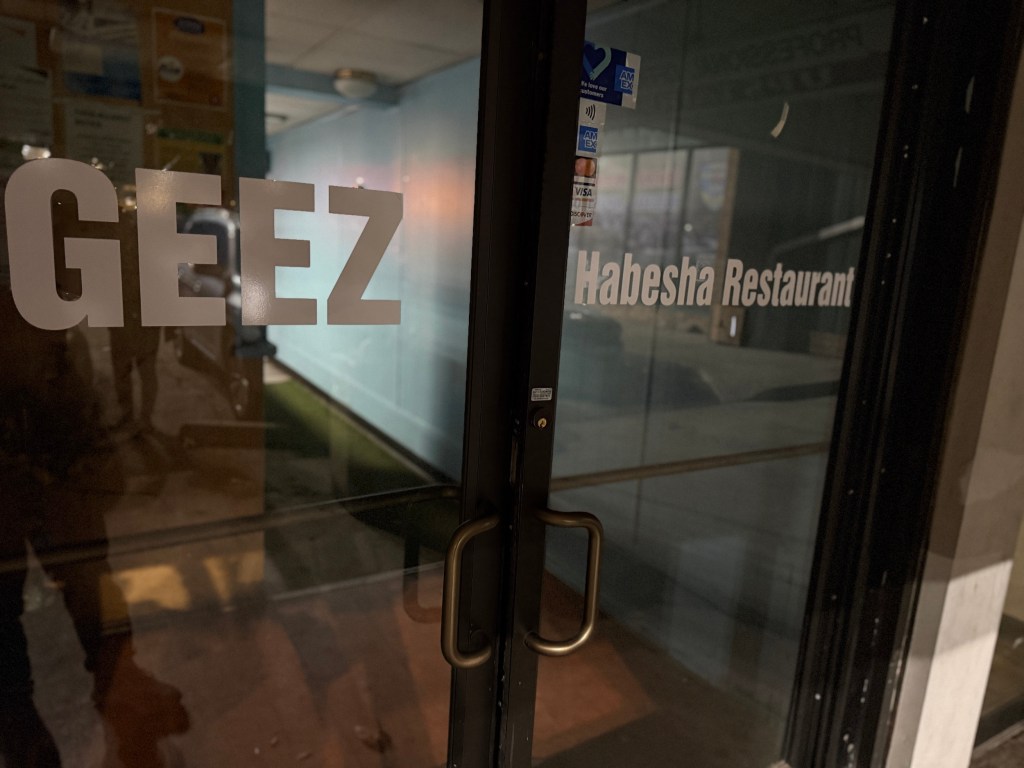
But if you place your trust in Google Maps and drive past all that, playing pothole slalom through the lot to the dark strip mall that lies beyond, your faith will be rewarded. There’s no sign for the restaurant save for faded lettering on a glass door. The windows are shaded so you can’t see inside. A “For Rent” notice on the neighboring door might confuse you into thinking it’s closed.
Only a little neon “Open” sign in the window and the faint strains of music indicate you’ve found your destination. There’s no menu posted at the entrance, just a dim hallway to walk down before entering the main space.
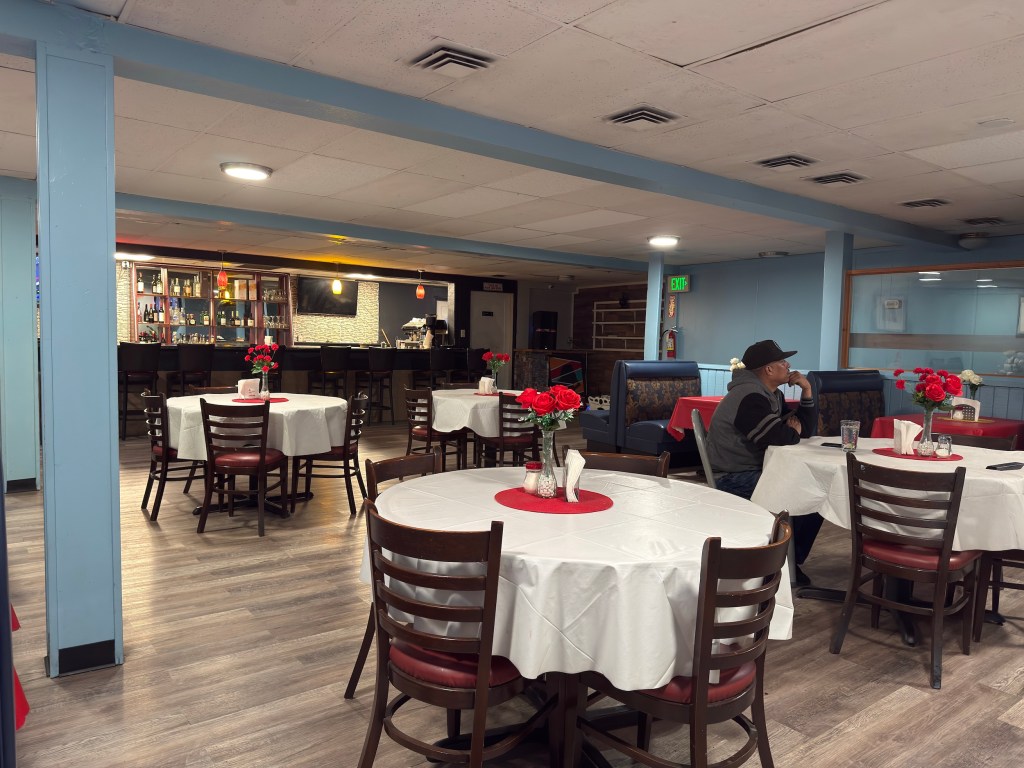
But despite this gauntlet of unwelcoming factors mostly out of the restaurant’s control, once you’re inside and seated, it’s all hospitable smiles, intriguing aromas, and light soothing jazz. The red and white covered tables each boast a white rose for decoration. The bright blue walls feature framed photos of food. And of course there are TVs, primarily featuring sports games.
Antony Bruno
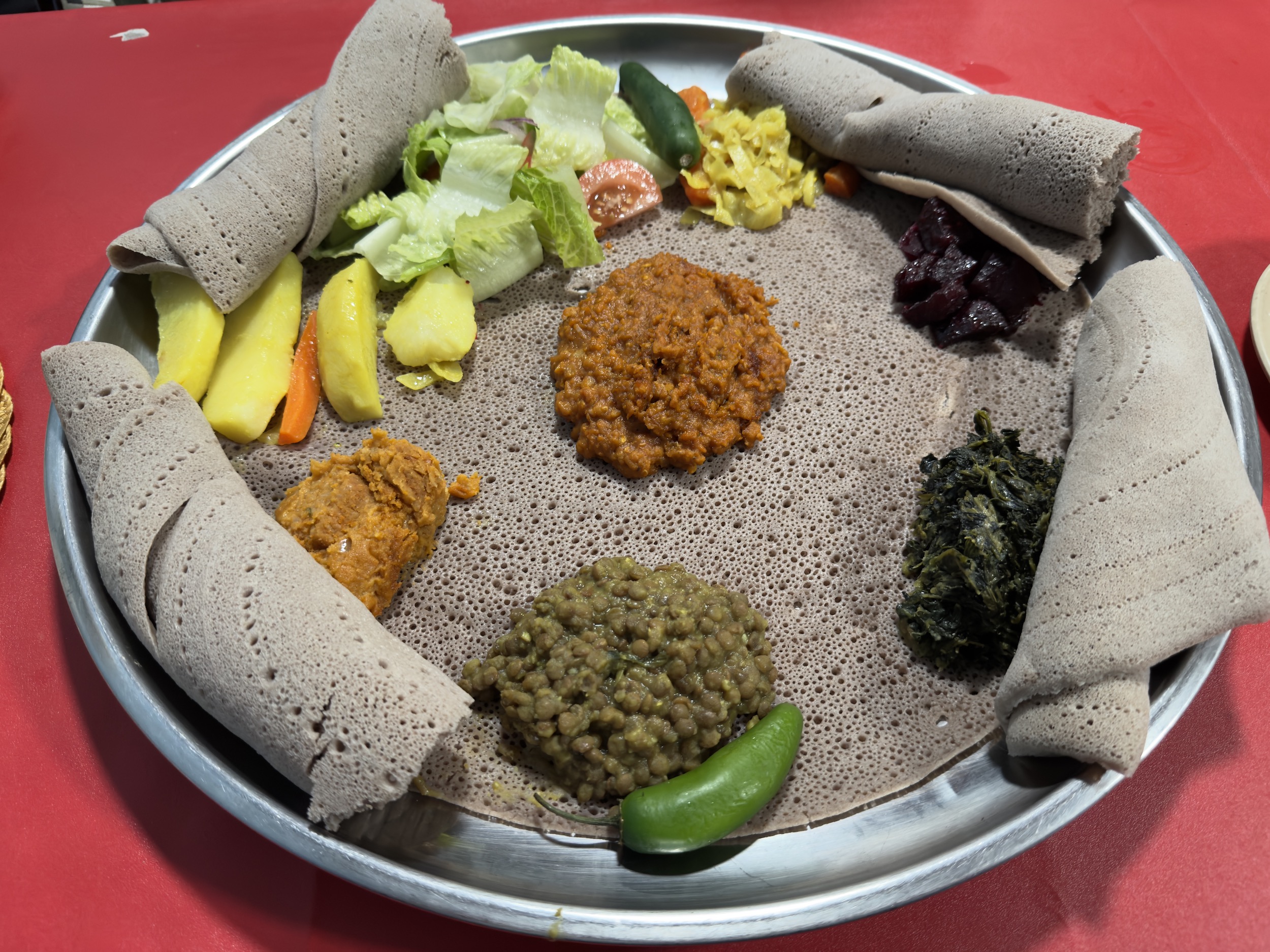
The fare at Geez Habesha is firmly Ethiopian, and all that comes with it. That means regardless of what you order, it’s served on a platter of injera bread: the spongy, fermented flatbread made of teff flour that is the hallmark of the country’s cuisine. It serves as both a base upon which all food is served and as the utensil you use to eat it.
The menus at most Ethiopian restaurants are fairly similar; at Geez Habesha, it is no different. There’s the standard “veggie combo,” which features small samples of various stews and purees. Here, this takes the form of both red and green lentils, braised greens, potatoes, pickled cabbage with carrots, boiled potatoes, and beets.
But the standout on this particular platter was the addition of shiro (or shero), a puree of powdered chickpeas with onions and garlic that can also be ordered as a standalone dish. Given its depth of flavor and addictive sweet/savoriness, shiro makes a strong case for doing just that in a future visit.
But ordering the veggie platter is just the start. There’s an entire array of meat-forward dishes to complement it, also eaten with the injera bread, which take a variety of forms.
Antony Bruno
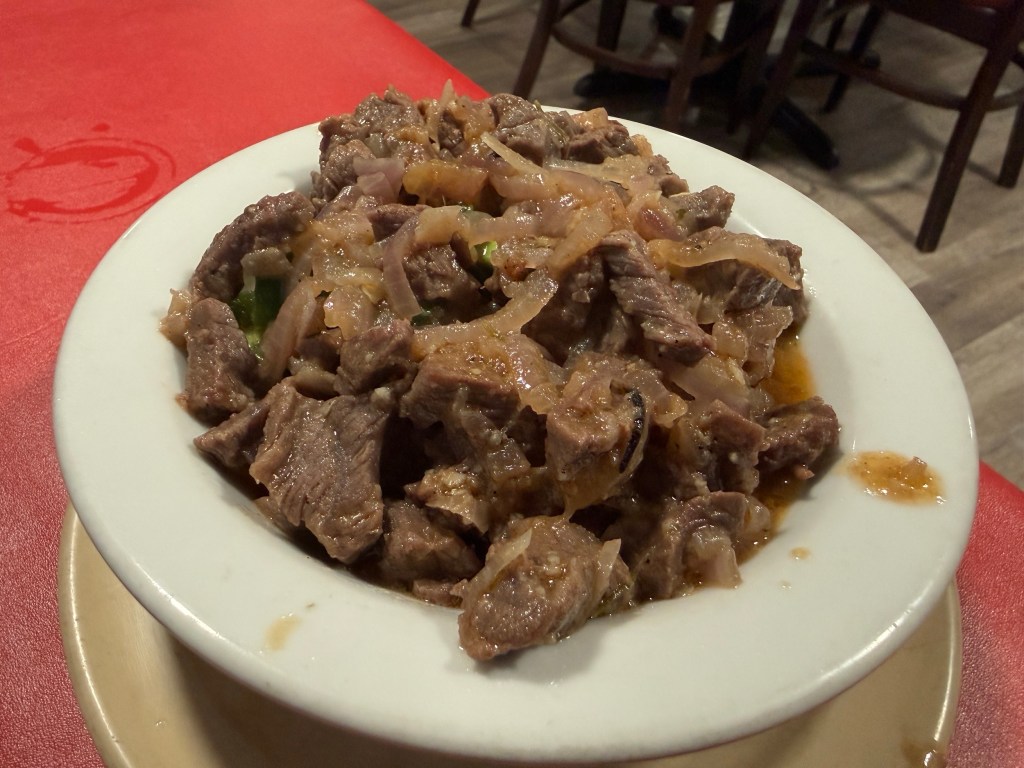
For instance, “tibs,” a dish of sauteed or fried meat usually mixed with some kind of pepper, is a common menu item. “Tibs” means “to fry,” so it is most commonly fried in a spiced butter mixture. Proteins can include beef, goat, lamb or chicken, each listed differently depending on the option:
- Siga = beef
- Yefigel = goat meat
- Yedoro = chicken
- Derek = lamb
Also, be sure to keep an eye out for “awaze tibs,” which features a spicy red pepper sauce — and with this cuisine, spicy means exactly that. The foundational spice blend of Ethiopian cuisine is berbere, which literally translates to “hot.”
Not all berbere is super hot, but heat is a defining characteristic. It’s not unlike the gochujang of Korean cuisine in that it is equally as ubiquitous across dishes and varies in heat levels depending on use. The blend features chile peppers, garlic, and ginger, as well as combinations of others spices like fenugreek, cardamom, or allspice, and is used in meat rubs, stews, and lentil dishes alike.
That includes a wide range of Ethiopian stews, called “wot.” Like tibs, wots options also have their own naming convention based on the protein included, such as:
- Doro wot = chicken (often served with hard-boiled eggs)
- Kei wot = beef
- Dinich = potato, which is traditionally vegetarian, but some may contain meat as well
Alicha, meanwhile, is a milder wot featuring turmeric rather than berebere and contains either meat or vegetables.
Rounding out the Ethiopian greatest hits are:
- Kitfo = an Ethiopian version of tartar featuring spiced, raw minced meat. It’s a delicacy usually eaten after periods of fasting boasting a herb blend called mitmita bloomed in clarified butter.
- Dulet = another minced meat dish, this time cooked, featuring a blend of liver, trip and spices.
- Firfir = (sometimes seen as “fin fin”) sauteed beef jerky served with peppers and tomatoes that carries a satisfying crunch mixed with bits of injera bread.
- Kikil = stewed lamb or beef, usually milder in spice than other dishes
But just because most Ethiopian menus are similar, doesn’t mean the experience will be. After all, most Italian restaurants serve many of the same pasta dishes. But the fun lies in experiencing how each chef approaches these traditional dishes in different ways.
That’s what makes this stretch of Havana Street so interesting. You can sample three different Ethiopian restaurants within ten minutes of each other. There are also several hookah bars/cafes offering Ethiopian and East African snacks as well.
So if you don’t mind a little navigational adventure past auto shops, car dealerships, and potholes from hell, you can explore this “little Ethiopia” section of Aurora and experience the full expression of this wonderful cuisine for yourself.
Geez Habesha Bar & Restaurant is located at 262 Havana Street in Aurora and is open from 11 a.m. to 2 p.m. daily. For more information, visit geez-habesha-bar-restaurant.com-place.com
All the previous Eat Up Havana stops:
- Old Town Hot Pot
- Leezakaya
- Chutney Indian Cuisine
- El Tequileno
- Milkroll
- Shin Myung Gwan Korean BBQ
- Watan Restaurant & Bakery
- Las Fajitas
- Mr. Tang
- Nana’s Dim Sum & Dumplings
- Yemen Grill
- Tofu House
- Sushi Katsu
- Coco Loco
- Ali Restaurant & Bakery
- Thank Sool Pocha
- Taqueria Corona
- Hanyang Wang Jokbal
- Coffee Story
- Tofu Story
- Havana Street Night Markets
- Seoul BBQ & Hot Pot (the Hot Pot)
- Seoul BBQ & Hot Pot (the BBQ)
- Pho 75
- Yong Gung
- Chopsticks A GoGo
- Angry Chicken
- L Cafe & Food Court
- Gangnam GT Lounge & Karaoke
- Katsu Ramen
- Dae Gee
- Snowl
- Chef Liu’s Kitchen
- Piramides Mexican Restaurant
- Nile Ethiopian
- +57 Bar & Restaurante
- Il Forno di Tutti
- Ifka Cafe
- Maandeeq Restaurant & Cafe
- La Sazon de Irene
- U&I BBQ & Karaoke Bar
- Pho 99
- Mariscos Los 3 Rios
- Orejano Casual Latin Cuisine
- Golf Ethiopian
- Pupusas La Salvadoreña