Antony Bruno

Audio By Carbonatix
Love him or hate him, chef Frank Bonanno has made an indelible mark on the Denver dining scene.
His first-and-still-flagship restaurant Mizuna is celebrating its 25th anniversary; it was one of the first fine-dining restaurants in Denver to receive national recognition. In fact, Anthony Bourdain (who once famously said there was “nothing worthwhile to eat” in Denver) gave Bonanno the nod as being the “big dog in town” in a 2010 episode of his No Reservations travelogue that included Mizuna as a featured stop. Bourdain later repeated the compliment during a 2013 performance of the “Good vs. Evil” tour with Eric Ripert in Boulder, name-checking every Bonanno-owned eatery after being asked for his favorite local restaurants during the audience Q&A.
Bonanno’s own list of openings (and closings) is longer than some restaurants’ menus. In addition to Mizuna, the current lineup of spots he owns with wife Jacqueline includes Luca d’Italia, Osteria Marco, Vesper Lounge, and Salita. Restaurants past include the recently closed Dumplin’, Salt & Grinder, French 75, Green Russell, Russell’s Smokehouse, Wednesday’s Pie, Lou’s Food Bar, Milagro Taco Bar, Bonanno Brothers Pizza, and Bones. They also opened (and later sold) the Milk Market food hall in LoDo.
Over the years, Bonanno’s had his share of controversies, too. His battles with the Denver Department of Public Health & Environment are the stuff of legend. On New Year’s Eve 2025, he and Jacqueline went toe-to-toe with activists protesting the use of foie gras on their menus. And the online hate aimed against him on social media is almost deserving of its own subreddit.
Now in his sixties and still working the line at Mizuna most weekends, Bonanno is not done yet. Almost 25 years to the day after he opened the doors to Mizuna, Bonanno announced his latest project: Rōmyō (pronounced “Romeo”), an Italian-Japanese fusion concept slated to open in July in the old Ted’s Montana Grill space on Larimer Square, just down the street from Osteria Marco.
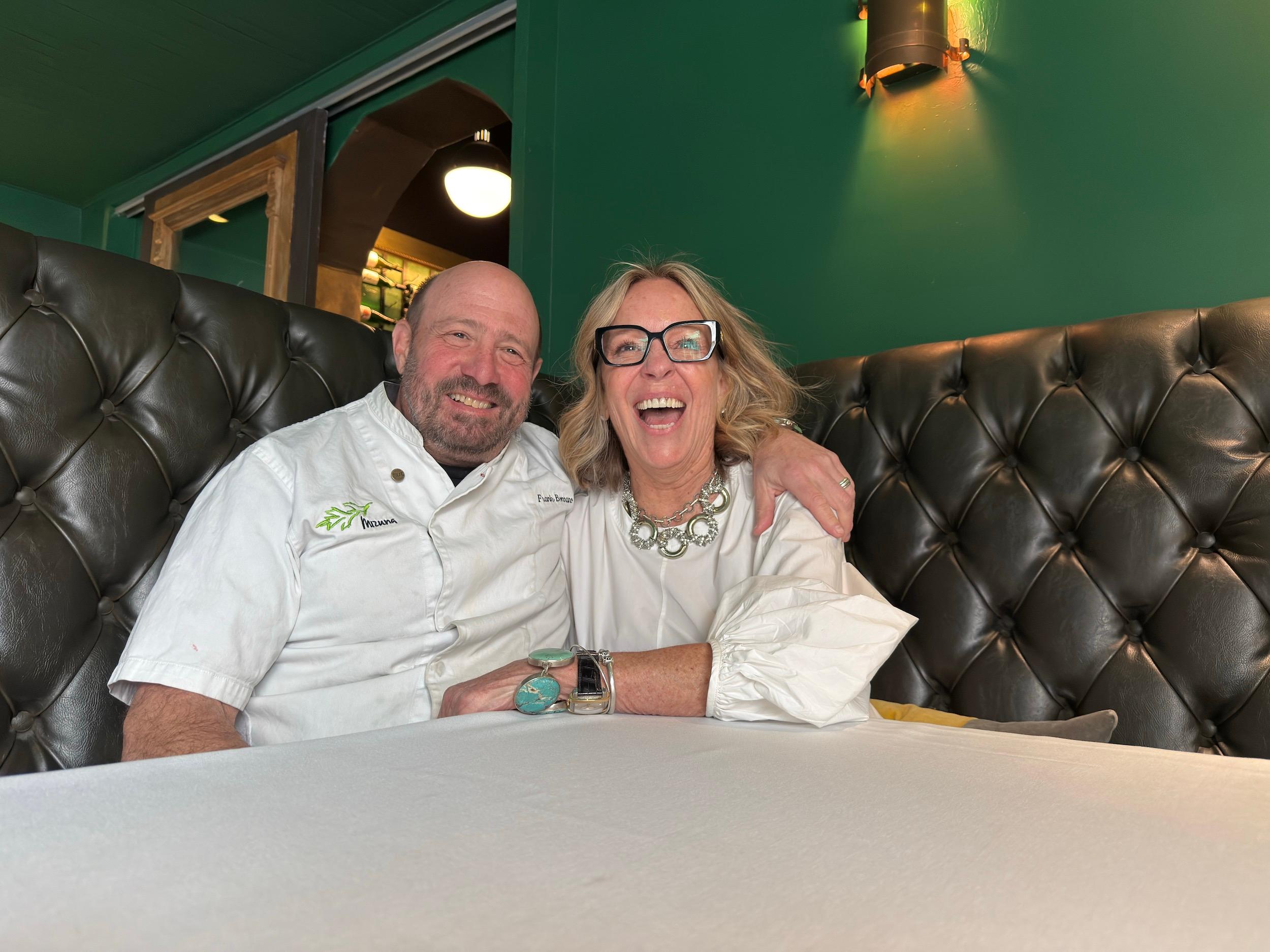
On the heels of this announcement, we sat down with Frank and Jacqueline Bonanno at Mizuna to look back on the iconic restaurant’s past, forward to Rōmyō, and where the Bonanno legacy stands today in Denver.
Antony Bruno
Westword: Are you surprised, given all the changing realities of the restaurant business today, that Mizuna is still standing after 25 years?
Frank Bonanno: I can’t imagine it any other way. It doesn’t feel like 25 years at all. The average chef is here for about six or seven years. As chefs have come and gone, it’s like a new chapter, right? You’re starting over. Because someone comes in with new ideas. They change things. And we go along with it. We’re always trying new things and evolving. I think our food right now is so relevant, and some of it I think is ahead of where things are. I think we’re being very creative.
To what do you attribute Mizuna’s staying power?
Frank: I think, as owners, if you’re not embracing change, it’s difficult to stay relevant.
Jacqueline: In a way, our restaurants are like our homes. And when we have enough money saved to do something to make it fresher, we do it. So it’s a constant evolution. I mean, we spend much more time here in the restaurants than we do in our home.
Courtesy of Bonanno Concepts
Of all your restaurants, where can we find you most?
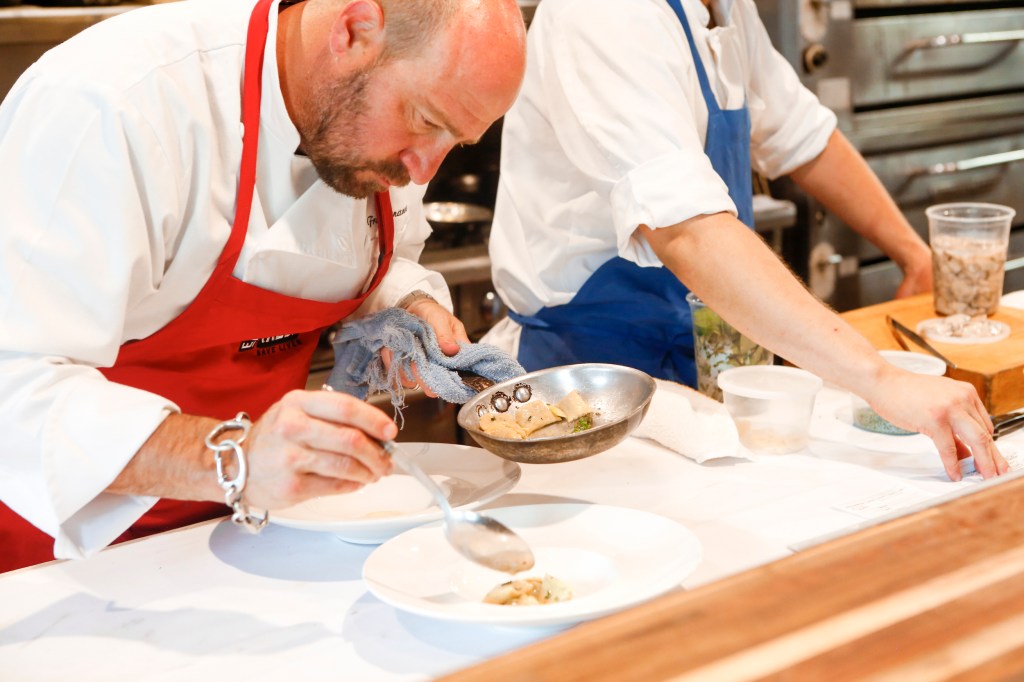
Frank: I spend probably 70 percent of my time here at Mizuna. I’m usually standing there cooking Thursday, Friday and Saturday nights. That’s where I ideally love to be. I love this food. I love where we are right now. I have had times where I didn’t love or get along with the chef as well. Or I had a chef who was so competent, or we were opening something new, and so I had to take myself out of it. But for the most part, I spend most of my time in this kitchen. I spend a very good amount of time in the Luca kitchen because they’re so close and I have a little area in the back where I can work without interfering with people. So even when I’m working on a dish for Mizuna, I’m probably over in Luca, if I’m not sitting in a fucking meeting.
So where do you get the energy to open yet another restaurant after all these years?
Frank: It’s just fun.
Jacqueline: It’s fun to open a restaurant. It’s fun to design them. It’s fun to look at the menu. It’s fun to taste through ideas. It’s fun to hire for it. Opening week is fun, seeing if you can maintain that momentum.
Antony Bruno
Talk about this concept of Italian/Japanese fusion.
Frank: So, Bones was like a French/Asian, French/American, whatever… my version of ramen. It was absolutely not traditional Japanese, but I was into ramen. We’d been doing itameshi [the Japanese word for Italian fusion cuisine] for four years during our culinary playdates at Luca, where we blend Italian with something else. It’s one of our most popular things. So that’s where it came from. I just love the idea of Italian and Japanese fusion.
And if you really think about Japanese and Italian food, they’re more similar, I think, than French and Japanese. I think when you look at Japanese and Italian, you see so many similarities of ingredients with just different approaches. Balsamic vinegar and teriyaki sauce, not that much different. The evolution of the noodle in both cuisines, stir-fried, not stir-fried, whatever. Ravioli or a dumpling…not a big jump, right?
It was originally going to be called Itameshi, after the dinners we’ve done, but there’s a restaurant in New York with that name. There are already two Mizunas — there’s one in Washington and it’s amazing how many people make a reservation in the wrong city — so it’s just not worth it.
You’ve had a complicated history with Larimer Square owner Asana Partners. Now that you’re returning to the street, is it safe to say that relationship has improved?
Frank: It’s amazing what making a deal can do. To be honest, I think they’re so much stronger now than they were. Having been on Larimer Square for eighteen years, it’s a tough place. It’s old buildings with a lot of things that are broken. They come in, buy it, and want to just change things, which we were all for, right? Like modernizing and doing things. But I just think that the maintenance and the sheer problems that arise on Larimer Square were something they didn’t anticipate. I mean, that would be my take on it. Their property management now seems to be very communicative and willing to fix things and do what’s necessary.
Many very successful chefs have come through your kitchen to open their own restaurants. How do you balance hanging onto talent versus seeing them go?
Frank: The goal is that I am hopefully getting them ready to go do their own thing. Honestly, the reason so many chefs who have been here have gone off is because they’re not going to go work in another restaurant where someone’s going to tell them what to do. I mean, there’s so much autonomy here. There’s really nowhere to go after this.
That’s why I think so many people have left here to be successful, because we make them know everything. It’s a very transparent restaurant. You want to look and see sales? Have at it. You want to look at the checking account? Have at it. You should be learning all of these things.
How disruptive is it when they leave?
Frank: The sous chef is usually stepping up. So that’s part of the cycle. They’re the executive chef for like three years, but before that they’ve already been here for two. So we’re always rotating someone through.
When you’re working, what’s your favorite station, since you can choose any one you want?
Frank: I always work next to fish or I work the fish station. I don’t love the meat station. I’m the fucking worst expediter ever. I just don’t have patience. Pasta for me is not an exercise in patience. It’s a meditative thing. I mean, the one thing that I always tell everyone when I’m trying to explain or teach them pasta is you need to shut the fuck up, not pay attention to anybody and focus on what you’re doing, because time and air are your two enemies when rolling pasta.
Which do you see as more of your legacy: the restaurants you’ve opened or the chefs you’ve developed?
Frank: I think it’s the restaurant. That’s what’s given the ability for all these people to come. I love the people. But these restaurants hopefully will be here, or someone else will come and take them over and do something new.
Jacqueline: I mean, two of them are named after our children.
Any new TV appearances coming up?
Frank: I’ll do them if they come, but I’m not actively searching. I’d love to judge more things. Like when I judged Top Chef, that was great. I don’t know that I want to necessarily compete that much. We have our second season of Full and Buzzed on PBS with some really fun guests. And we’re doing a documentary on the opening of Rōmyō.
Finally, just gotta ask how you react to some of the heat you get on occasion on social media? You seem to let it just slide off you, but does it ever get to you?
Frank: I kind of can take the “I don’t give a fuck” approach. But when it affects the staff…you’re attacking me but you’re not really attacking me. You’re attacking the people who work here. And I don’t think that’s fair. That happens way too often. I think it’s important that people know when they make some comments that they’re not affecting the person it was intended to affect.
Mizuna is open for dinner from 5 to 9 p.m. Tuesday through Saturday at 225 East Seventh Avenue; learn more at mizunadenver.com.