
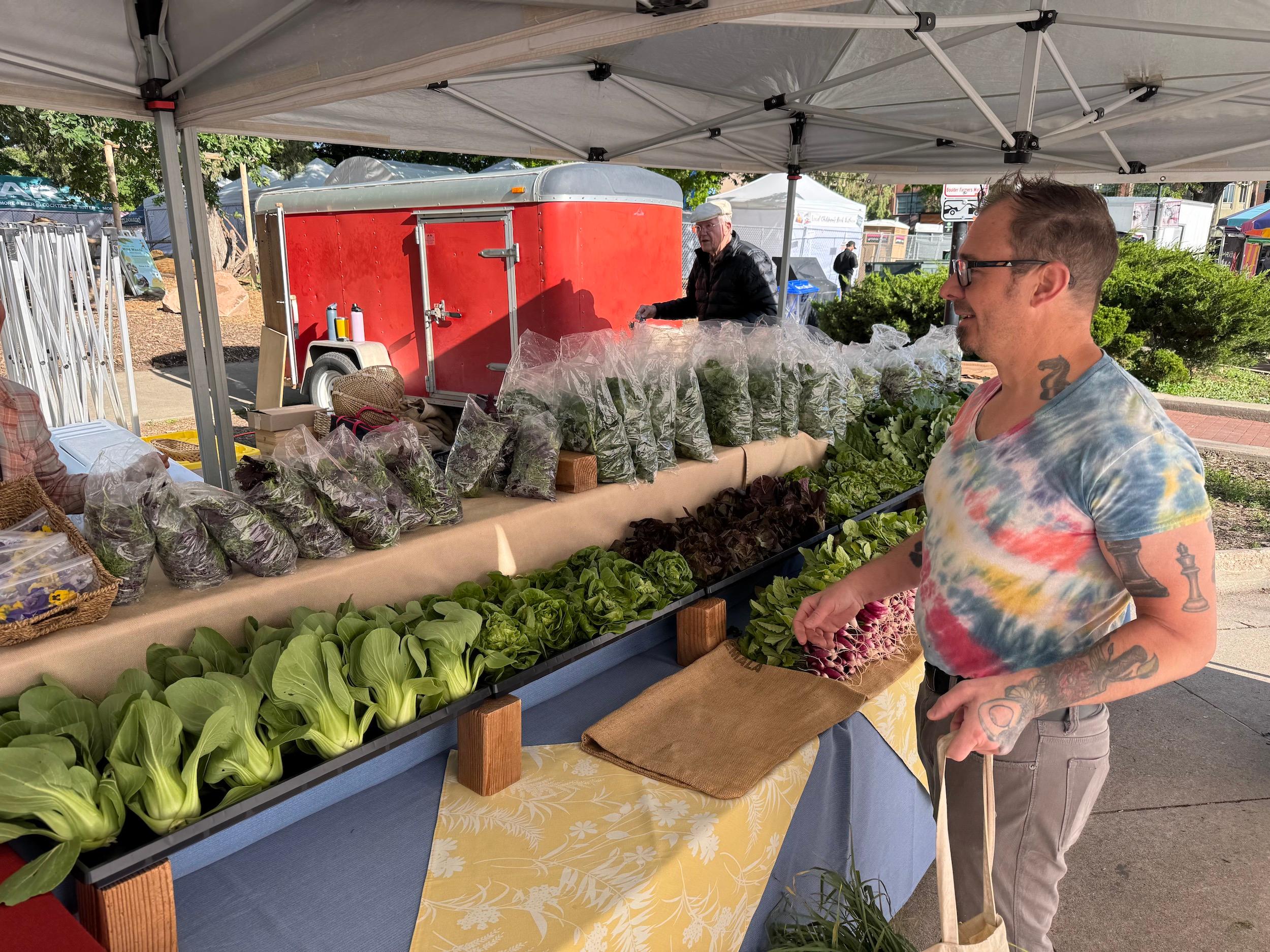
Christian Toohey

Audio By Carbonatix
Thanks to a warm winter and spring, as well as record-low snowfall, Colorado is in the midst of a terrible drought. And for restaurants hoping to source their produce from Colorado-based farmers, it’s shaping up to be an especially tough year. That means fewer options and higher prices for Denver diners seeking farm-to-table fare.
“Our source of produce is here in the Front Range, and our only fruits come from the Western Slope,” says Paul Warthen, executive chef and co-owner of Potager. “Any restaurant that does use local produce, there are going to be a lot of changes, and the prices are going to go up.”
Although still early in the growing season, the state is already seeing dire consequences. Insufficient soil moisture and a less-than-hopeful forecast have Colorado farmers scaling back their plans, planting fewer crops and letting fields go fallow. Some have already borne the brunt of a warm spring, such as one of Potoger’s peach providers, Ela Family Farms, which recently reported an entire fruit crop loss from the April freeze that hit Delta County.
“I foresee some pretty extreme challenges when we get to the height of summer and potentially run out of water,” says farmer Mark DeRespinis, owner of Esoterra Culinary Garden in Boulder, which supplies some of Denver’s top restaurants with locally grown produce. “That could impact multiple seasons going forward.”
It takes a certain level of deranged optimism to keep going when the forecast appears this bleak. But hard times haven’t stopped farmers and chefs before, and they won’t stop them now. However, diners eating out this summer should be ready for a few changes beyond just asking for water.
Carrie Shores, executive director of SAME Cafe — the non-profit restaurant on East Colfax that relies primarily on donated, locally grown produce — says it would be naive not to be concerned. But she hopes the restaurant’s community of farmers, gardeners and supplemental partnerships can still provide support.
“We may have to look at different ways of being creative, but I think that’s what we do here, anyway,” she says. “We have to be creative with our resources, knowing that at any time they can be limited.”
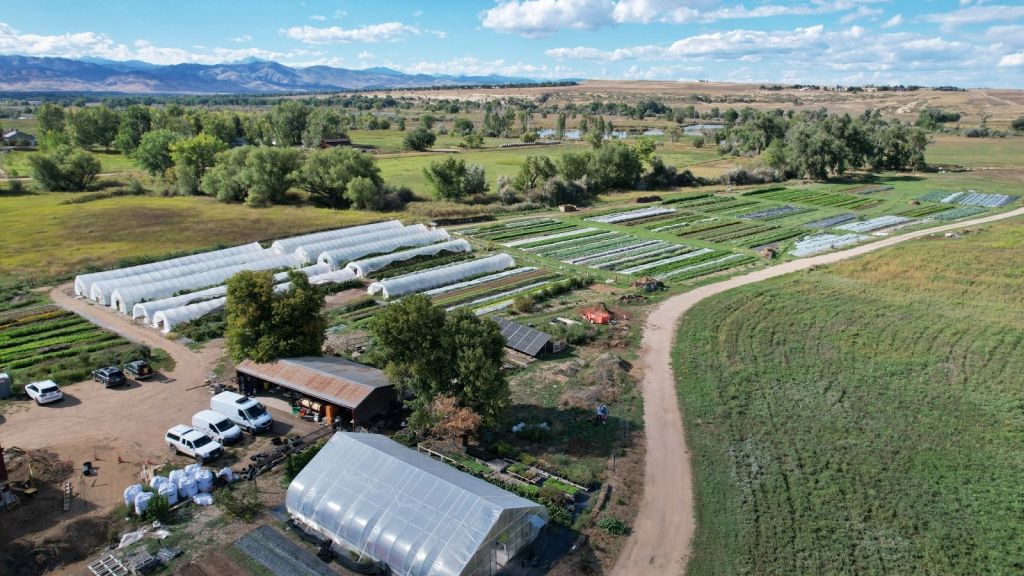
Courtesy of Esoterra Culinary Garden
More With Less. More With More
The weather always has the potential to impact crops, whether it be hail, a late freeze or a drought. So farmers and the chefs who work with them communicate every winter, before crops are planted, to prepare for the realities the climate presents and the demands restaurants have. Due to the lack of winter precipitation and the minimal snow or rain forecast for this past winter, farmers are already making changes.
“We try to refocus,” says Warthen. “What do we want to do? How are we doing it? And then that just becomes menu planning because we change the menu every four weeks. … So this year, we’re just planning a little differently.”
For instance, fennel is less productive than other crops and requires more water. As a result, farmers will plant less of it this year, leaving less for chefs to work with on their menus. Looking ahead, Warthern also expects fewer cucurbits (squash, pumpkin, zucchini and so on), since many varieties are similarly water-intensive. Instead, farmers and chefs are pivoting to quick-growing lettuces and radishes.
“We’re just going to learn a lot about what we can do when we have limited water resources,” says DeRespinis. “The whole Farm-to-Table 2.0 movement has been about us meeting the chefs where they are and the chefs meeting us where we are. And that really involves celebrating what we can do in each season.”
In other words, not only doing more with less, but also doing more with more. As the variety of vegetables available narrows, chefs are buying as much as they can of whatever farmers are producing now to sustain them through what may be a difficult summer.
Warthen has already bought 100 pounds of winter radishes, dehydrating most of them to use as a sort of pasta. With spring radishes, his cooks use the roots in various dishes and ferment the greens.
“I’m trying to spend as much money now on every farm as I can, because they need it to keep going,” says Warthen, who grew up on a farm in Maryland. “If they suffer now, they’re going to suffer later. Even if you get rain in the middle of summer, it’s already too late for certain things.”
At SAME Cafe, cooks have filled freezers with excess donated winter produce such as carrots, onions and celery as the staffers consider how much they can prepare fresh and how much to preserve for the rest of the year.
“When we picked up asparagus two weeks ago, we got almost 400 pounds,” says Shores. “I think people who are [using] locally grown produce in their businesses will have to look at other ways of using that produce. Freezing it, preserving it, pickling — whatever kind of techniques they have to extend the life of it.”
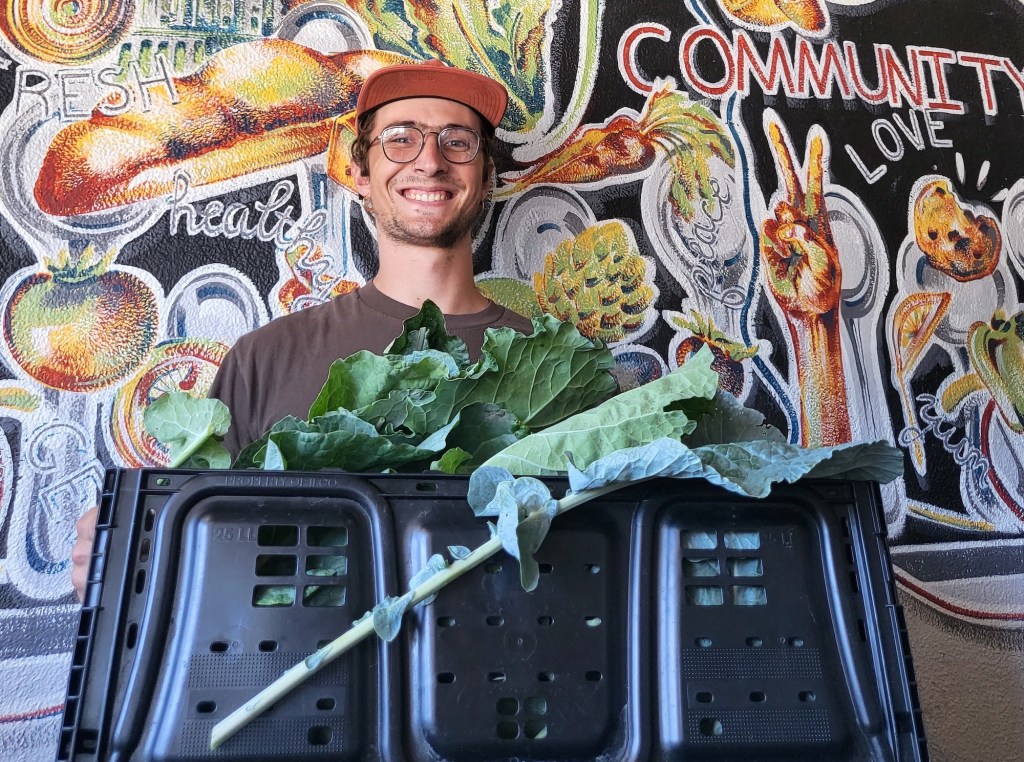
Hard Knoch PR
Discipline, Creativity and Sacrifice
Denver chefs are also doing their part to avoid contributing to the water shortage issue by using less water. Yes, that includes not serving water at tables unless a customer requests it, as well as doing things differently in the kitchen and throughout the restaurant.
For the last two months, instead of using a hose to water Potager’s flowers, garlic, herbs, strawberries, greens and other produce growing in the gardens, the restaurant is collecting the water left over from ice baths and unconsumed water pitchers and glasses in tubs out back, which they use to hand water instead.
“As long as it’s not contaminated with chemicals or too much salt or something, everything goes into the garden,” says Warthen. “You just have to be creative.”
At SAME Cafe, the staff pulls ingredients from the freezer to thaw overnight in the walk-in rather than under running water. It takes longer, but it’s less wasteful. Still, there’s no getting around the dishes and restrooms that need constant water, not to mention the need to hydrate customers.
At Esoterra, DeRespinis looks for versatile crops that can manage extreme heat and dry conditions while still maintaining quality. Drought-tolerant amaranth, for example, can act as a garnish or replace thirstier spinach or other greens.
“All these uses take the traditional American diet and turn it on its head,” he says. “It gives us an opportunity to connect again to plants.”
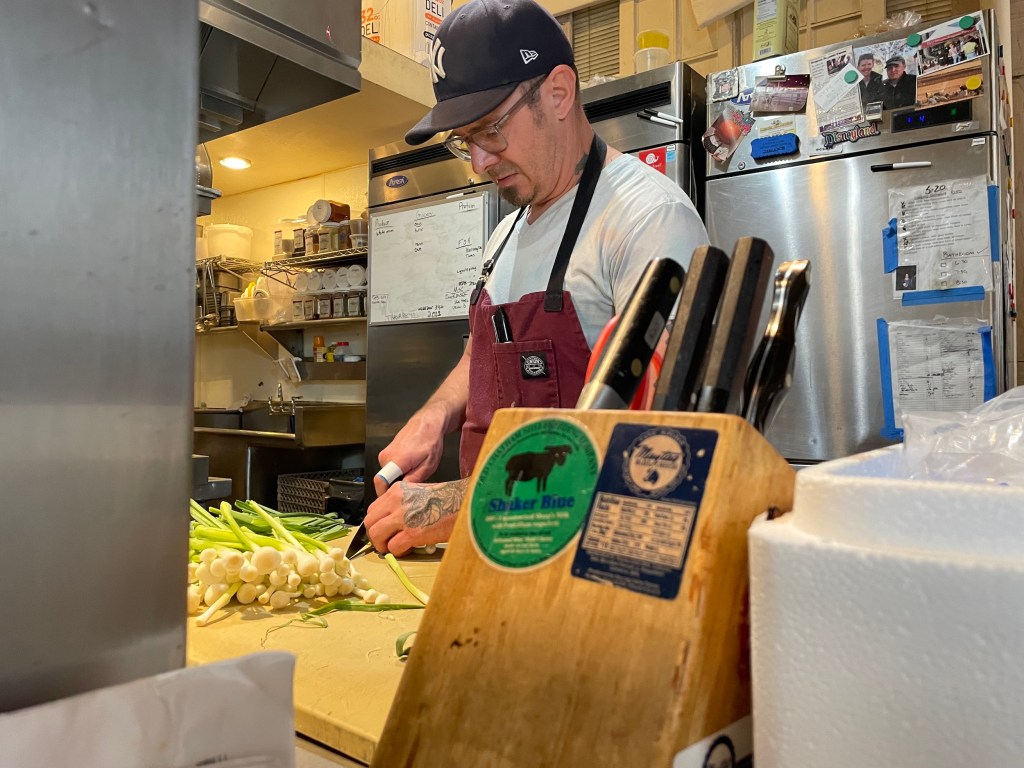
Eileen Warthen
An Emotional Toll. A Financial Response
Beyond water restrictions and creative uses of produce, droughts also have an emotional impact. Watching neighborhood lakes go low or dry up altogether, or seeing the perennials come back with stunted growth, creates an air of uncomfortable uncertainty for everyone, farmers included.
“I was really wrestling with that a lot this spring, where I realized the impact it had on me,” says DeRespinis. “A lot of farmers are intimately connected to their crops. And when their crops are struggling and they can’t give them what they need, it’s like a family member being sick, you know? It’s really hard.”
While the drought is undeniably a drastic situation, Esoterra’s entire model relies on diversity to prevent a single crop or a bad season from ruining the operation.
“We’ve built out the farm for resilience,” he says. “Thriving amidst adversity is one of those things that — whether it’s something we feel good about or not — is an opportunity every time we get these challenges to not take the success for granted.”
For chefs like Warthen, the best strategy is to continue investing in the farms and the products you want to eat.
“Make sure that you’re going to the farmer’s market and that you’re supporting these people, ” he says, “because if not, then there’s nothing going to be left but corporate restaurants.”