

Evan Semón

Audio By Carbonatix
“Are you ready to see some queers fight it out?” the announcer shouted.
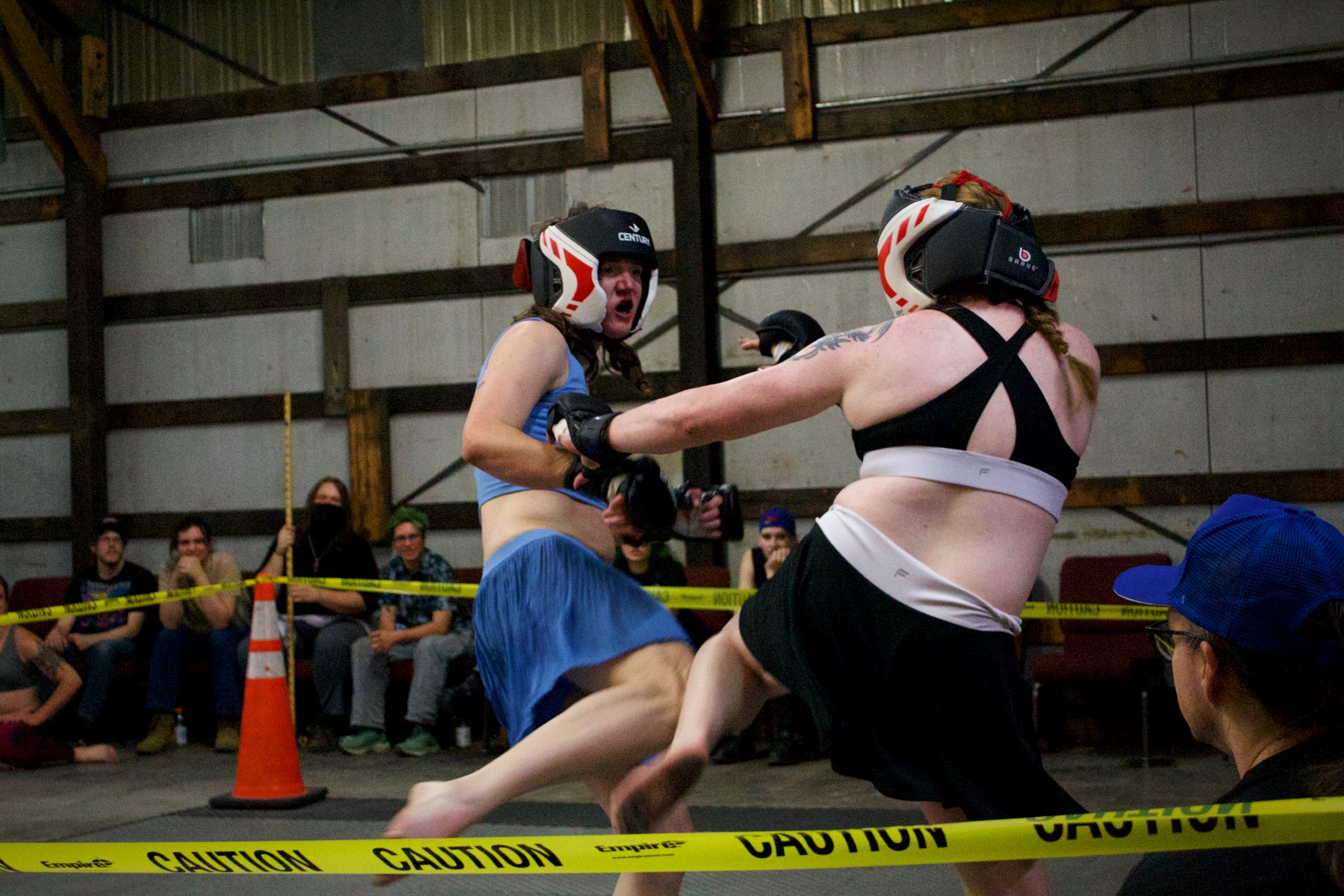
Eight transgender women met in a Denver warehouse on the eve of Pride Month for a mixed-martial-arts tournament, battling for the coveted title of “toughest tranny.” Traffic cones and caution tape marked off the ring: a thin foam mat atop the concrete floor. The referee wore a “fuck ICE” hat, while two scantily clad ring boys sported cat ears and tails. Over 100 spectators surrounded the action, cheering and at times chanting, “Let’s go, trannies.”
This is Queer Bash, a fight club for local trans athletes. The semi-regular event comes as numerous combat sports organizations have barred trans women from competing in women’s divisions, including the North American Grappling Association, World Boxing Organization and International Olympic Committee. “Which is total horseshit,” argues Sybil Vane, a trans woman and jiu-jitsu fighter. “I get beaten up by cis women all the time.”
“Well, screw them,” says Vane, lead organizer of Queer Bash. “If they won’t let us in their space, we’ll just make our own.”
Transgender athletes have become a hot-button political issue in recent years. President Donald Trump signed an executive order in February 2025, seeking to ban trans women and girls from participating in female sports categories. More than two dozen states have passed legislation restricting trans athletes in school sports. Coloradans will vote on a similar restriction against trans student athletes via a ballot measure this November.
In this increasingly hostile political environment, Queer Bash is a haven for trans fighters. Beyond that, it also serves as a fundraiser, supporting free self-defense classes for LGBTQ+ people.
“I want to bring martial arts and self-defense to the people who need it most and who have the least access to it,” says Alejandra Chopin, founder of 36th Chamber, the organization behind the self-defense classes and Queer Bash. “The climate right now is one of fear and trepidation. … We want [students] to have a better ability to move through the world, to feel safe regardless of who they’re with or where they go.”

Hannah Metzger
Annual reports of anti-transgender hate crimes in the U.S. more than quintupled from 2015 to 2025, according to FBI data. Trans people are over four times more likely to be victims of violent crime compared to straight cisgender people, according to a 2025 study by the Williams Institute at UCLA.
During Queer Bash, that fear is drowned out. Fighters trade punches and share hugs interchangeably. When blood is drawn, it’s out of respect, rather than hate.
After seven matches and 23 rounds, Vane was crowned the winner of Queer Bash on May 31. Fellow fighters adorned her with a sash reading “toughest tranny in Denver” and lifted her into the air on their shoulders. She draped a trans flag around her battered, bleeding arms. It was a “dream come true,” Vane says.
“I had to fight just to create this space where I could compete,” she adds. “I’ve fought every frickin’ day to make this happen. When I get in the ring, that’s the easy part.”
We keep us safe
Chopin grew up as the only Latino kid in a small, conservative town in Louisiana. Her mom didn’t teach her Spanish, worried Chopin would be targeted if she spoke it in public, she recalls. It didn’t stop the bullying.
At seven, Chopin turned to karate. Then taekwondo. Then kung fu. “I wanted to be sure that I could keep myself safe and my sister safe,” she explains. That same desire to protect others inspired Chopin to form 36th Chamber in 2021.
“My whole life, I knew what it felt like to feel unsafe because of who you are. How isolating that can be. I never want anyone to feel like that,” Chopin says. “My initial idea was an escort service for vulnerable people. … But I realized I don’t have to go out and act as a bodyguard for people. If I can teach them how to protect themselves, then I can be everywhere at once.”
Evan Semón
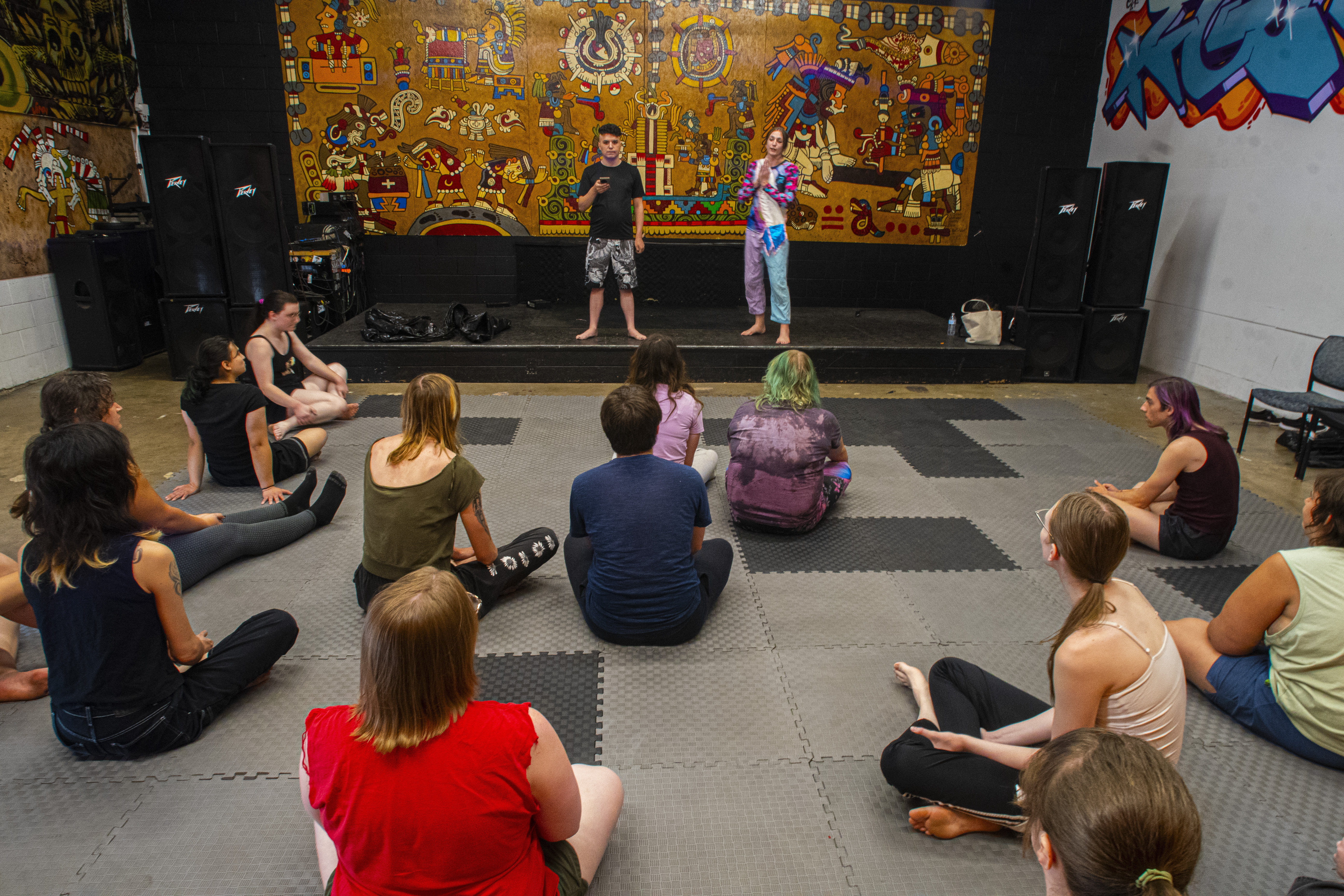
The initiative began with Chopin teaching a few people in a friend’s basement. Today, eight certified instructors take turns leading weekly self-defense courses across various martial arts disciplines, including jiu-jitsu, kung fu, boxing, wrestling, judo, muay Thai and more. Some of the instructors are trans themselves. All of them work for free, donating their time to ensure students can access the class at no cost.
“They want to make sure they reach the people that need them,” Chopin says. “It’s totally free, and it always will be. It is paramount to me that we keep the classes as open and accessible as possible.”
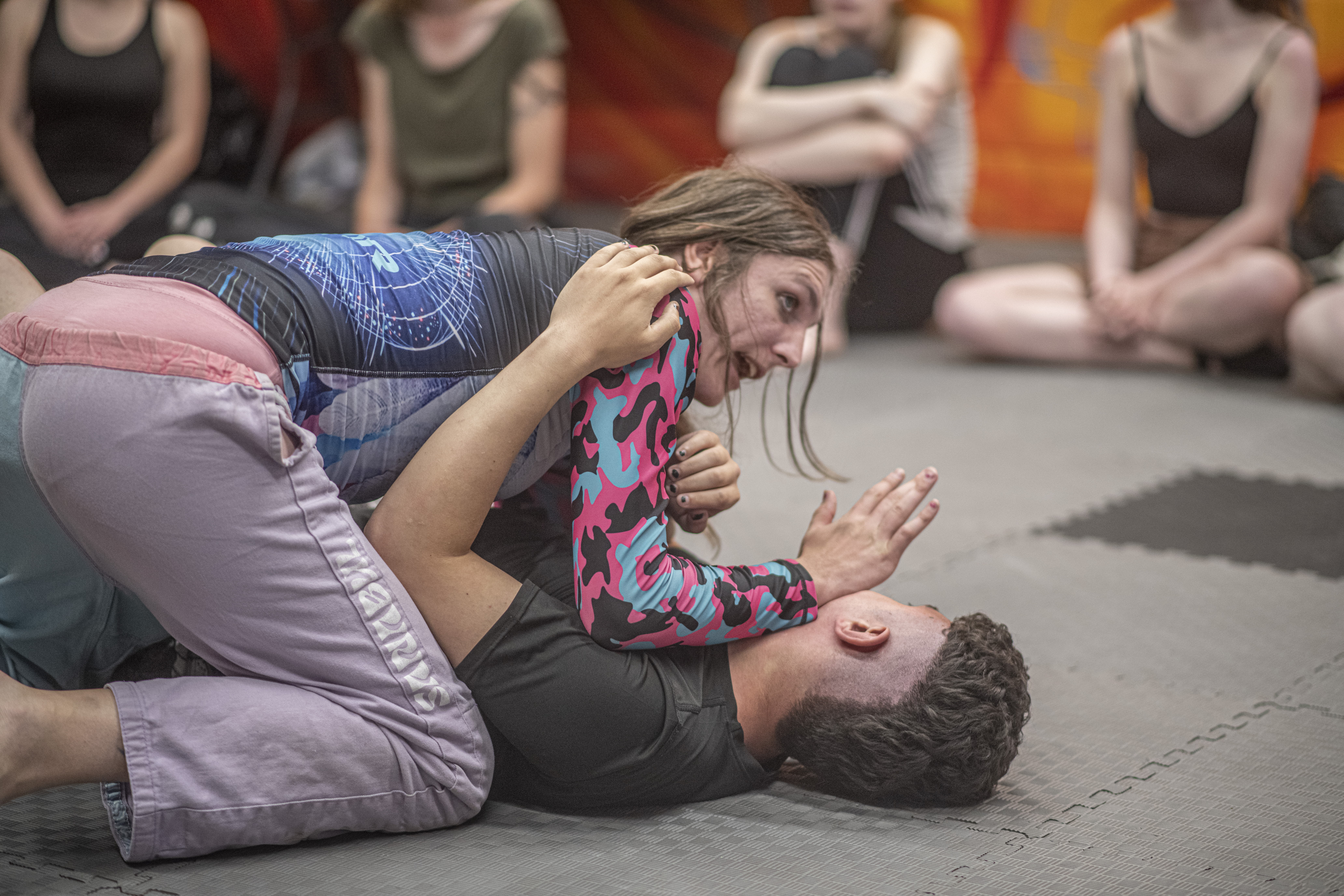
Seventeen students attended the class on June 7, a jiu-jitsu course led by Vane. The diverse group included individuals of various ages, gender identities and skill levels. For two hours, Vane walked them all through paired exercises and round-robin drills.
Vane joined 36th Chamber in November 2024 after seeing a Reddit post seeking instructors. “It sounded like exactly what I wanted to be doing: bringing jiu-jitsu to the dolls,” she says. “It’s the best thing that ever happened to me.”
Despite the intensity of the exercises, the room was often filled with laughter. Students complimented each other’s nails and tattoos between chokes and pins. While demonstrating one hold, Vane described it as an ideal move to apprehend a Nazi. At the end of class, much of the group remained for a “family dinner,” grilling hot dogs in the summer sun.
Evan Semón
“Some [students] have always had an interest in martial arts, but never found a space to explore that. Some of them have been on the receiving end of violence or dangerous situations. But what they tend to stay for is the community,” Chopin says. “I’ve had students say that this saved my life, or helped me kick drugs, or just helped me find a roommate.”
The recent surge in national anti-trans rhetoric has made more local trans people inclined to seek out the self-defense class, according to Chopin.
“The best defense will always be a strong community,” she says. “That’s what 36th Chamber does: It keeps us safe. We keep us safe.”
A league of their own
When Trump signed a slew of executive orders rolling back transgender rights shortly after taking office again in January 2025, Colette Rayne suddenly found herself a trans woman in one of the most anti-trans states in the nation, fielding unprecedented attacks from the federal level.
She fled her Oklahoma home by the following month, driving to the nearest safe zone: Colorado.
Rayne arrived in Denver not knowing a soul. But soon, she met Chopin and 36th Chamber. The group offered her a soft landing — and a hard punch.
“When I got here, I had nobody. Almost all of the connections that I have in the city now started here,” Rayne says. “We have a blast hitting each other here, but what it’s really about is bringing in trans refugees who are coming here from all over. Giving them a welcoming place to get started and teaching them how to defend themselves.”
Every attendee at the May 31 Queer Bash was offered free food and clothing. Though the events are technically fundraisers, there is no cost to enter; the audience is simply encouraged to donate if they can.
Hannah Metzger
Rayne participated in the first Queer Bash in April 2025, shortly after moving to town. She was the runner-up during the third and latest Queer Bash, coming in second to Vane by a split decision. But as Vane declared to the crowd that night: “Whatever the judges say is bullshit. We were even.”
“It’s amazing,” Rayne says. “It gives trans people from dangerous places a way to have an instant community, have instant friends, and learn to fight back.”
The political undertones of the event were evident during Queer Bash. One fighter was jokingly introduced as a “tran-tifa super soldier” and entered the ring wearing the Soviet flag. Volunteers handed out zines urging voters to reject Colorado’s upcoming anti-trans-athlete ballot measure.
The fighters helped run the ragtag tournament, setting up speakers and moving chairs between matches. There was plenty of other staff present, though: a medic, corner coaches, a referee and three judges, including Chopin. Fighters weren’t organized by weight classes. They began the event wearing helmets, but Rayne and Vane ditched the head protection during their five-round finale.
The brawls were brutal at times — fighters were forced to pause on multiple occasions to clean blood off the mat — but the friendships shone through the carnage. Opponents hugged after their matches concluded. Vane even kissed both of the (adult) ring boys to celebrate making it to the final.
“I don’t have the words to describe how amazing this feeling is, to be here surrounded by all of these people I love,” Vane says. “I would do anything for this. I would die for this. This is the greatest thing in my life.”
One of us
A founding supporter of 36th Chamber was absent from Queer Bash on May 31. Harpy Candor was among Chopin’s first students, she says. A trans woman, Candor spread the word throughout the community and was instrumental in getting the self-defense classes out of a basement and into an activity center.
Candor died by suicide last year, at age 31.
“She was there from the outset,” Chopin says of Candor. “She believed in it so incredibly strongly. … [36th Chamber] is an active memorial for my friend.”
Trans adults are four times more likely to attempt suicide compared to cisgender adults, according to the Williams Institute, which experts have attributed to stigmatization, discrimination and lack of access to care. In states with anti-trans laws aimed at minors, suicide attempts increased among trans and gender nonconforming teenagers by up to 72% in the years following the passage of legislation, according to a 2024 peer-reviewed study by the Trevor Project.
Evan Semón
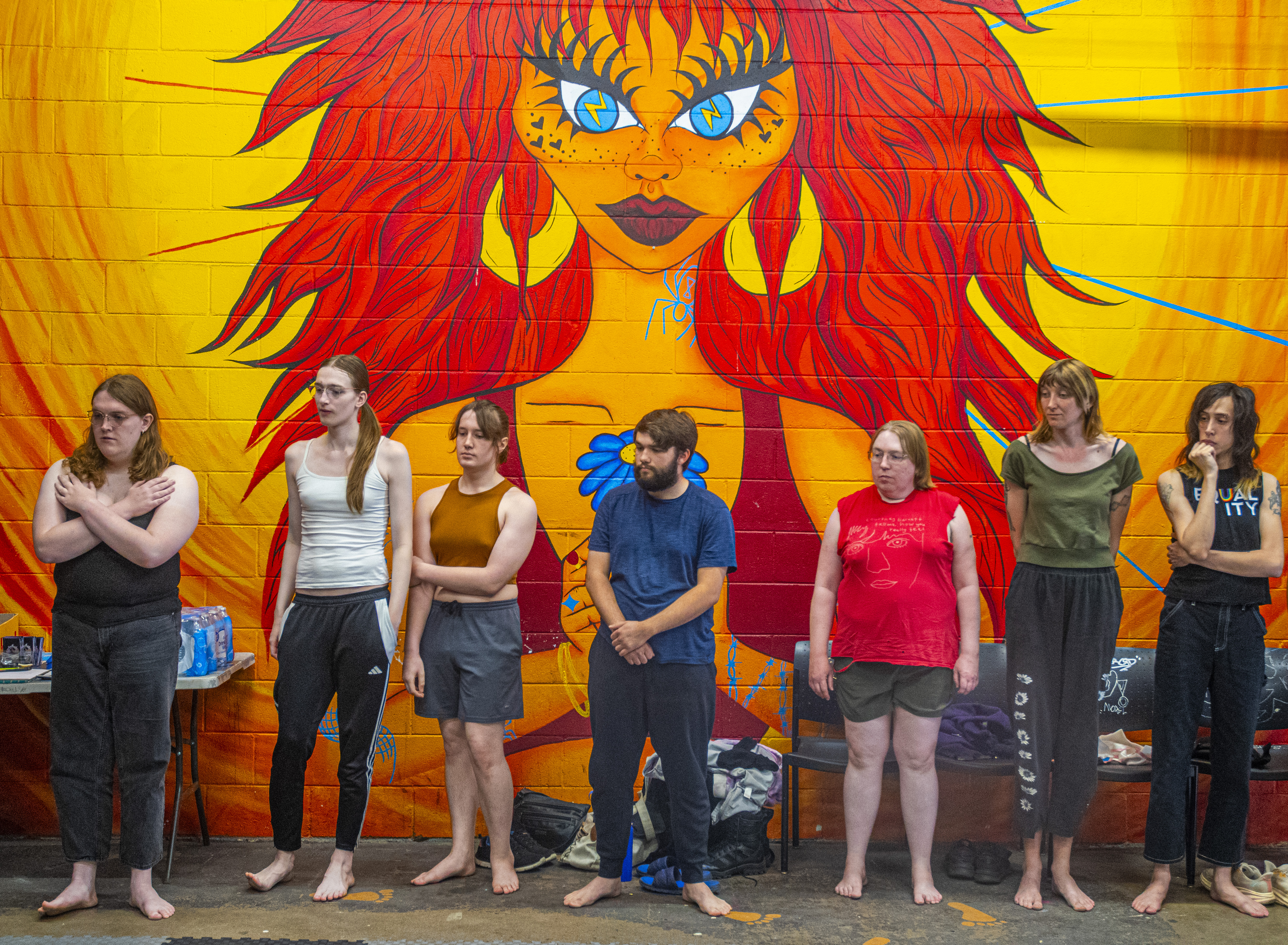
In the face of such sorrow, 36th Chamber serves as a beacon of joy.
“I’ve always had this burning anger at the injustice of it all,” Chopin says. “Initially, I constructed 36th Chamber from a place of outrage and anger. But more and more, I’m finding that is not what is necessary. That is not what I am called to do. What is required of me is to love people. That is where my motivation comes from.”
The love Chopin has received in return was on full display during Queer Bash. While giving introductory remarks, she said the community’s support had empowered her to explore her own gender identity. Chopin had used a male name and pronouns prior to the event. Now, in front of 100 friends and strangers, she reintroduced herself as Alejandra, using she/they pronouns.
“After tonight, if they come, they come for us,” Chopin declared.
Within seconds, Chopin was buried in a massive group hug. Fighters, volunteers and audience members sprinted from every corner of the warehouse to embrace her. Whispers of encouragement and “we love you” were heard before the group erupted into a thunderous chant.
“One of us! One of us! One of us!”