
Bennito L. Kelty

Audio By Carbonatix
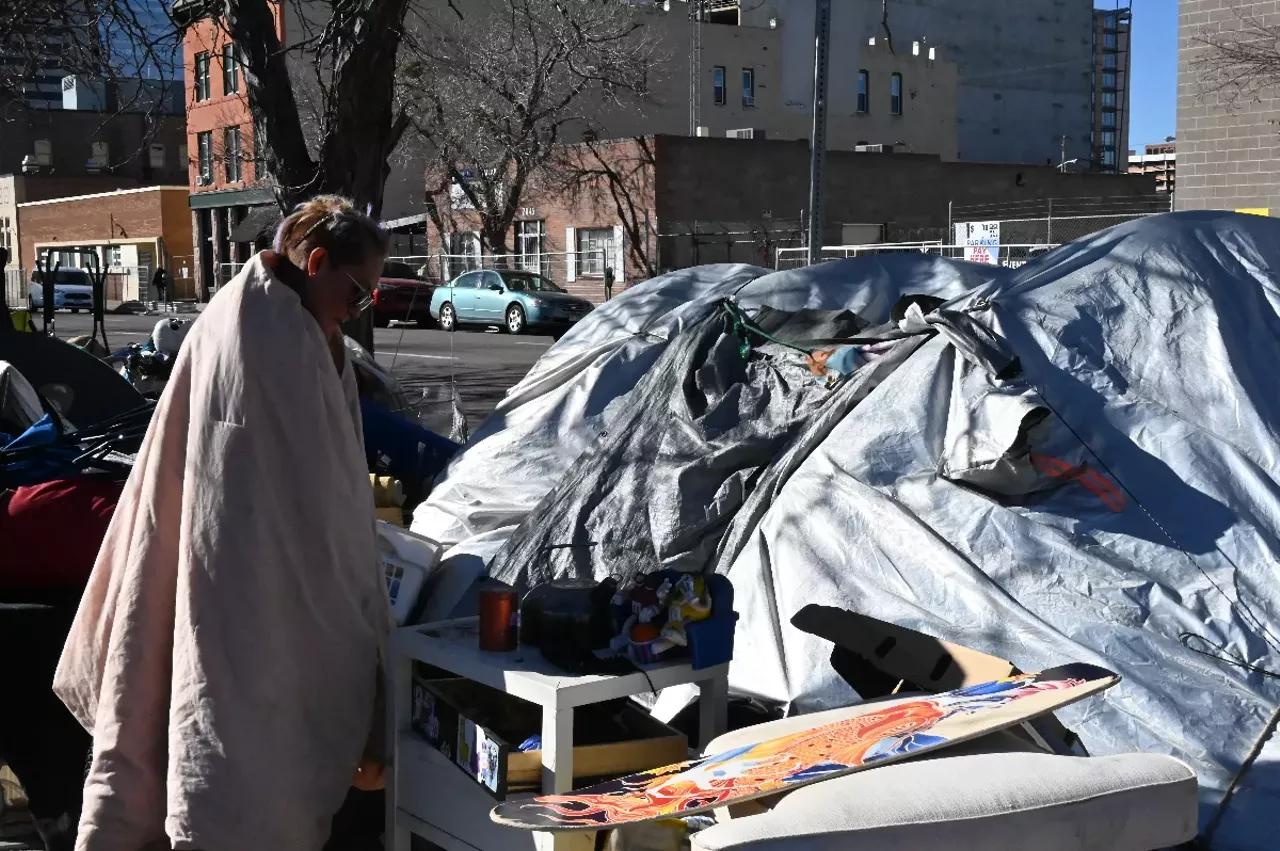
Walk through downtown Denver today and the change from just a few years ago is hard to miss. The large homeless encampments that once dominated sidewalks, parks and underpasses have largely disappeared. Blocks that were once filled with tents, trash and disorder are clearer and more usable.
For a city that spent decades debating homelessness with limited visible improvement, Denver has shown that street homelessness can be reduced when the city focuses on funding shelter capacity and outreach.
But those successes are blunted by the nexus of connecting phases of homelessness services. Denver has become better at moving people off the streets and into shelters, but it hasn’t reduced homelessness.
In 2025, thousands of people were still experiencing homelessness in Denver. The metro region continued to face historically high levels of homelessness. Fewer people sleeping outside is a civic improvement, but it is not the same thing as building a system that prevents people from becoming homeless or keeping them from cycling back into crisis.
Many placements are still in temporary or semi-temporary settings, including noncongregate shelters, micro-communities and transitional housing. These tools are valuable as parts of a larger system, but they’ve become the expensive destination instead of the bridge to sustainability and opportunity off the streets.
The cost structure is a core concern of taxpayers, as well. City spending on homelessness has reached well into the hundreds of millions of dollars, with a recent report identifying more than $20 million in underreported costs tied to the program. Even allowing for the complexity of emergency response, shelter operations and supportive services, Denver residents deserve clearer reporting on what the city is spending and what outcomes those dollars are producing.
A better model would recognize the successes of reducing street homelessness while building sustainable, long-term programs that control costs and produce better results to keep people off the streets.
First, the city should not treat homelessness as a single condition. Some people are temporarily displaced by job loss, rent increases, family breakdown or debt. For them, prevention, short-term rental assistance, mediation, employment support or rapid rehousing may be the most effective and least expensive intervention.
Others struggle with serious mental illness, addiction or long-term chronic homelessness. They may need intensive case management, treatment and supportive housing. These are very different populations and require very different kinds of programs.
Second, the city should replace an open-ended shelter model with a defined pathway. Emergency shelters should remain low-barrier, especially during dangerous weather. Longer-term public assistance should come with a structured plan that includes stabilization, treatment and case management. The requirement should be a managed pathway into employment, transitional housing, subsidized housing and, eventually, graduation into permanent housing without the need for ongoing financial support.
Third, enforcement should remain part of the system. Compassion does not require tolerating open drug use, theft, violence or unsafe public spaces. A city has obligations both to people experiencing homelessness and to residents, workers, businesses and families who need sidewalks, parks and public spaces to be safe and usable.
Finally, Denver needs to measure what matters and focus on the outcome metrics. Success should not be measured primarily by how many people are moved indoors. The city should report how many people are moved into permanent housing, how long they remain housed, how many return to homelessness, the cost of intervention, and which providers are producing the strongest long-term outcomes to get people self-sustaining and back on their feet.
Denver deserves credit for reducing visible street homelessness, but the next phase needs to have more discipline. The more important task is building a system that turns expensive emergency interventions into long-term, cost-effective solutions.
Westword.com frequently publishes opinion pieces and commentaries on matters of interest to the Denver community; the opinions presented belong solely to the authors, not Westword. Have one you’d like to submit? Send it to editorial@westword.com, where you can also comment on this essay.