Gil Asakawa

Audio By Carbonatix
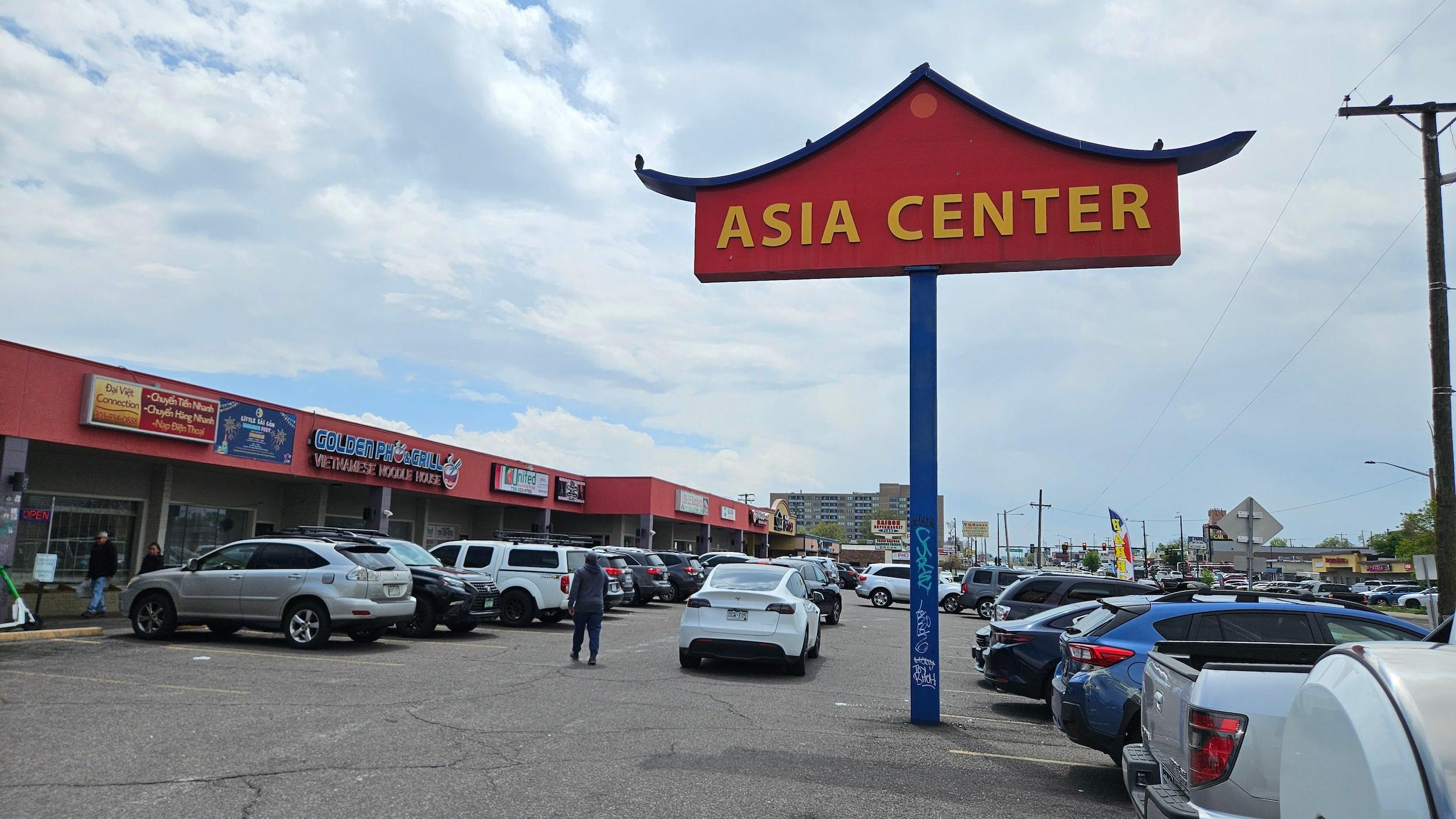
Denver’s Little Saigon commercial district along Federal Boulevard is home to dozens of Asian-owned restaurants, markets, retail shops, and other businesses. But in recent weeks, the roughly mile-long stretch of Federal Boulevard between Alameda and Mississippi avenues has emerged as the focal point of an exploding controversy over growth, gentrification, and cultural identity in Denver.
Ground zero of this debate is the Asia Center strip mall located at the intersection of Federal and Mississippi, which new owners may tear down and renovate into a four-story, mixed-use building with low-income housing and street-level businesses. Doing so would displace over a dozen existing businesses that call the center home today.
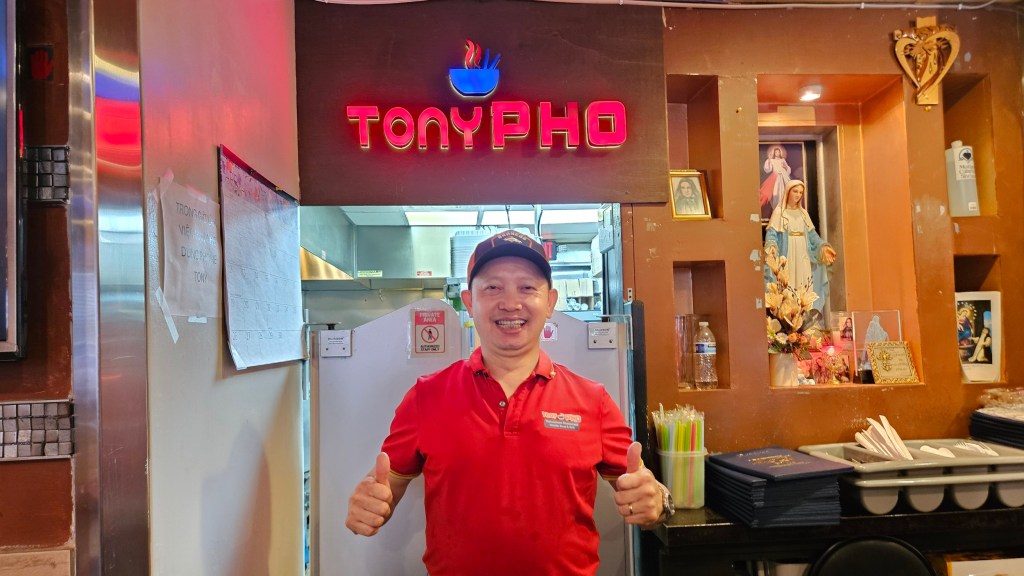
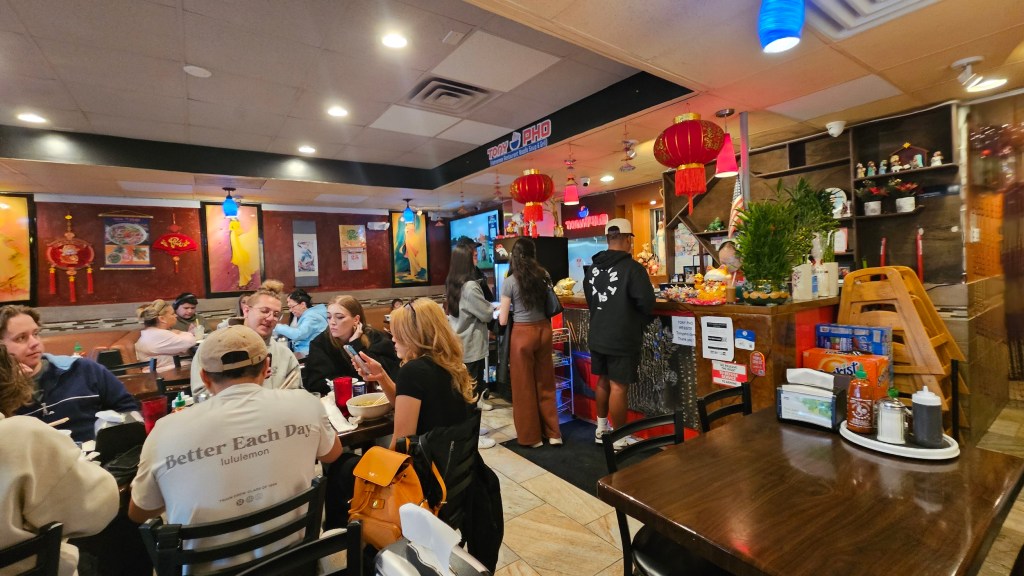
Among them Tony Pho noodle shop, run by owner/operator Tuan “Tony” Le.
“I’ve been working on this street thirty years,” he says. Then, in a quieter voice, he adds, “But I’m scared.”
Gil Asakawa
He’s scared because news of the possible edevelopment came not through a letter from the landlord, but from a social media account that shared the new owners’ conceptual plans filed with the city earlier this month. Lacking any further information or context, the reaction online and social media was swift and fierce.
Realtor Katrina Nguyen created a Change.org petition to save the Asia Center that collected over 10,500 signatures in a little over a week. An impromptu protest was held at the location just days afterward.
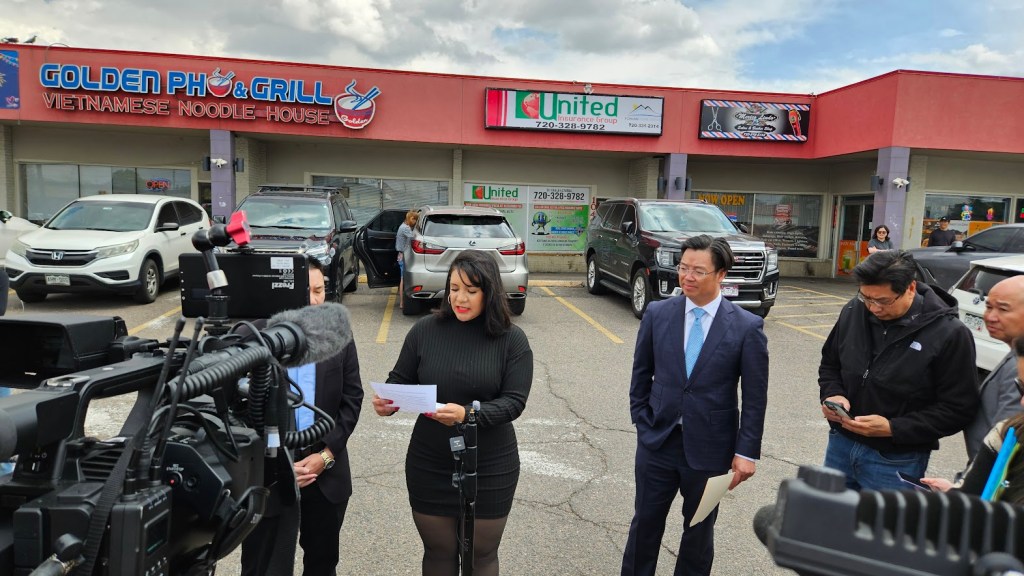
To address the community’s concerns, District 7 Councilwoman Flor Alvidrez, who represents the area where the strip mall sits, and members of both the development group behind the project and the Asian-American community held a press conference on April 29 in the Asia Center’s parking lot.
According to Chuong Le, the attorney representing the project’s ownership group (and no relation to Tony Le), the filing that sparked the initial outcry was merely a conceptual outline designed to determine the feasibility of their plans. The image of the project contained in the filing was only a rendering used by the architects as a quick fix to satisfy city filing requirements, he says.
“Yeah, there were some miscues,” he tells Westword. “It didn’t help that when it came out.”
Chuong Le says the Asia Center Development group intends to gather community input during the planning process, and promises that the location’s cultural significance will be honored, welcoming back current businesses once development is complete and including a community center within the new complex, as well.
“I know the investment group has been very careful and patient about wanting to do this properly,” Chuong Le says. “We want to do this because we really want to honor and elevate our identity and our cultural heritage to last for many, many years more. We want to do this right.”
Gil Asakawa
During the town hall event, Alvidrez echoed Chuong Le’s position.
“This passion is really exciting,” she said. “South Federal is more than a row. It’s a place of memory, sacrifice, entrepreneurship and culture. For decades, immigrant families, just like mine, built businesses here, created jobs… At this time, there are no demolition permits. There’s no final redevelopment approval. What has been submitted is an early concept or discussion, and that’s why we’re here. Now is the time to engage, not panic or be divisive, and not to have misinformation.”
Yet the fears of the business owners remain. The businesses in the Asia Center include not just Tony Pho, but sandwich shop Ba Le, and Golden Pho & Grill. Among the many concerns are whether they can afford to move temporarily or wait during the years it might take to complete construction.
Another concern is the lack of information about who is behind the new development. During the town hall, Chuong Le said that there are more than a dozen investors in the group from Denver’s Asian-American community, but so far they have chosen to remain anonymous.
“I want to take a moment to slow this conversation down and add context that’s been missing,” he said. “The people behind this project are Asian Americans who grew up in this neighborhood, built their lives here and understand what this place has meant across decades. Even me and my own family grew up just around this area. My uncle had his business right in the corner there.”
He added that the ownership group hadn’t planned on moving forward until it had a chance to hold listening sessions and get feedback and ideas from the community, a process he expected would take years. But the current controversy has caused the group to speed up the process.
Among those looking to help further that conversation is Joie Ha, executive director of the non-profit Colorado Asian Pacific United. The group has previously worked to educate the public about Denver’s once-thriving Chinatown, and organized the “Big Dreams in Denver’s Little Saigon” oral history project on display at History Colorado through October 5.
“Redevelopment is inevitable, but I think that what was difficult about this particular news was that it was not something that the community as a whole was very aware of in terms of the detail,” Ha says. “It’s really important that we have the community involved in as many aspects as we can. And I think that regardless of whether or not the developers are from the community or outside the community, the process is one of the most important things. The process needs to include people who are going to be most directly impacted.”
Gil Asakawa
That includes the patrons of Asia Center businesses, who remain skeptical.
“I grew up in this kind of area,” says shopper Sophie Bui, while waiting for her mother outside the center. “The whole gentrification thing is just kind of sad. Especially with a town like this. There’s not a lot of places for Asian Americans.”
Inside Tony Pho, a group of regulars express similar concerns.
“We’re not fans of that,” says Taylor Phan, whose grandfather is friends with Tony Le. “It’s big news in Little Saigon. Yeah, we saw the news. This should stay as it is.”
Filmmaker Hannah Tran, who is shooting a documentary about Little Saigon, acknowledges that the historic district — which was established in 2014 — is in dire need of improvements.
“A lot of the businesses, restaurants, and stores (are) aging,” she says. “I don’t think the community is against progress and updating. And I think people want to see this area thrive. I think people want this area to be safe.”
The trick, she adds, is to do so in a way that preserves the cultural significance of an area built by their immigrant parents and grandparents.
“I think people want to see growth,” she says. “But growth with respect for our history and culture and the collective identity that our parents and grandparents built for almost five decades. What’s been missing is a little bit of transparency and being able to communicate and really knowing what’s going on, and just to see these livelihoods slip out of their control after all the hard work they put in.”