
Backstage Flash

Audio By Carbonatix
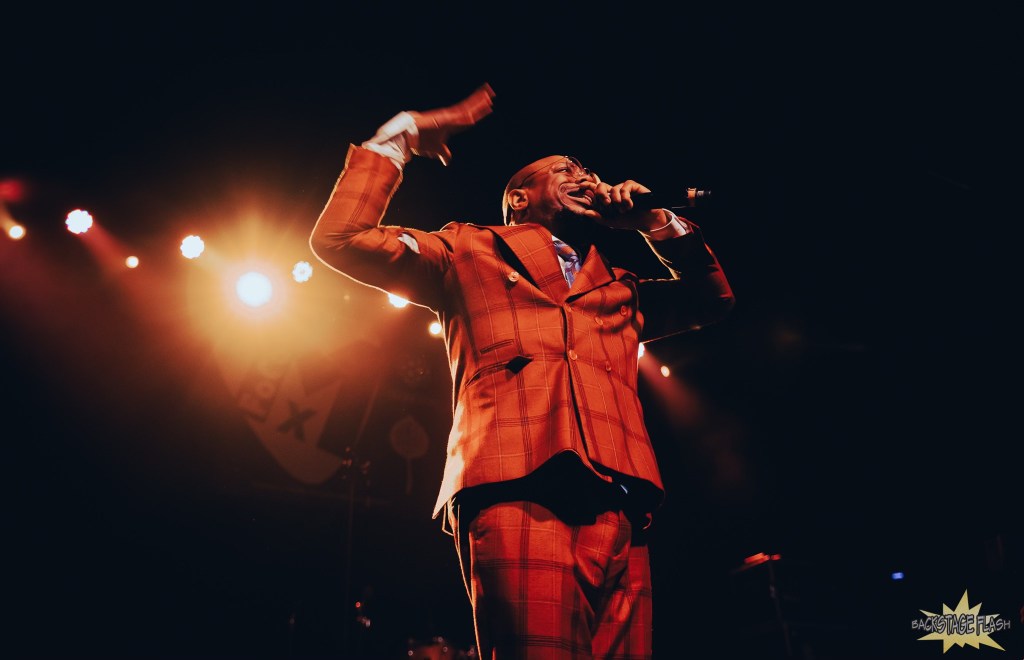
When Rafael Nava paused during his FoCoMX set alongside Shadow Work bandmates Joseph Szlanic and Ben Zickau, he acknowledged the turmoil swirling around the world. That’s why, he said, he chose his next song: Sam Cooke’s “A Change Is Gonna Come.” His vocals encapsulated pure passion, and the audience, packed wall-to-wall in the Aggie Theatre, was enraptured by the time the band broke into its next song, “Something’s Burning,” a newly released original off its upcoming album.
It was a moment that exemplified the community FoCoMX has built over the fest’s eighteen years: one that believes in the unifying power of music. That was even clearer when Shadow Work finished its standout set with a cover of Rage Against the Machine’s “Killing in the Name.”
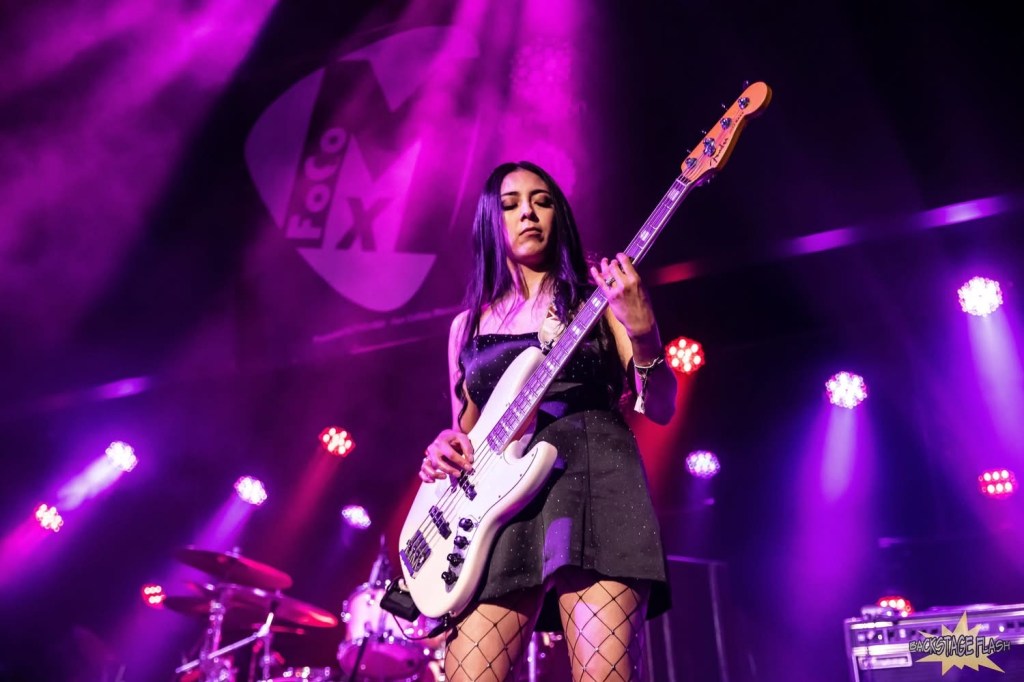
Once again, FoCoMX proved that it’s one of Colorado’s most essential music festivals. The annual event in downtown Fort Collins featured 450 local bands playing April 24-25, 2026, and the sold-out affair showcased how willing people are to invest in local artists.
Backstage Flash
“We’d never sold out before,” says Peggy Lyle, co-founder of FoCoMA, which produces the festival with support from Platinum sponsor Fort Collins Connexion, founding sponsor Odell Brewing, longtime sponsor the Bohemian Foundation and many more local sponsors and partners. “It takes a lot of people to put it together, but it really is just a beautiful moment of community and music. … We really appreciate the musician support and community who help us fund work that we do throughout the year, and this is our main way of doing that. And we’re also able to compensate all the bands, and we’re able to pay all the vendors. It’s kind of a big part of the ecosystem that we love being a part of.”
The businesses in downtown Fort Collins warmly welcome the festival each year, she says, adding that it leads some to host live music year-round. The area is picturesque and completely walkable, with venues within fifteen minutes of each other, all anchored by an outdoor stage. “The venues, some of their best weekends of the year will happen during FoCoMX,” Lyle says. “I think my favorite part is, by bringing music in, we show the value of music as part of that economy. Then people a lot of times pivot and say, ‘We’re gonna have music in here all the time.'”
And for musicians, the fest presents an opportunity to catch each other’s sets or finally meet in person.
One of the best things about all-local festivals like FoCoMX is that they platform artists of all genres that you can see throughout the year. That enhances the major discovery component, with 25 percent of billing given to acts that have never performed at the festival before, according to Lyle. “We have a philosophy of trying to expose people to new music, and we call them discovery bands and discovery slots, so that people might have shown up to see one band in the lineup, but all of a sudden they’re getting to see a new, really talented project that they’ve never heard of, and so that they hopefully are, you know, they’re learning about new bands, and the new bands are gaining fans in our market,” she says.
Backstage Flash
With more than 400 shows packed into two days, the most memorable concerts don’t happen only at the Aggie, but also at small bars like the Neighbor and breweries like New Belgium. More standout sets we caught included the poet Dominique Christina, who put on a mystical, rare concert at Wobble HiFi, where she captivated the audience with her emotive songs that are completely spellbinding. Then there were the swelling sonics of Bluebook, the longtime Denver band fronted by Julie Davis, whose haunting and enchanting melodies won the group a Best of Denver award this year for Best Band. And you can’t forget rapper DNA Picasso, who had the crowd at Sound Bar up and moving to his unparalleled bars as he brought collaborator Malcolm Whyz3 on stage for a surprise collab in an enraptured set.
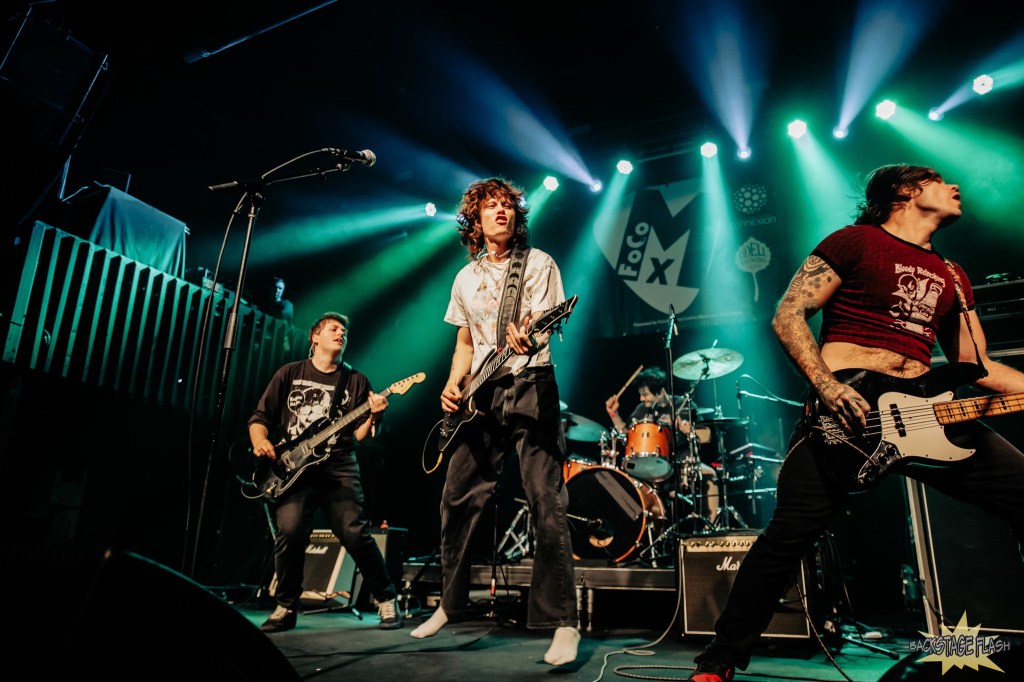
The Aggie is where so much of the action happens, though. The venue was packed for rapper Old Man Saxon, one of whose songs was recently featured in a YSL Paris Fashion Week show; his set won him hundreds of new fans who left the venue with stacks of merch. The surfy, indie-rock tunes of The Mañanas always keep the audience dancing. In fact, one of the most entertaining things at this venue is the nearly nonstop mosh pit that’s more amusing than anything on TV. It was constantly swirling during All My Senses, a post-hardcore band that includes members of former genre purveyors Plasma Canvas, and practically exploded with crowd surfers during Horse Bitch’s midnight set on Saturday, when the band performed fan favorites like “Pirate Ride” as well as new songs off its upcoming album.
Backstage Flash
Eighteen years in, Lyle says she still gets the same”festival high” that she did at the first iterations. “As far as growth, I mean, it started as a very grassroots volunteer effort to really just give musicians a chance to see other bands,” she explains, “and funny enough, that’s really what it still is. In a large way, it is for building audiences, but it’s also one of the few festivals that all the bands go and see each other. It’s really a chance for them to network and jump into someone’s set. … That’s the magic, and that ethos is still there after eighteen years.”
Denver could learn something from this event. Of course, the Mile High City has its own local festivals, but at nowhere near this scale. There’s the Underground Music Showcase, which highlights Colorado artists of all genres but also includes national headliners and touring bands — something that many locals feel dilute its original DIY ethos. Then there are the actual DIY affairs, such as HUFR Fest, which brought local and regional stoner-rock bands to Bar 404 for three days the same weekend as FoCoMX, or the upcoming Blucifer’s First Rodeo, which lands the same weekend as UMS this summer. Similar to FoCoMX, Blucifer will be an all-local event, but is (so far) more limited in genre and size. Of course, since this will be its first year, there’s room to grow.
And that’s exactly what festivals such as FoCoMX inspire: growth, in both artistry and community.
“It’s kind of a group project, you know?” Lyle says. “The reason we’re successful is because each one of those bands works hard to share that they’re going to be playing and bring their fans out, or the volunteers who are going to volunteer two or three shifts, just because they love it so much. I mean, they don’t have to do that. So I think it’s because it’s a we project, and not just a top-down kind of project. I think that’s why it’s successful — because it’s fun.
“We’ve worked as a community for a lot of years to have the message out there that local music matters, and providing spaces for musicians to play, and making sure that they’re compensated for their artwork,” she concludes. “Those kinds of messages really pay off, and we’re just kind of a huge showcase of that. But there’s a lot of work that happens year-round that supports that ecosystem, and the fans are a critical part of that.”